
Home » Uncategorized (Page 10)
Category Archives: Uncategorized
Signing Day
Ah, signing day. We’ve finally made it. Things have been quiet here over the past month because, let’s be honest, not much happens in the world of amateur baseball between the completion of the draft in early June and mid-July. Sure, you’ve got your signings trickling in here and there, plus amusing rumors of pre-draft deals gone wrong (the Alec Rash text message fiasco is a personal favorite) and the dramatic “will he or won’t he” sagas that play out near the top of the draft each year (I’ll say Gausman will, Appel and Giolito won’t…though the Giolito feeling is based more on wishful thinking than anything concrete — selfishly I’d rather see him at UCLA than on a rival club’s pitching staff).
You also have analysts rushing to praise or bury each team’s draft haul, a silly exercise (good draft = team that picked all your pre-draft favorites, bad draft = team that didn’t) made even sillier when done prior to knowing which players will sign before the deadline. There can be value there and I’m likely to do some post-signing day musing myself, so I shouldn’t dismiss all of the post-draft analysis as “silly,” but when done so quickly after the draft it seems like the whole exercise is merely a rehashing of what was said before the draft with no room for any deeper thought, like stopping and wondering why a pro scouting staff that has seen a player dozens of times over multiple seasons may have picked a guy higher than one random internet dude with a spotty track record of judging talent and a few decent contacts had him ranked on his own personal big board.
Finally, there is also plenty of tournament and showcase ball to watch if you don’t mind travelling to exotic locales (I kid, but Durham is a nice town) and sitting in relentless summer heat. This is most relevant to my interests, and should hopefully bear some meaningful content on the site in the near future. I’ve resisted the urge to post immediate reactions to what I’ve seen so far this summer because a) I like waiting until the end of the summer showcase period to present a fuller picture on each player’s prospect stock heading into 2013, and b) it is summer, a time where even the most disciplined unpaid writer can get distracted by, well, just about anything besides sitting in front of a computer screen.
All of that is in the past. Let’s talk about the future. Over the weekend I’ll be finalizing all of the 2012 draft rankings that I didn’t get to before the big day. I know this is a ridiculous way of doing things, what with the draft being completed over a month ago, but I’m a weird guy who needs to have one thing 100% out of the way before moving on to the next topic. Once all the ’12 rankings are finished, then we can move on to some fun, random posts (big league debuts of interest, retrospectives on old rankings, early impressions on ’13 college prospects) to buy time until the first big board for 2013 (tentative target date: late August) is ready to go.
Also, I might change the name and design layout of the site. So stayed tuned for that. As always, thanks for reading, commenting, and emailing.
2012 MLB Draft: Top 100 Hitters
WordPress is being uncooperative tonight, so the pitchers will have to wait. Thankfully, I managed to get the top 100 hitters in order before the site crashed. It stinks not having the full big board available, but it’s better than nothing, right?
1. SS Carlos Correa (Puerto Rico Baseball Academy, Puerto Rico): plus-plus arm strength; positive reports on glove, above-average tools across board defensively; very fluid defender; 6-3, 190 pounds; tons of projection; plus athlete; needs at bats; plus power upside; plus speed; crazy bat speed, no problem with velocity; good approach; R/R
2. OF Byron Buxton (Appling County HS, Georgia): 93-94 peak FB; plus-plus (80) speed; dead pull hitter; loves to swing; raw, but immensely talented; above-average to plus arm, closer to above-average now but accurate; crazy quick hands; bat speed, bat speed, bat speed; BJ Upton comp from an athletic standpoint makes sense; weirdest comp ever: Mike Schmidt, at least in terms of distance from plate and current swing; tremendous athlete; plus raw power; CF range if his instincts catch up, otherwise a potential Gold Glove winner in RF; 80 speed/60-70 arm/70 range
3. Florida JR C Mike Zunino: legitimate plus raw power, but expected to be above-average in-game professionally as length in swing could cause some issues on high velocity arms; plus arm strength; good athlete for his height and weight; plus defensive tools behind plate, surprisingly mobile; calling card is his power, but underrated as a natural hitter; value comes on field, obviously, but added bonus of being a take charge leader is nice for the position; more than just a flashy strong arm, also really accurate; swing can get too long at times which could expose him against good breaking balls going forward; also gets bonus points for calling own pitches; I like Zunino a ton, so don’t take this comment as an attempt to hedge my bets, but rather an attempt to keep coverage fair and balanced: due to his inconsistent approach and reports of below-average physical conditioning, I think it is fair to have some serious doubt about Zunino as a sure-thing, franchise player, top five pick; 6-2, 220 pounds
4. OF Albert Almora (Mater Academy, Florida): plus arm strength; plus speed; shows all five tools; big upside at plate; lots of power, but swing needs retooling; almost plus range in CF; quick bat; aggressive base runner; some debate at start of spring about how good his tools really are, but he can play; should be above-average (with plus upside) in CF for a long time; great athlete, good instincts; above-average power with plus upside; above-average arm; average speed; hit tool is better than most HS guys, 70 upside with a great looking swing; so smart on bases, great at reading pitchers; really strong approach; 6-2, 180 pounds; R/R
5. OF David Dahl (Oak Mountain HS, Alabama): good speed; plus arm strength, clocked at 95 from outfield; strong defender; aggressive on base paths; uses whole field; very mature hitter; biggest question for me is power upside long-term; Colby Rasmus comp; enough instincts for CF; update: above-average speed; above-average arm; 6-2, 190 pounds; L/R
6. C Stryker Trahan (Acadiana HS, Louisiana): plus hit tool; honest above-average speed; plus bat speed; good arm; swing is textbook; lets ball travel deep, but quick hands allow it; athletic behind dish; shows plus raw power; most impressed by his power to all fields; if Blake Swihart could run, he’d be Trahan – also think the Wil Myers comps are warranted; the big question is all about his defensive future, but I think he’s athletic enough to be given the chance to work with pro coaches and get everyday reps; 6-1, 220 pounds
7. SS CJ Hinojosa (Klein Collins HS, Texas): power upside is immense, due mostly to crazy bat speed (swing is level); steady defender at short with tools to be even better; really like his quick bat, but swing can get out of whack at times; impressive arm strength; think he’ll stick up the middle pretty easily; 5-11, 185 pounds
8. OF Courtney Hawkins (Mary Carroll HS, Texas): very muscular build; good speed; strong arm; more present power than majority of class; plus raw power; lots of swing and miss and some pitch recognition issues; average or better speed; RF professionally; has improved a great deal across the board in last calendar year, especially on defense; good instincts in CF, but might not be quick enough; plus arm; speed, power, and arm will take him far; reminds me so much of Adam Jones it’s scary; 6-2, 215 pounds; R/R
9. 3B Trey Williams (Valencia HS, California): big hit tool; potential plus to plus-plus raw power; advanced idea of how to hit, e.g. big opposite field power threat; strong arm often categorized as plus; potential star defensively at third base; great reactions and instincts; outstanding athlete; plus bat speed; plus hit tool; slightly above-average speed; very strong; has that special sound; pitch recognition to be monitored; super quick bat, solid approach: very patient, lightning in wrists; swing needs some work, but what is there is a fine building block; strong arm, steady defender; below-average speed, but quick feet and reactions at third; should be an average defender at worst with much more upside than that; big-time raw power, personally I’m a believer; 6-2, 210 pounds; R/R
10. 3B Tanner Rahier (Palm Desert HS, California): plus arm strength; accurate arm; quick bat; good power; good fielder with well above-average range; intriguing raw power, above-average for me; not toolsy, but gets it done; ball jumps off bat, special sound; likely a 3B as a pro; impressive pitch recognition; Evan Longoria comp; only question for me is power upside, hit tool is outstanding; some believe he’ll stick at SS, Gold Glove upside at 3B; 6-2, 205 pounds; R/R
11. Clemson JR 3B Richie Shaffer: really good defender at first, but more average on a good day at third; plus raw power to all fields; plus raw arm strength (has hit 94 off mound), above-average in total after accuracy is factored in; made outstanding recovery from broken hamate bone, minimal power loss; good athlete; average runner; not entirely convinced he’s a third baseman forever, but believe he can play either 3B or a corner OF spot through his first big league (six year) contract; 6-3, 200 pounds
12. 3B Joey Gallo (Bishop Gorman HS, Nevada): plus raw power from left side; good athlete; plus arm; no problem against quality arms, has hit both high velocity and big league quality breaking balls; similar to Richie Shaffer defensively – both have plus arms and enough athleticism to play third base for a bit before transitioning to right field; some prefer him on mound (88-93 FB; 94-98 peak with some of the easiest velocity of any prep in recent memory; good 74-76 CB; mid-80s CU; 77-81 SL needs work), but his kind of power is hard to pass up; not a perfect comp, but there’s some Kris Bryant to his game; really want to move him up over Richie Shaffer for the top spot, and for some organizations I think he’s worth the risk, but the relative safety of the college bat pushes Shaffer just ahead; 6-5, 220 pounds; L/R
13. Georgia Southern JR OF Victor Roache: raw, but talented; plus athlete; plus raw power; a hair over average speed; average arm; willing to wait for his pitch and drive it; has had his swing doubted at every level, but has hit everywhere he’s been; much will be known about Roache’s medicals based on his draft position as his broken wrist is a concern going forward – if he goes on the first day, as expected, we can assume everything checked out more or less fine, but if he falls then the question about his long-term prognosis will be out there; his final position on this board is subject to change pending any news on his health, but Roache’s impact bat is one of the draft’s most overscrutinized and thus, in my opinion, underrated bright spots; 6-1, 225 pounds
14. 3B Rio Ruiz (Bishop Amat HS, California): very strong hands; plus arm; very quick bat; no problem with velocity; big league hitter; popular Eric Chavez comp that makes sense; 6-2, 200 pounds; L/R; good athlete; really intrigued by bat; patient
15. 3B Addison Russell (Pace HS, Florida): good athlete; consistent hard contact; plus defensive tools; excellent range; great bat speed; too aggressive at times, but has worked hard to improve approach; plus arm; really good athlete; has worked hard to put on muscle, looked like a corner infielder all the way; now they say he is athletic enough to stick up middle again though he still looks like a future 3B to me; very quick bat; 6-1, was up to 215 pounds; down to 185 now; above-average speed; huge raw power; questionable hit tool; R/R
16. 3B Corey Seager (Northwest Cabarrus HS, North Carolina): good athlete; strong arm; great feel on defense, could be star at third; line drive machine; swing holds back power upside for now, but if he grows into some power, watch out; already more pop than his brother; patient approach; 55 speed; 6-3, 200 pounds; L/R; should settle into average speed
17. Stony Brook JR OF Travis Jankowski: plus speed; great CF range; average at best arm; below-average present power, but I think there’s more pop coming; potential plus hit tool; great athlete; really good approach, especially with two strikes; awesome instincts, great first step; has struggled some on Friday nights, much better against lefthanded pitchers; I hate piling on with the obvious comp, but I think there are lots of similarities between Jankowski and the college version of Jacoby Ellsbury – to take it a step further, it wouldn’t surprise me to see a power spike similar to Ellsbury’s, though perhaps not quite as drastic, once Jankowski hits pro ball; 6-1, 190 pounds
18. Purdue JR C Kevin Plawecki: tremendous approach, as good as any hitter in this year’s college class; still a raw defender, but above-average tools are there; average arm, but it plays up due to much improved footwork and a quick release; good athlete; above-average hit tool; hits consistent line drives tony and makes a ton of contact; like the power, but others aren’t solid his swing will allow for much more than gap power – I think there’s 20 homer upside here; there was some question heading into the year, but will definitely stick behind plate; uses the whole field well as a hitter; high marks for all things intangible; given the choice between Zunino in the first or Plawecki later, I’d wait it out and grab Purdue’s backstop who might have more long-term upside; 6-2, 210 pounds
19. Arkansas JR 3B Matt Reynolds: line drive machine who lacks present strength and swing plane for big power, but makes up for it with consistent hard contact all over the field; above-average speed that plays up on bases; outstanding defender with a strong arm and enough athletic ability to play up the middle at times; could even be tried at catcher, though I think a more likely conversion would be to 2B – could even be tried as an everyday SS if a team is feeling especially frisky; I think a player in-between Kyle Seager and Chase Headley is a realistic ceiling for Reynolds – some speed, some pop, but lots of value tied up in defense and on-base ability; 6-1, 200 pounds
20. Stanford JR 3B Stephen Piscotty: gap power, but could be more with added strength; often too aggressive for his own good, but compensates by showing great plate coverage; impressive ability to use the whole field; average speed; good arm; above-average hit tool that I wasn’t sold on to start the year, but can now admit is one of the college class’ best – he’s really fun to watch hit; good enough defender at third to at least get a chance to start there in pro ball, but less likely to stick there long-term than Richie Shaffer – RF makes for a fine backup plan in the event a switch is necessary; like the hit tool, his power is better than I first gave him credit for – the gap power should give way to more over the fence pop as he focuses 100% on hitting professionally; not to keep repeating myself, but Piscotty’s bat has really impressed me more than I expected this year – he has a very quiet swing, mature approach, and is capable of hitting any pitch in any count, including pitchers’ pitches; above-average athlete; have personally compared him to James Darnell in the past, but should have higher ceiling; 6-3, 215 pounds
21. 3B Carson Kelly (Westview HS, Oregon): 88-92 FB; plus 78-82 CU with fade; 73-80 CB; low-80s SL with plus upside; can really swing the bat; plus bat speed; no problem with high velocity arms; plus arm; strong; agile; good approach; above-average defensive tools; can’t decide on his pro position, lean towards 3B; slow, but not glacial; 6-2, 210 pounds; R/R
22. 3B Daniel Robertson (Upland HS, California): potential plus defender, but more in the steady style and not so spectacular; plus arm; big hit tool; has raw power, but doesn’t know how to use it just yet; does show as much opposite field power as any high school hitter in recent memory; 6-1, 185 pounds; R/R
23. Arizona State JR SS Deven Marrero: advanced defender with plus tools (great range, soft hands, plus arm); average power potential, gap power at present; average speed, plays up a bit in game; he’d also work well at 2B or 3B, though a position switch is not necessary; despite the down year, Marrero has impressed in by hitting a variety of stuff – i.e. he’s not struggling for lack of being able to hit a good fastball or misidentifying breaking balls; above-average hit tool; even though I’ve never been top-five pick high on Marrero as a prospect, it bears mentioning that he’s a ballplayer with no obvious below-average tool and a worthy first round pick – closer to the back than the front, but still worth a first round grade; interesting information from watching him/parsing the stats: he absolutely kills lefties, but struggles against righties; still living off his impressive freshman season to some extent, but scouts remain high on him as somebody who will settle in as one of the top 5-8 defenders at shortstop in the game while hitting better with wood than what he showed in college – his ceiling may not be as an All-Star caliber player, but he could still be a first-division starter; 6-1, 195 pounds
24. Cal Poly JR OF Mitch Haniger: plus defensive upside in RF, can hang in center despite average at best speed; very strong arm; above-average raw power, 20+ HR upside; strong; average at best hit tool yet still better than expected (at least by me) coming into the year; good athlete; improved approach in 2012 as he has matured a great deal as a hitter throughout his college career; 6-2, 215 pounds
25. 3B Mitch Nay (Hamilton HS, Arizona): impressive bat; questionable defender, could wind up in RF; super strong arm; easy to love his bat speed; above-average power upside; slow; 6-3, 200 pounds
26. 3B David Thompson (Westminster Christian HS, Florida): huge power; good approach; really quick bat; quick enough for LF, but has chance to stick at third; strong arm befitting a QB; long swing
27. OF Lewis Brinson (Coral Springs HS, Florida): plus (70) to plus-plus speed; strong arm; great athlete; huge upside; big (60-65) raw power; very raw; great athlete; reminds me of Austin Wilson as a prep player but with the ability to play CF, though he could be plus RF; plus arm or better, depending on his release; Florida commitment; more of a baseball player than other toolsy prospects; quick bat; pull power; love his defense; Phillies kind of player; 6-4, 185 pounds
28. OF Jameis Winston (Hueytown HS, Alabama): plus arm strength; plus-plus athlete; plus speed; plus CF range; power upside remains to be seen; can really hit; super quick bat; others really like his power; think scouts got discouraged about his baseball future once it was clear he was going the football route at Florida State, but his baseball tools are outstanding; 6-4, 200 pounds; S/R
29. OF Nick Williams (Galveston Ball HS, Texas): plus athlete; advanced feel for hitting; patient approach; great athlete; impressive speed; long strider; average arm; see a lot of Dom Brown in his game, for better or worse; I’m stubbornly sticking with Williams as an elite prospect because the tools he showed before this spring’s struggles are still there; 6-3, 200 pounds; L/L
30. OF Anthony Alford (Petal HS, Mississippi): above-average power upside; plus-plus athlete; plus arm; can play any outfield spot, but could be great in corner (LF); above-average to plus (70) speed; strong; 6-2, 220 pounds
31. SS Gavin Cecchini (Barbe HS, Louisiana): good athlete; good speed; solid defender; more power than you’d expect, at least average as a pro; should be able to stick at shortstop, but more steady than spectacular there; above-average arm; plus hit tool; like his hit tool, not sure on the rest; I think he’ll have to move off SS, but we’ll see
32. Virginia JR 2B Stephen Bruno: good defender with plus range and plus arm – could be good enough to play shortstop professionally, though that’s currently the minority opinion; I’m in said minority, but put him with the 2B group (he could be a plus defender with more reps at 3B, by the way) to hedge my bets; above-average speed; plenty of pop; Bruno is one of my favorite players from this year’s college class – he’s a natural born hitter with emerging power and a good idea of the strike zone who rarely gets cheated during an at bat; if he doesn’t settle in as an everyday player anywhere, he has the high floor of a quality big league utility infielder; 5-9, 165 pounds
33. SS Adrian Marin (Gulliver Prep HS, Florida): plus arm strength; confirmed plus speed; needs to add some bulk; steady defender who should stick at SS, could be very good at 2B; no problems with velocity; gap power; has “it” whatever that is; 6-0, 170 pounds
34. Florida JR SS Nolan Fontana: average to above-average speed; good defender who manages to get by without elite defensive tools – positioning and instincts go a long way; average hit tool; little power, but enough pop to run into one from time to time – big improvement in this area in 2012; highlight of his game is without a doubt his great approach; Fontana never takes off an at bat, always working deep counts and being sure to swing at pitches he knows he can handle and/or waste; more physical strength than given credit for; should have a long professional career in some capacity, whether it is as a starting middle infielder or an above-average utility player; as much as I like Fontana (and I really, really like Fontana), I have to pass along the comp I heard a scout who saw him play a lot this year throw on him: former first round pick Russ Adams, a similarly polished college shortstop who didn’t have enough punch to make a meaningful pro impact; 5-11, 185 pounds
35. TCU JR C Josh Elander: plus power potential; above-average arm strength but it plays up even more due to quick release; footwork behind plate still needs work; above-average foot speed; physically mature and very strong; one of the best overall tool sets of any college prospect, but Elander is no different from many other prospects of this archetype – with great tools often comes a high degree of rawness; I believe he’ll have no problems sticking behind the plate, and think he has a chance to be a starting caliber catcher; could follow the Eli Marrero career path if his defense continues to lag behind his bat; 6-0, 205 pounds
36. C Wyatt Mathisen (Calallen HS, Texas): strong and accurate arm; good defensive tools, but needs reps; really nice patient approach; quick bat; slightly below-average speed, but good for catcher; 6-1, 210 pounds
37. C Clint Coulter (Union HS, Washington): good defensive tools, but a little stiff behind plate; may or may not stick at catcher long-term, but I’m a believer; little Jeff Bagwell in his crouch and swing setup; good athlete; plus arm, but needs to polish up footwork; pro body; loud contact; strong; big league caliber defensive tools for me, not all agree; above-average arm; really interesting power; fun player to watch who impacts the game in a multitude of ways; 6-3, 220 pounds
38. 1B Nathan Mikolas (Bradford HS, Wisconsin): strong hit tool; above-average power upside; good athlete; really smart young hitter; quick bat; can hit to all fields; questionable defender and athlete; best position is batter’s box; has also played some OF; 6-2, 200 pounds
39. OF Jesse Winker (Olympia HS, Florida): projects as LF, but a really good one; above-average raw power; really strong hit tool; plus arm strength, above-average in total due to accuracy and iffy mechanics; lightning quick bat; pretty lefthanded swing; patient approach; love the bat here; opposite field power is no joke; present power is legit; 6-3, 200 pounds; L/L
40. OF DJ Davis (Stone HS, Mississippi): plus-plus (80) speed; gap power, more there; improved approach; interesting power upside (double digit); CF range; weak arm; plus CF range; 5-11, 170 pounds
41. OF Max White (Williston HS, Florida): above-average to plus (closer to plus) speed; plus hit tool; plus arm strength; has put on strength and added power; pretty swing; present hit tool is iffy, but bat speed is there; high level CF tools; 6-2, 185 pounds
42. Florida State SR OF James Ramsey: you’ll read lots of averages in his reports, which might not excite many, but those are actually a testament to the hard work he has put in since arriving on campus – Ramsey has come as far as any college player that I can remember in recent memory; above-average hit tool; average at best defender; average range; average at best speed; average arm; average power; was always considered a LF only professionally, but his range has improved a great deal in 2012 – can now play a decent enough CF to play there in a pinch; gets good jumps despite not having blazing speed; there were some rumors that he could be tried at 2B professionally, but I’m not sure the team that drafts him will want to mess with his bat that way; he now uses the whole field so much better than when I last saw him (100% pull-heavy) that he looks like a new player; still unsure of his pro ceiling, but I think his bat is good enough to find him a role in some capacity; 6-0, 200 pounds
43. California JR 2B Tony Renda: gifted pure hitter who was once considered a butcher in the field, but has improved a tremendous amount to the point that he is now considered at least average; will make all the plays hit at him, but range is nothing to brag about; has worked really hard to improve all-around, so makeup is not a question; now steady enough defensively to stick up the middle, though he’ll have to continue working as he progresses through minors – it’s admittedly a stretch, but I’ve heard his defense/desire to improve his defense (not great/off the charts) combination compared to a young Chase Utley, a player who few believed would ever be average at 2B but worked and worked until one day becoming one of the top defenders in the game in his prime; average at worst speed, has been timed slightly better; if his power comes as some expect, he could have enough bat to play LF; reminds me a little bit of last year’s favorite Tommy La Stella, but higher national profile will get him off board earlier; 5-10, 180 pounds
44. Oklahoma City JR C Dane Phillips: has seen time in RF as well as behind the plate; average arm strength; above-average power upside, but better hit tool; slow, but, hey, he’s a catcher, right?; I’ve long been on record in believing in Phillips sticking behind the plate long-term, citing his progress year-to-year rather than his current ability; well known as a well-traveled man: transferred from OK State to Arkansas, where he was ruled ineligible, before landing at NAIA school Oklahoma City; tools are there to be a big league starting catcher; 6-1, 200 pounds
45. Miami SR C Peter O’Brien: nothing has changed when it comes to O’Brien’s basic scouting report: plus-plus power and a strong arm, but below-average everywhere else; what has changed is his level of competition – doing what he did in the ACC has opened some eyes, and rightfully so; his hit tool isn’t as strong and he’s a better bet to stick behind the plate, but I think a comparison between O’Brien and last year’s preeminent college power hitter CJ Cron has some merit – if O’Brien had been moved off of catcher coming into the year, I wonder if scouts would appreciate his bat more rather than focusing on the negatives of his defense; 6-5, 225 pounds
46. Buffalo JR C Tom Murphy: plus raw power; good athlete; good catcher speed, average overall; above-average arm strength; came into year with many calling his defense “passable,” but in need of improvement – well, he’s improved a lot in the past four months, and now the only question surrounding his defense is how good he’ll continue to get; Murphy is a well-rounded player with enough power to profile as a potential starting catcher; 6-1, 220 pounds
47. Washington JR 3B Jake Lamb: plus raw lefty power; average defender; plenty of arm strength; previous two points could be added together and lead to a potential switch to catcher professionally, though his progress with the bat has slowed this talk; has flashed big league tools for years and now production is finally catching up – should be a better pro than college player once adjustments are made to his swing; above-average big league starter upside; 6-3, 210 pounds
48. Purdue JR 3B Cameron Perkins: above-average power upside; interesting profile as a hitter: he’s a well-known hacker, but with low strikeout totals and a well above-average ability to hit for contact; average speed; average defender; could be very good in RF; lets ball get very deep on hands; strong arm; good athlete; 6-5, 200 pounds; bad-ball hitter; hard to strikeout; 6-5, 200 pounds
49. OF Andrew Pullin (Centralia HS, Washington): above-average arm; above-average speed; big raw power, but inconsistent in swing setup; more solid across the board than a standout in one area; little bit of Utley in swing; 6-0, 185 pounds; L/L
50. OF Kolby Copeland (Parkway HS, Louisiana): very good athlete; good power; strong arm; love his approach; 6-2, 185 pounds
51. OF Braden Bishop (St. Francis HS, California): good speed; great athlete; high level glove in center field; great smarts on bases; strong arm; gap power; strong hit tool; 6-1, 180 pounds; R/R
52. OF Josh Henderson (First Baptist Christian HS, Virginia): gorgeous swing; gifted natural hitter; patient approach; good power; average speed; stuck in OF corner; average arm; average range; plus bat speed; 6-0, 190 pounds; L/L
53. OF Austin Aune (Argyle HS, Texas): pretty lefthanded swing; great athlete; first round tools; football star who is a questionable sign; good runner; strong arm; can hit the ball anywhere it is pitched; 6-3, 190 pounds
54. Texas Tech JR 2B Jamodrick McGruder: as you’d expect, the college 2B class is more steady than spectacular so any plus ability you see is worth getting super excited about – McGruder is a plus athlete with plus speed and a plus arm; he’s also a solid defender with the chance to improve as he gets more comfortable in the infield; some teams may view him as a potential CF due to his speed and arm; above-average hit tool with enough pop to play everyday at the next level; 5-7, 170 pounds
55. OF Rhett Wiseman (Buckingham Browne & Nichols HS, Massachusetts): plus raw power; above-average to plus speed; good range in CF; iffy arm, but accurate; very raw at plate; also raw in field; swing needs work, inconsistent; have liked his showcase performances; 6-1, 200 pounds; L/R
56. OF Vahn Bozoian (Ayala HS, California): big righthanded power upside; questionable hit tool; plus-plus arm strength, but not always accurate; can handle big velocity; 6-5, 210 pounds
57. OF Fernelys Sanchez (George Washington HS, New York): plus-plus speed; can be too aggressive, but I like what I’ve seen out of his approach, especially as a spoiler; huge defensive tools; remain intrigued by hit tool; 6-3, 200 pounds
58. Chipola (FL) JC SO OF Andrew Toles: plus speed; plus arm; plus range in CF; kicked off team at Tennessee, but has rebounded nicely both on and off the field at junior college; easy player to like because his path to the big leagues is clear – he’s a defensive dynamo who can really run with enough pop to help keep his on-base abilities evolving over time; the popular comp (Michael Bourn) seems like a really fitting one; 5-10, 185 pounds
59. Rice rJR OF Jeremy Rathjen: above-average speed, power, and arm all give him the look and feel of a starting big league RF if he puts it all together; had reputation of being too aggressive at plate — mostly from being too jumpy early in counts, swinging at pitchers’ pitches — but has worked hard at Rice to hone his plate discipline; good defensive feel; coming off ACL injury, but you wouldn’t know it from breakout season; have heard comps to fellow native Texans Hunter Pence and Brad Hawpe; in a lean year for college bats, Rathjen stands out as one of the few potential starting-caliber players with All-Star upside; 6-5, 200 pounds
60. Texas A&M JR OF Tyler Naquin: plus-plus arm; pretty swing; above-average to plus speed; plus hit tool; reminds me a little of a super-charged version of Alabama OF Taylor Dugas – similar style of play, but every tool a grade (or more) better; better contemporary comparison may be Travis Jankowski; good enough to play CF, though he hasn’t gotten many chances to show it in college; can drill a fastball, but pitch recognition is an issue – like many non-big leaguers he struggles with good breaking stuff; started to show he can go the other way with the better breaking stuff as the year went on; emerging power, but will need to needs to continue to add muscle if he wants to drive the ball against professional pitching; currently his power plays mostly to the gaps; tons of plate coverage; as a CF, Naquin is a legitimate first day prospect; 6-2, 180 pounds
61. West Chester (PA) SR 2B Joe Wendle: pre-season FAVORITE who earned his all-caps designation; easily the best local (to me) player, so I got the chance to see him in person fairly regularly the past two springs; no clear above-average tool, but his present skills are excellent; average speed that plays up due to smart base running and instincts in field; really like the hit tool, swing likes a big leaguer; should be good defender at 2B in time – he’s not a natural, but he gets it done; solid arm; 6-1, 190 pounds
62. 2B Alex Bregman (Albuquerque Academy, New Mexico): very strong; big power upside; gifted natural hitter; talented at all defensive spots, including short; really good athlete; nimble behind plate; outstanding approach; good speed; most likely a 2B professionally, but can also catch; improved defense behind plate before injury; average at best arm; showing some ability behind plate, but its early; wowed by his hitting ability; 5-11, 185 pounds; R/R
63. OF Bralin Jackson (Raytown South HS, Missouri): quick bat; good speed; good raw power; great athlete; above-average arm; good CF range that could be better with practice; bat is a work in progress; raw all-around, but athleticism and tools make him must follow; like the swing a lot, almost like a lefthanded swing in a righthanded hitting body; 6-0, 180 pounds; R/L
64. OF Ty Moore (Mater Dei HS, California): plus hit tool despite unorthodox swing; above-average (55ish) speed; strong enough arm; just knows how to hit; doesn’t have range for CF or power upside for corner, so tweener status limits his ceiling; 6-0, 185 pounds
65. OF Skye Bolt (Holy Innocents HS, Georgia): plus arm strength; above-average speed; interesting lefthanded power; good range; very good athlete; should be good CF in time, has speed to make up for mistakes; very accurate arm; 6-2, 180 pounds; R/R
66. OF Brett Phillips (Seminole HS, Florida): plus-plus arm strength; 55 speed; 6-1, 185 pounds; above-average range in CF with time; smart hitter; swing needs retooling; average power upside, but will have to work to unlock it
67. Texas JR OF Jonathan Walsh: advanced approach; strong arm; above-average power; big league bat speed; profiles as type of player with the chance to be a better pro hitter than he showed in college – raw physical tools have outpaced his production thus far; outside chance he’ll be announced at catcher, his high school position, on draft day – if that’s the case, expect said announcement to have come way before than many national outlets are currently predicting; from 2009: tremendous athlete with questionable defense behind the plate who is a prime candidate for a position switch; best speed in the catching class; advanced bat with ML-approach should and raw power wins him a place in my heart; I’ve heard a Jayson Werth comp that is just crazy enough for me to buy Walsh as a worthwhile high round draft pick; Texas commit; 6-3, 220 pounds
68. Wake Forest rJR OF Mac Williamson: impressive raw tools, emphasis on raw; above-average to plus arm strength; too aggressive at plate, gets himself out too often; I’ve long wanted to see him move back behind plate, but realize that dream is dead – as it is, he’s a good defender with the prototypical arm for RF; physically mature and very strong; plus power upside; above-average speed, but slow starter – once he gets underway, you see his speed; much improved as hitter in 2012, chasing fewer bad balls; Williamson is interesting for a lot of reasons, not the least of which being his consistently strong power performances and improved plate discipline; if it all comes together in pro ball, Williamson is a five-tool player (four of which are decidedly above-average, the most questionable tool being his bat) with big league starter upside – he profiles very similarly to Adam Brett Walker as a hitter and athlete, but with a higher floor based on his added defensive value; has also shown promise on the mound over the years: 88-92 FB, 94 peak; good sinker; good CB; shows CU; 6-4, 240 pounds
69. Jacksonville JR OF Adam Brett Walker: plus power upside; popular John Mayberry Jr. comps, especially in terms of frame makes a lot of sense; I’ll take the minority view and state that I think he has the chops to be an average RF as pro, but acknowledge that he could be very good defensively at 1B; average at best speed, but not for long as his body fills out; swing isn’t as long as you’d think and he’s a more refined ballplayer than often given credit; average hit tool; average at best arm; I think Walker gets an unfair reputation as a hulking all or nothing slugger who will have to hit 30+ homers to have any kind of long-term value; with a score of 45s/50s across the board, Walker’s game is relatively well-rounded – though, of course, it is still his power that will make him a potential big league regular or not; 6-5, 225 pounds
70. Texas Tech JR OF Barrett Barnes: plus raw power; good bat speed; above-average speed; by all accounts possesses above-average CF range, but I think his body will eventually send him to LF; good enough arm, though it is easily his weakest tool; good athlete; strong; 6-2, 220 pounds
71. Kentucky JR 2B Alex Yarbrough: one of the draft’s strongest hit tools; some pop to gaps, certainly enough to keep pitchers honest; above-average runner without big speed – it plays up due to smarts and instincts on the bases; defense is biggest question, but has been steady at second in 2012 – he’s reliably sure-handed with passable range; had somebody compare him to present-day (i.e. not the amateur version) of Neil Walker, citing Walker’s rookie season (2010) as Yarbrough’s upside; 6-1, 175 pounds
72. Virginia JR SS Chris Taylor: plus arm strength; very athletic; steady defender capable of making majority of plays on balls hit at or near him while also pulling off the occasional highlight reel stop and throw; profiles best as leadoff hitter (if he has enough pop to maintain on-base skills) or seventh/eighth hitter in a better lineup; I think his speed has been exaggerated by some outlets, but it is still comfortably above-average; has some power to gaps, but likely never a double-digit HR power guy in big leagues; relatively high floor (utility guy) prospect with the enticing ceiling of everyday shortstop – I tend to err on the side of caution with respect to his upside, but still think he has such a well-rounded skill set that the odds of him reaching the highest levels of pro ball are all but assured; 6-0, 175 pounds
73. Miami JR SS Stephen Perez: plus arm strength, accuracy comes and goes; plus defensive tools, but inconsistent present ability – even his range varies from outing to outing, but the flashes are enough to make you think he can defend in the big leagues; good runner; fringe-average power upside, but currently below-average; have heard Cincinnati, the team that drafted him out of high school, is in on him again this year; 5-11, 185 pounds
74. SS AJ Simcox (Faragut HS, Tennessee): excellent range, especially to his left; strong arm; gap power; needs to add bulk and has the frame to do it; advanced hit tool; reminds me of a last year’s top prep from Tennessee Nick Delmonico a bit; average speed, maybe a tad more; he can definitely stay at shortstop, so if you buy the bat, and I do, he’s a keeper; 6-3, 170 pounds
75. SS Dansby Swanson (Marietta HS, Georgia): good athlete; plus speed; strong hit tool; good defensive tools; 6-1, 170 pounds
76. Connecticut JR 2B LJ Mazzilli: above-average speed; good athlete; chance to be really good defender, but isn’t quite there yet – still think he’s better than many of the national outlets are reporting, but I get that there’s plenty of wiggle room in player evaluation; no discernible platoon split; 6-1, 190 pounds; I’ve long championed Mazzilli as a potential big league starting second baseman, so I might as well ride it out: Really impressed by 2B LJ Mazzilli‘s swing and approach at the plate. He has a little toe-tap timing mechanism that reminds me a little bit of Mark Reynolds’ swing, only without the swing-and-miss length. Good speed, good athleticism, and good hands should keep him up the middle, and a little physical maturation at the plate could help turn him into one of those super annoying scrappy middle infielders we all know and love (or hate, depending on the player).
77. 2B Chase Nyman (Pascagoula HS, Mississippi): lets ball get in very deep before swinging; very mature approach to hitting; born to hit; plus hit tool; no other tool stands out, but he can hit; room for added strength; 6-0, 185 pounds
78. C Brian De La Rosa (Olympic Heights HS, Florida): advanced defender; very accurate arm; plus arm; good athlete; mobile behind the plate; good raw power; 5-10, 190 pounds
79. 3B Jackson Campana (Providence HS, North Carolina): plus arm; huge raw power; 87-89 FB; above-average defensive tools at third; 6-6, 200 pounds
80. 3B Corey Oswalt (James Madison HS, California): power is his best tool; nice swing setup; quick bat; great athlete; plus arm; tools to be at least average defensively; 88-90 FB, 91-92 peak; good 77-80 CB; 6-4, 215 pounds; R/R
81. OF Tyrone Taylor (Torrance HS, California): great athlete; above-average speed, really quick accelerator; interesting hit tool; big defensive tools; not a ton of power upside, but has some sneaky pop; leadoff future; gap power at his best; 6-2, 180 pounds
82. OF Vincent Jackson (Luella HS, Georgia): big personal favorite as hitter; can hit velocity; average speed; strong arm; 6-4, 200 pounds
83. OF Justin Black (West HS, Montana): good defender in corner, can play CF due to great first step quickness and positioning; plus speed; slash and dash at this point, but power could come as he fills out; 6-1, 185 pounds
84. St. John’s JR OF Jeremy Baltz: above-average raw power that is already playing to all fields – willing to go where the pitch is thrown; strong hit tool; plus bat speed; slow; average at best arm; not very good in LF, so he has a ton riding on his bat; 6-3, 205 pounds
85. 3B Dylan LaVelle (Lake Stevens HS, Washington): quick bat; good power; slow; tools to play a good third base; strong hit tool; power upside; 6-2, 200 pounds
86. 3B Xavier Turner (Sandusky HS, Ohio): great base stealer; good arm; above-average speed; gap power; good defensive tools; quick bat; like him a lot; swings like a hitter, not a slugger but can still hit it out; 6-1, 205 pounds
87. 3B JT Phillips (Columbus HS, Georgia): no problems with velocity; quick bat; plus arm that would play at either third or catcher; good athlete; like him as a defender at third, good reactions; interesting power; TJ survivor; 91-93 FB, 94 peak; 73-74 CB; 6-3, 200 pounds
88. C Blake Baxendale (Rogers Heritage HS, Arkansas): improved defender with improved conditioning, always had above-average defensive tools; big present power; uses whole field as hitter; 6-3, 210 pounds
89. C Korey Dunbar (Nitro HS, West Virginia): good defensive tools; big raw power to all fields; plus arm; good athleticism; 6-1, 215 pounds
90. OF Theo Alexander (Lake Washington HS, Washington): quick bat; no problem with high velocity; strong; LF in pros; average speed; 6-2, 200 pounds
91. OF Steven Golden (St. Francis HS, California): good arm; very good speed; good instincts in OF combined with his speed give him plus range; line drive swing with very few moving parts – I like his hit tool more than most, though power upside is questionable; 6-3, 180 pounds; R/R
92. OF Giovanni Brusa (St. Mary’s HS, California): above-average arm; above-average speed; great athlete; big power upside; raw hit tool; could be league average defender in RF; 6-3, 200 pounds
93. LSU rJR OF Raph Rhymes: I think Rhymes gets downplayed as a prospect by national draft experts because they are guarding against casual fans overrating one of college baseball’s relatively well-known players; there’s really no denying that he is a wonderful natural hitter, though it is probably fair to say that his hit tool is his only above-average tool; I think he’ll be passable in left field with enough pop and plate discipline to potentially make it as a big league starter; he does run the risk of being an “all or nothing” prospect – if he can’t make it as a big league starter, then his ceiling drops down to pinch hitter only as he doesn’t fit defensively as a backup outfielder; 6-0, 180 pounds
94. Georgia Tech JR OF Brandon Thomas: above-average to plus speed; power upside largely untapped; really great athlete – if there’s one thing about his game that stands out, it is his athleticism; average hit tool with average power upside; good CF range; good enough arm, but far from special – not strong, but accurate; perfect world ceiling that a scout threw out: Andre Ethier; I think of him as a slightly lesser version of Barrett Barnes; 6-3, 205 pounds
95. UCLA JR OF Jeff Gelalich: above-average runner; good range in corner; good athlete; solid all-around defender; above-average hit tool; has added strength; average to just above-average arm; can play CF, but best in corner – likely best in LF, but good enough to cover all over; seen by many as a potentially excellent reserve outfielder, but I think he’s got a strong enough all-around game to start down the line; 6-1, 200 pounds
96. Florida State JR 1B Jayce Boyd: long believed to have plus power upside in bat, but still developing; plus to plus-plus fielder; uncanny how gifted a natural hitter he is; well-earned reputation as more of a hitter than slugger, a distinction that could scare some teams off when projecting a first base bat; similar prospect in some ways to Christian Walker, but better physical projection, defense, athleticism, and power ceiling give him edge; 6-3, 200 pounds
97. C Austin Barr (Camas HS, Washington): plus raw power; quick bat; good athlete; Stanford commit; 6-3, 215 pounds
98. C Steve Bean (Rockwall HS, Texas): best known for his plus arm and outstanding defensive tools, though he is still growing into the position defensively; good athlete; decent runner for a catcher, but not exactly fleet of foot in the grand scheme of things; interesting power upside that some scouts insist on and others don’t buy into; not just strong, but baseball strong – he’s built well, and he knows how to use it to his advantage on the diamond; prep catchers always carry risk, but Bean’s defensive upside negates some of it – I’m not as sold on the bat as others; 6-2, 190 pounds
99. 1B Ron Miller (Serra HS, California): great bat speed; above-average arm; plus raw righthanded pull-side power; pitch recognition to be watched; strong; 5-11, 215 pounds
100. 1B Khristian Brito (Quinones Medina HS, Puerto Rico): plus-plus raw power, but little else beyond that; does have a strong arm and better than you’d expect athleticism for his size; comparable to Keon Barnum, but has the edge in one key factor: age; 6-4, 230 pounds
2012 MLB Draft Rankings Reference Page
All of the position player rankings have been finalized. If I missed somebody obvious, let me know. This draft stuff has my brain fried, so it is very possible I skipped over a name that should have been included. The remaining lists will be updated throughout the day, both before and after my draft day (bang up scheduling job on my part…) consultation with an orthopedic surgeon. If things go well and I’m in a good mood, everything should be done in time. If things don’t and I’m bummed about getting the news I’ll be sliced open yet again this summer, then I might just do a quick Day 1 Big Board and call it a night. Thanks to all who have checked in over the past few weeks. Enjoy the draft.
2012 MLB Draft Catcher Prospect Rankings
2012 MLB Draft First Base Prospect Rankings
2012 MLB Draft Second Base Prospect Rankings
2012 MLB Draft Third Base Prospect Rankings
2012 MLB Draft Shortstop Prospect Rankings
2012 MLB Draft Outfielder Prospect Rankings
Still to come…
(Ongoing) 2012 MLB Draft Pitcher Prospect Rankings
Final 2012 MLB Draft Big Board: Hitters
Final 2012 MLB Draft Big Board: Pitchers
Final 2012 MLB Draft Big Board
ACC APB
With college baseball just days away, I’m finally hitting the home stretch of my own 2012 MLB Draft preparations. Before content here begins to pick up in a big way, I thought I’d try something on the site that I’ve never thought to try before. As I’ve mentioned before, I’m a borderline obsessive completist; if it’s not 100% perfect, to my liking, and complete, it isn’t going to be shared with the world. To that end, I was wondering if anybody out there has any information about the whereabouts of the following players:
- Virginia JR RHP Ryan Briggs
- North Carolina SO OF Jeff Bouton
- North Carolina FR SS Zac LaNeve
- North Carolina State JR RHP Dane Williams – [heard injuries forced him to give up the game, but haven’t been able to confirm]
- North Carolina State rJR OF Cameron Conner
- Miami FR OF Jake Lane
- Maryland SO RHP Austin Kilbourne (thanks to an intrepid commenter, we know Kilbourne has transferred to Shelton State CC in Alabama)
- Maryland FR LHP Shane Campbell
I hate going through my notes and seeing useful information about legitimate prospects, and then checking and not seeing their names on the roster they used to be on. Drives me bananas. It would be great if I could just delete them and forget they ever existed, but, as mentioned, I’m a crazy person who can’t do that.
ACC Draft Preview should be up early Wednesday morning. I have no idea what the preview will actually consist of, but it’ll be good. Maybe an All-ACC 2012 Draft Team, complete list of potentially draftable players, ’13 and ’14 Futures List, and then a straight top 10 or 20 or 30 or 50 top 2012 Draft prospects list. Does that work? If you’ve got an idea/request/complaint, let me know in the comments/via email…
Milwaukee Brewers 2011 MLB Draft in Review
Brewers 2011 MLB Draft Selections
I think Texas RHP Taylor Jungmann unfairly got lost amongst the collection of so many talented 2011 college arms. I think his fastball command is so good that he’ll have early enough pro success to buy him some time to sharpen up his inconsistent offspeed stuff. I think the Jared Weaver comp – made by Baseball America, if memory serves – is a good approximation for his ceiling. So concludes three things I think I think about Taylor Jungmann.
Texas JR RHP Taylor Jungmann: has touched 96-99, but regularly sits low-90s (91-93); new reports have him 92-95; can still reach back and crank upper-90s (like on opening day 2011), but sits most comfortably 92-93, occasionally dipping to 89-91; plus FB command; good sink on FB; plus 75-78 CB; plus CB command; good 85-87 CU; good SL; love the Jered Weaver comp
The parallel careers of Georgia Tech LHP Jed Bradley and new Seattle Mariner LHP Danny Hultzen will be fascinating to watch. Bradley can do many of the same things that caused so many to fall in love with Hultzen this past spring. Hultzen dominated the college game in a way Bradley didn’t, but, from a stuff perspective, the two lefties are much closer than you might think. Bradley’s fastball might even be a tick better than Hultzen’s, though his secondary offerings are nowhere near as consistent. There are days, however, that his change and slider look just as good as Hultzen’s top two offspeed pitches.
Georgia Tech JR LHP Jed Bradley: 88-92 FB with plus life and good sink, pretty steady peak up at 94-96; loves to cut the FB; has sat 91-93 at times; holds velocity late; good sink on FB; average 80-84 SL that flashes plus when velocity gets up to 86-87; good 77-79 CB; plus 79-83 CU that he has worked very hard on, but sometimes goes away from for too long; both the SL and CB are very inconsistent offerings; 6-4, 200 pounds
Academia de Milagrosa (PR) HS RHP Jorge Lopez is a really intriguing mix of polished present stuff and long-range upside. He currently can throw three pitches for strikes – fastball, curve, change – and there’s a chance each pitch winds up big league average or better. He’s also a great athlete with exactly the kind of projectable frame that gets the scouts hot and bothered.
RHP Jorge Lopez (Academia la Milagrosa, Puerto Rico): 88-91 FB with good command, 93 peak; very good 73-75 CB; plus CU; 6-5, 175
The early pro reports on Long Beach State RHP Drew Gagnon’s velocity are promising (e.g. fewer pitches in the upper-80s, peaking at 95), but I’m still lukewarm about any pitcher without one clear knockout pitch. His slider (82-85) shows the most promise, but he leaves it up too often and has difficulty putting it in a spot where hitters will consistently chase it. There remains value in Gagnon’s steady three-pitch assortment (he still throws the curve, a fourth pitch, but that should be scrapped going forward) and his plus fastball command, like Jungmann, is attractive, but limited upside keeps me from loving the pick. I do appreciate the stacking of starting pitchers early, however; it isn’t outside the realm of possibility that the Brewers added four big league starting pitchers with their first four picks in the draft.
Long Beach State JR RHP Andrew Gagnon: 89-91 FB, has hit 93-94; once promising slurvy breaking ball has turned into above-average 82-85 SL; rapidly improving 85-86 CU that is now at least an average pitch; plus command; 78-82 CB; breaking ball command an issue; 6-2, 188 pounds
Lefthanded power and good defense does not a star first base prospect make. Cal State Fullerton 1B Nick Ramirez can hit it out of the park and shows no problems fielding his position, but the expectations for a first base prospect are likely too high for him to ever provide value as an everyday player. I don’t think he’ll struggle so much as a hitter that he’ll ever be tempted to return to pitching, but the thought of him someday holding down a lefthanded reliever/power bench bat role makes me happy. For me, Nick Ramirez is the next step of the evolution that began the post-injury version of Joe Savery.
Ramirez has a well-deserved reputation as a power hitting first baseman with a plus throwing arm, but what I think I enjoy most about his game is his quality defense. I’ve said it before and I’ll say it again: no matter what becomes of Ramirez as a pro, he’ll go down as one of my favorite college players to watch.
Overslot fifth round pick Leander HS (TX) OF Michael Reed is a toolsy yet raw athlete from Texas. He looks great in a uniform and possesses the strength you’d normally see from a star football player, but there are legitimate questions about how he’ll bat will play as a pro. The fifth round is as good a time as any to start taking chances on prospects like this.
[strong; plus arm; average speed; raw bat; shows all five tools]
Most high school athletes are raw. That’s a fairly uncontroversial statement that we can all agree to, right? There are, of course, degrees of rawness, but the gap between what a player shows as a teenager to what he’ll hopefully show once he’s on the precipice of becoming a big league ballplayer is immense. The following might be a little bit more subjective, but hear me out: Like Michael Reed, Newbury Park HS (CA) RHP Daniel Keller is another raw prospect with big tools, but, as a pitcher, has upside that can be more reasonably met with good instruction. At one point or another, Keller has shown all of the things you’d want to see in a future big league pitcher: his fastball sits between 88-92 (peaking 93-94) with occasionally impressive sink, his change has shown flashes of being an above-average pitch, and both his curve and slider look like usable pitches on his best day. The problem with Keller is that he’s never really had all of his pitches going at the same time. That, combined with a delivery befitting a pitcher as raw as he is, makes Keller a long-term project. The abilities that go into throwing hard, locating pitches, and spinning breaking balls strike me as skills that you own forever (more or less) once you’ve shown that you can do them. Figuring out how to hit all these crazy pitches, like Reed will have to do, requires a far steeper learning curve. In other words, all else being equal, I’ll take the raw pitcher over the raw position player.
RHP Danny Keller (Newbury Park HS, California): 88-92 FB, 94 peak; good sinker; raw but interesting CU; good 79-80 CB; 75 SL; raw; violent delivery; 6-5, 185
Mississippi RHP David Goforth throws very, very hard. That’s good. David Goforth also throws the ball very, very straight. That’s less good. Pro hitters don’t have as much trouble squaring up on straight fastballs as their SEC counterparts. Upper-90s heat can work even without a ton of movement when complemented with a consistent, well-placed offspeed pitch. When on, Goforth’s slider qualifies and, though it isn’t offspeed per se, the new and improved cutter could also work. Big fastball plus the potential for an interesting secondary plus a max effort delivery all adds up to a future big league reliever.
Mississippi JR RHP David Goforth: 93-96 straight FB; has hit 97-99 in relief; average 79-83 SL that flashes plus; occasional CU; max effort delivery; good athlete; poor command; new 88-91 cutter has been effective; has been up to 98-100 in 2011; 5-11, 185
Biggest thing working in Brookswood SS (BC) C Dustin Houle’s favor is time. He’s young enough that he’ll have plenty of time to show that he can hit professional pitching and defend at either third or behind the plate. I know it is a lazy comp and I apologize, but I’m a lazy apologetic man: Houle’s perfect world upside sounds a lot like fellow Canadian Russell Martin to me.
Houle probably fits best behind the plate, but I’m sticking with him as a third baseman for now. He is a talented player who will need a lot of minor league reps. That shouldn’t be a problem for him because, as one of the youngest draft-eligible players this year, youth is on his side.
I’ve heard the Brewers were pleasantly surprised at how good La Grange HS (GA) OF Malcolm Dowell looked in his first shot at pro ball. They knew he was a great athlete who would steal bases and cover a lot of ground in center, but his approach to hitting was far more refined than expected. If everything works out, he has leadoff hitter upside. Not a bad potential outcome for a player I personally badly missed on leading up to the draft.
I honestly can’t remember why I cooled on Oklahoma State LHP Mike Strong this past spring; reports on his stuff were somewhat down in 2011, but his results remained as strong as ever. He succeeds with a good fastball and a better curve. A new cutter and better conditioning helped him pitch deeper into games, but his iffy control might not be what the pros want out of a starting pitcher. As a lefty with three usable pitches, he’ll get his chances even if he moves to the bullpen in the not so distant future.
Oklahoma State SR LHP Mike Strong (2011): 88-92 FB; holds velocity late; plus hammer mid-70s CB; cutter; developing CU; 6-0, 180 pounds; (9.65 K/9 – 4.90 BB/9 – 4.42 FIP – 64.1 IP)
Florida RHP Tommy Toledo (Round 11) is an intriguing sleeper that could emerge as a legit starting pitching prospect if his arm checks out. When he commands his low-90s fastball, he’s tough to hit. If the starting experiment doesn’t work, Toledo can always move back to the bullpen into the role he played so well while at Florida.
Florida JR RHP Tommy Toledo: coming back from arm injury; 88-91 FB; took line drive off of face in 2010; 91-93 back and healthy; command comes and goes; really nice breaking stuff
Neither UNC Wilmington OF Andrew Cain (Round 12) nor Holly Springs HS (NC) LHP Carlos Rodon (Round 16) signed with Milwaukee, so both will head back to the great state of North Carolina to play college ball. In the case of Cain, he’s taking his pro grade speed, raw power, and size back to UNC Wilmington. An improvement to his offensive approach would go a long way towards getting him picked where the rest of his talent – we’re talking top five tools – warrants. Rodon will give it the old college try at North Carolina State. He’s flashed well above-average stuff across the board, but inconsistency rightfully knocked him down on draft day. Those three potential pro pitches – fastball, slider, and change – make him a potential first day pick next time around.
LHP Carlos Rodon (Holly Springs HS, North Carolina): 87-89 FB, peak 92-93; loses velocity early; 75-76 CB; good 76-80 SL; emerging CU; raw enough that he may be better off at NC State; inconsistent offspeed stuff; spotty command; good athlete; 6-2, 210
Outside of the three pitchers taken by Milwaukee in the first two rounds, Lufkin HS (TX) SS Chris McFarland (Round 18) is the best long-range prospect selected in 2011. All of his tools work really well at third, and I believe in his bat in a big way. Reagan HS (FL) C Mario Amaral (Round 17) got away, but he’ll be a fun prospect to watch develop at Florida State.
The 2014 draft class might wind up loaded with premium third base prospects if all of the supposed difficult signs wind up at their respective universities. McFarland’s down senior year has many thinking he’ll wind up at Rice this fall. That’d be great news for college baseball, but a bummer for the fans of whatever team drafts him. They’d be missing out on an excellent athlete with five-tool upside at third. McFarland’s lightning quick bat is his best tool, followed closely behind by his well above-average raw power and aided by his discerning eye at the plate. His speed, size, and arm are all exactly what you’d want out of a potential big league regular.
I’m a huge sucker for hitters who know the strike zone better than the umpire, so count me in as a fan of Connecticut 1B Michael Nemeth (Round 21). Unfortunately, I’m more of a fan of Nemeth the player rather than Nemeth the prospect, if that makes sense. It’s really hard to hitch your wagon to a first base only prospect without neither a plus hit tool nor plus power. Patient hitters with gap power who play above-average or better defense are not without value, but those guys face a pretty massive uphill slog to legit prospectdom in today’s game.
Nemeth’s name kept coming up in discussions with people in the know leading up to the publication of this list. He was admittedly off my radar heading into the year, but those 2011 plate discipline numbers are eye popping. After having seen him myself a few times this year, I can say he looked to me like a guy with good power to the gaps with the chance to be an average hitter and above-average defender down the line.
I’ve long been a fan of Florida C Ben McMahan (Round 23), and see no reason why he won’t turn up as a big league backup catching option a few years down the line. He won’t hit enough to play every day, but his defense is top notch.
There is still a part of me that thinks McMahan could surface a few years down the line as a big league backup, based largely on the strength of his plus defensive tools.
Georgia RHP Michael Palazzone (Round 24) doesn’t wow you with the fastball (sits upper-80s, 92 peak), but his top two secondary pitches are good ones. A good final season for the Bulldogs could get him taken in the top ten rounds.
Georgia JR RHP Michael Palazzone: 92 peak FB; plus CU; solid CB
If Orange Coast CC RHP Chad Thompson (Round 27) is healthy, then the Brewers got a major steal this late in the draft. He’s got the size, heat, and upside of a prospect who typically would be selected within the first five rounds. In a weak Brewers farm system, Thompson could rise up into their top ten by season’s end. Or his stuff, slow to recover from Tommy John surgery so far, never returns to his high school level. If that’s the case, the Crew are out a 27th round pick. Classic low risk, high reward pick. Either way, great gamble by Milwaukee at this stage in the draft.
Thompson is huge (6-8, 215) with an explosive low-90s FB (90-93) peaking at 94-95, nasty splitter, upper-70s circle change with serious sink, and a raw mid-70s curve that needs polish. There are also rumblings that he now throws a good forkball, but, haven’t not seen him personally since high school, I can neither confirm nor deny its existence. If Thompson’s elbow is structurally sound after last May’s Tommy John surgery, the Phillies have a major sleeper on their hands.
On top of being a pretty darn fine draft prospect, Mesquite HS (TX) C BreShon Kimbell also deserves credit for being a man of many names. Baseball America has him listed incorrectly as “Kimbrell” in their draft database and the Louisiana Tech website lists his first name as Bre’shon. I personally like Bre$hon, but just because I think it looks cool. The unsigned Kimbell has a heck of a chance to become Louisiana Tech’s best draft prospect since Brian Rike in 2007. If/when he reaches the bigs, he’ll have his sights set on David Segui, currently the most accomplished Bulldog of all time. Kimbell has the raw talent to do big things in college, but he has a long way to go.
Kimbell is unusually strong, very athletic, and a gifted defender. He also has shown big raw power in the past, but inconsistencies with his swing mechanics make his trips to the plate hit or miss, no pun intended. Some good pro coaching could turn him into a high level pro prospect in short order. Also, BreShon – a fella with a name like that is obviously destined for greatness, even though I sometimes read it as Bre$hon.
You know Maryland SS Alfredo Rodriguez (Round 32) must really, really, really be able to pick it at short if he pulled off getting drafted despite a 2011 slugging percentage less than Ravens tackle Michael Oher’s listed (313 pounds) weight.
The most highly regarded returning Terrapins prospect is JR SS Alfredo Rodriguez. Rodriguez is a really good defender who will definitely stick at short as a pro. He made strides with the bat last spring, but is still almost exclusively a singles hitter at this point. Needless to say, great defense or not, I’m not as high on him as I know some are.
Born, raised, educated, and now a professional ballplayer, all in the great state of Wisconsin. Wisconsin-Milwaukee RHP Chad Pierce (Round 38) is just a bit more than a feel-good local pick, however; his fastball peaks at 92 and he’s got the athleticism you’d expect from a converted college catcher.
Connecticut LHP Elliott Glynn (Round 39) is a crafty lefty with a mid-80s fastball that dances low in the zone often enough to get him way more groundballs than your typical crafty lefty. He also has two solid secondaries (slider and change) that he’ll throw at any point in the count. There’s some relief upside here which, for a 39th rounder, makes Glynn more interesting than most. Connecticut C Doug Elliot (Round 35), Glynn’s college battery mate, is a solid defender with interesting but undeveloped power. Seems like a handy org guy to me.
Connecticut SR LHP Elliot Glynn (2011): upper-80s FB with good movement; 82-83, peak at 86; solid SL; plus CU
I’ve heard conflicting reports on whether or not we’ll be seeing Trinity Christian Academy (FL) SS Ahmad Christian (Round 46) play baseball for the Gamecocks this spring. He’s such a good athlete that the NFL is a possibility down the line, but I still hope he gives baseball a shot. His defense at short is already professional quality. In reading up on both Christian and new teammate/fellow two-way athlete Shon Carson, I stumbled upon a fact that I feel like the last person on the planet to either know or care about. Sheldon Brown, former Eagle and current Brown defensive back, was a part-time outfielder for the USC baseball team?
It sure doesn’t seem like Christian will sign a pro contract this year, but his crazy athleticism, great range, and plus glove are all too good to leave him off this list. In the likely event he’ll wind up at South Carolina, it’ll be interesting to track his development as a dual-sport (the other being football) prospect. Like Hunter Cole before him, going off to school could be a blessing in disguise for his long-term outlook. There are still many concerns about Christian’s offensive ability and three years in the SEC will provide a clearer picture of his skills.
2011 MLB Draft First Base Rankings Resource Page
For more on the top twenty college and top fifteen high school 2011 first base prospects…
…and for a combined top thirty list of all 2011 draft-eligible first base prospects, do you and me both a quick personal favor and tilt your head downward slowly at a 45 degree angle.
- Utah JR 1B CJ Cron
- 1B Travis Harrison (Tustin HS, California)
- 1B Jacob Anderson (Chino HS, California)
- 1B Dan Vogelbach (Bishop Verot HS, Florida)
- 1B Dante Bichette (Orangewood Christian HS, Florida)
- Florida JR 1B Preston Tucker
- 1B Kevin Cron (Mountain Pointe HS, Arizona)
- Vanderbilt SR 1B Aaron Westlake
- 1B Rookie Davis (Dixon HS, North Carolina)
- 1B Wallace Gonzalez (Bishop Amat HS, California)
- Southern California JR 1B Ricky Oropesa
- Washington State JR 1B Taylor Ard
- Wichita State SO 1B Johnny Coy
- 1B Ryan Krill (Portage Central HS, Michigan)
- Cal State Fullerton JR 1B Nick Ramirez
- North Carolina State JR 1B Harold Riggins
- 1B Elliot Richoux (The Woodlands HS, Texas)
- 1B Rouric Bridgewater (Diamond Ranch HS, California):
- Walters State SO 1B Cody Stubbs
- St. Mary’s JR 1B Troy Channing
- Central Florida SO 1B DJ Hicks
- Oklahoma JR 1B Cameron Seitzer
- LSU-Eunice FR 1B Hommy Rosado
- Cal State Fullerton SO 1B Carlos Lopez
- 1B Skyler Ewing (Arlington HS, Texas)
- Connecticut SR 1B Mike Nemeth
- Georgia JR 1B Chase Davidson
- East Tennessee State SR 1B Paul Hoilman
- Minnesota JR 1B Nick O’Shea
- Northwestern JR 1B Paul Snieder
Where Were You When…
I was in the crowd for this one last night, so hopefully you’ll excuse the originally scheduled Alex White retrospective (as well as responses to comments/emails) appearing a little later than originally planned.
Apologies for the ugly layout, I’m working on moving some things around and hope to have it fixed shortly. If you click “Continue Reading” it should look a lot prettier.
Game Notes: Connecticut @ Villanova

Connecticut JR OF George Springer
JR OF George Springer looked nothing like the player I had read so much about this spring. His results may not have been what you’d like to see, but the improved process stood out. Good pro coaching will do wonders for him, though it will be really interesting to see how much tinkering his future employer will really want to do after investing a hefty bonus in the college version of Springer’s swing. He looks a little bow-legged in the photo above, but it isn’t a great representation of his swing setup because it captures him just as he started his stride. I had great video of him swinging the bat, but it disappeared into the ether during a file conversion. As for Springer’s swing, again, I’m not a scout, but I was really impressed with his balance at the plate, both in his approach and follow through. I didn’t like his collapsed back elbow, but found many of his flaws to be those decidedly under the “Coach Him Up and He’ll Be Alright” umbrella. This may be a cop-out, but the rise of so many other prospects could really be a boon for Springer’s career. Taking him in the top ten scares the heck out of me, but if he slips closer to the middle or end of the round, watch out. Lowered expectations + more stable pro organization, especially at the big league level (less need to rush him) = transformation from overrated to underrated almost overnight.
Another quick note I’ll pass along without much comment: George Springer cares. I realize this is a dangerous game to play because, really, how can we ever know such a thing, but George Springer (his name just sounds better when you use the first and the last) cares, or, at worst, is one heck of an actor. I’d never get on a player for not reacting to a strikeout with anger (and, by extension, showing that they care) because, as a quiet guy myself, I know demonstrative displays of emotion shouldn’t be the standard by which we judge effort and dedication. But the way Springer reacted to an early strikeout — pacing back and forth in front of the bench seemingly in search of a tunnel to pop into and blow off some steam (soon enough, George) until finally settling to the far end of the dugout, just off to the side, where he took a knee, closed his eyes, and started pantomiming his swing — really stood out to me. Probably nothing, but there you go.
None of that changes my view of George Springer the prospect, by the way. Just thought it was a relatively interesting tidbit worth passing along. I have to admit that I do kind of love the idea of a player with a wOBA approaching .500 getting that worked up over a bad at bat. Or maybe I love the way a player who is is clearly pressing at the plate has still somehow managed to put up a league/park adjusted triple slash of .386/.482/.667 (as of mid-April).
Two pro comparisons for Springer came immediately to mind. The first is 100% physical and in no way any kind of projection of future pro value. Something about Springer’s body, swing, and overall on-field demeanor reminded me a great deal of Florida’s Mike Stanton. Again, the two are very different players, but the physical similarities were interesting. A comp like that is probably why most people don’t like comps, but they’ll live.
The second comparison is much, much better, I think. Springer’s upside and overall tools package remind me so much of Minnesota minor leaguer Joe Benson that it’s scary. File that one away…
***
He’s no speed demon on the basepaths, he won’t approach double digit homers as a pro, and he’s not build like a prototypical professional outfielder, but, boy, JR OF John Andreoli can swing the bat. The way he controls the bat through the zone is a sight to behold. Some of the guy’s hits couldn’t have been rolled by hand into holes any better than he hits them. Beyond the pure hit tool, I asked around about certain players before the game, and almost to a man I was told to watch out for Andreoli’s bunting. One gorgeous second inning push bunt for a single might not be stone cold proof of anything, but it gave the pregame prognostication a little extra weight. He’s a well above-average defender in a corner that might be stretched some in center, though I’m not so sure his 55ish speed wouldn’t also work up the middle. Andreoli is probably nothing more than a late round organizational player at this point, but he could make for an interesting senior sign in 2012.
SR LHP Greg Nappo‘s upper-80s fastball plays up because of good deception in his delivery. It is still probably a below-average pitch on balance because the command isn’t quite what you’d hope it would be coming from a typical pitchability lefty. He relied quite heavily on the heater, mixing in occasional cutters and an average slow curve that he could drop into the strike zone more easily as the game went on. He’s also probably an organizational guy at this point, but he can always take pride that he’s the player featured in my header.
SO OF Billy Ferriter disappointed me a bit. Definite pro body, but he made a habit of swinging at junk and watching meaty fastballs go by. Small sample size, I know, but scouts made note that he’s made a habit of getting himself out all year long. Still like the upside, but have to keep telling myself he is only in his second year college ball. He’s draft-eligible this year, but unlikely to sign.
Really impressed by SO 2B LJ Mazzilli‘s swing and approach at the plate. He has a little toe-tap timing mechanism that reminds me a little bit of Mark Reynolds’ swing, only without the swing-and-miss length. Good speed, good athleticism, and good hands should keep him up the middle, and a little physical maturation at the plate could help turn him into one of those super annoying scrappy middle infielders we all know and love (or hate, depending on the player).
Still think I prefer JR UTIL Kevin Vance as part of a battery, whether that be behind the plate or on the mound, than at the hot corner. I like his above-average fastball/plus curveball combo and plus command as a potential relief arm down the line. If he sticks as a position player, I think that arm would be best served as a catcher. Surprised to see his batting line as weak as it is because I really liked his level, powerful, and well-balanced swing. A team could gamble on his upside, but it is starting to look like his down junior year could keep him a Husky for another season.
Villanova JR LHP Kyle Helisek has one of the most extreme wrist wraps/curls in the back during his delivery that I can remember. I won’t pretend to be an expert on pitching mechanics, but his windup looked painful to me. My main focus on the day was watching the Connecticut bats, so I didn’t notice much more than that, but I’ll probably see Helisek a few more times before the end of the year and/or next season.
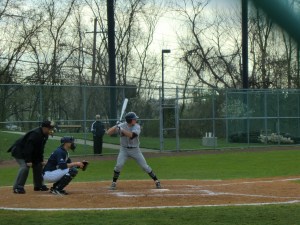
Connecticut JR SS Nick Ahmed
I’m way more excited about JR SS Nick Ahmed‘s pro prospects after a weekend watching him play. My favorite sequence came after a 1-1 bunt attempt. Ahmed was hit with a pitch, but the umpire ruled he didn’t pull the bat back as he attempted to bunt for a hit. It wasn’t until he was halfway down the first base line until the umpire actually made the call. Ahmed was visibly upset with the call and kept repeating “no chance, no chance…” as he took to himself and anybody that would listen. Fast forward to later in the at bat: 3-2 count, fastball up in the zone, home run drilled deep and gone to left. No woofing afterwards, just a quick sprint around the bases, and back to the dugout. I’m still not totally sold on his power upside, but think he’ll hit enough to be league average with the bat assuming he plays a premium defensive position. On that note…
Ahmed is more difficult to judge in the field. He doesn’t look like a traditional shortstop (listed at 6-2, 205, though he was eye-to-eye with the 6-3 Springer), but he’s got a plus arm (not a direct comparison, but he has a similar flick of the wrist style throw to Jose Reyes) and more than enough athleticism to range in both directions. If he’s not a pro shortstop, and I really think he is, then he’d be best served moving to center, so as to better utilize his athleticism and surprising first step quickness, with third base as a backup to the backup. He has a long way to go before he becomes the player he’ll eventually be (if you can follow that), but I feel pretty comfortable slapping a big league utility guy floor on him.
2011 MLB Draft – Top 30 College SS Follow List
The difference between Miller, Motter, and Panik is slight enough that ranking them was nothing more than a flip of my very rare, three-sided coin. I feel much more strongly that Miller, Motter, and Panik are in fact the top three college shortstop prospects. All three players have the defensive tools to stick at short (Miller is probably the most questionable, but count me as a believer), and, at minimum, all profile as average big league players capable of playing anywhere in the infield as a pro. After that, things are wide open. Shortstop and catcher are both really tricky positions to judge as an outsider because many pro teams have very specific types of players they target at those spots. In this case, I tried to err on the side of defense, athleticism, and likelihood of staying at the position professionally, but a few prospects with more bat than glove (e.g. Featherston and Serna) offered skill sets too intriguing to ignore. I’m hoping tomorrow’s expanded commentary on this list will shed some light on the thought process behind many of the picks, but I’m happy to answer any questions in the meantime. Until then, here’s what I’ve got…
- Clemson JR SS Brad Miller
- Coastal Carolina JR SS Taylor Motter
- St. John’s JR SS Joe Panik
- Connecticut JR SS Nick Ahmed
- Michigan SO SS Derek Dennis
- UCLA JR SS Tyler Rahmatulla
- TCU JR SS Taylor Featherston
- Oregon JR SS KC Serna
- Virginia Military Institute SR SS Sam Roberts
- Texas Tech JR SS Kelby Tomlinson
- Long Beach State JR SS Kirk Singer
- Southeast Missouri State JR SS Kenton Parmley
- Lake Erie College SS Ryan Rua
- California JR SS Marcus Semien
- Vanderbilt SO SS Sam Lind
- Troy SR SS Adam Bryant
- Army SR SS Clint Moore
- South Carolina JR SS Peter Mooney
- LSU JR SS Austin Nola
- Texas JR SS Brandon Loy
- LSU JR SS Tyler Hanover
- Tampa JR SS Taylor Wrenn
- James Madison SR SS David Herbek
- Southeastern Louisiana JR SS Justin Boudreaux
- Virginia Tech JR SS Ronnie Shaban
- Virginia Tech SR SS Tim Smalling
- Oklahoma JR SS Caleb Bushyhead
- South Florida JR SS Sam Mende
- Minnesota JR SS AJ Pettersen
- Wichita State JR SS Tyler Grimes
2011 MLB Draft – College 3B Commentary
Full list here; quick and dirty commentary mere centimeters below…
I wanted to focus on players at or beyond the halfway point on the list because, as I’m sure to repeat ad nauseum in the coming months, this year’s college third base class does not lack in star power. Crane and Woodward are two of my favorites despite the fact it is unlikely either will emerge as a viable big league starter. That can make lists like this weird; sometimes high floor prospects that profile better as future utility guys get the upper hand on boom/bust prospects that have the talent to start but not necessarily the required skills to thrive in a backup role…and sometimes they don’t. Anyway, both players are extremely well rounded – solid tools across the board for each, though Crane has more power and Woodward more speed – and both offer really interesting defensive versatility. Woodward’s speed and superior instincts should help him get pro looks all over the field (minimum: 3B, 2B, maybe CF?) while Crane’s history as a prep catcher could entice a team into trying him as a backstop professionally.
I originally had Lusson much, much higher (top ten, I think), but some last minute homework pushed him down; like Crane, he could get tried as a catcher professionally. Lusson’s college neighbor Jantzen Witte (Austin and Forth Worth are like right next door, right? Texas is one cozy state, after all…) is a draft-eligible sophomore with elite defensive tools with the chance to break out with the bat in 2011. Another Texan collegian, Vincent Mejia, is a favorite of mine from a statistical standpoint – love the way he controls the strike zone – but there were enough scouting concerns (raw power is average at best, super slow runner) that kept me from putting him any higher.
The Big 12 third base prospect list would be pretty darn impressive in its own right, with Ginther, Asche, and Juengel coming in the rankings back-to-back-to-back. That trio meets Buechele, Smith, and Lusson in the top twenty three, with Baylor’s Cal Towey ready to join the fun at twenty eight. It is very possible I was too harsh with both Ginther (loads of untapped potential due to his football background) and Asche (underrated defender with a really sound approach at the plate, despite underwhelming numbers). Juengel has the most raw power of the three, but loses out because of his below-average defense. Non-Big 12ers Threlkeld, Leeds, and Bream all have plus raw power, but, like Juengel, have serious questions about their defensive upside.
2011 Quick Draft Thoughts – Florida State Seminoles
1. This list took me a really long time to put together because Florida State has a ton of mid-round draft candidates who are really, really hard to separate. It also took me a long time to complete because I kept getting sucked in to reading the commentary at the many devoted Florida State baseball websites out there. I’ve admitted my lack of knowledge about the actual ins and outs of college baseball already – embarrassing admission, but it would take me a minute to remember what two teams played for the championship last year – but I had no idea that so many fans see the Florida State program as one settling into second-tier baseball school status. Recruiting has slipped in the past few seasons and the star quality players that once beat a path to Tallahassee are now finding homes elsewhere. I think getting a pair of potential plus bats on campus in consecutive years (Jayce Boyd last year, Eric Arce this year) is noteworthy, but on the whole there does seem to be a pretty big gap between upperclassmen and underclassmen talent. Any Florida State fans out there able to confirm or deny any of what I’ve read?
2. How did Tyler Holt fall to the tenth round last year?
3. I’ve always considered this site to be somewhat unique in the way player statistics drive the way college prospects are evaluated. I wish I was motivated and/or smart enough to make a little table, but here’s the gist of the stats/scouting Punnett square that I consider every time I think about a college player:
- Good Numbers + Good Scouting Reports = BUY
- Good Numbers + Questionable Scouting Reports = HOLD
- Lackluster Numbers + Good Scouting Reports = HOLD
- Lackluster Numbers + Questionable Scouting Reports = SELL
Players that fall under the first or last categories above are easy to sort out. Anthony Rendon is really, really good and, though I suppose there is some sport in figuring out how good “really, really good” actually is, there isn’t much debate about players in this category beyond that. Prospects in the last category don’t really exist, at least not in a world where we are being picky about using the word “prospect” to describe them; these college players are better at baseball than 99% of the general population, but aren’t talented enough to even get mentioned by anybody outside of their immediate family. Players in the middle two categories are where guys like me earn our imaginary internet cash money. Typically, I’m more willing to give the players in group two the benefit of the doubt over group three, but there is no hard and fast rule. It all comes down to the scouting reports, really; where they are coming from, whether or not they are firsthand accounts, the particular tools being praised or knocked, reasons for the players better/worse than expected output, the list could go on forever. For example, let’s say there is a player at State University that you happen to see play and fall in love with. You are convinced he has what it takes to be a pro, but his numbers don’t match up with what you’ve witnessed in front of you. That’s great! Sure, our eyes fool us plenty and sometimes we only see what we want to see, but the opposite is absolutely true as well. It’s not quite scouts vs stats, but more like projection vs production. I’m straying too far from where I want to go with Florida State now, so I’ll close with what I hope is one last succinct thought: just because Player X has hit better than Player Y as an amateur doesn’t mean that he’ll continue to do so, or even get the chance to do so, as a professional.
When making any kind of ranking or list, I almost always start by leaning towards production, but ultimately wind up working my way back towards favoring upside projection. The reason why I bothered to rehash this tired “debate” in the first place is to say that Florida State has a ton of fascinating production vs projection draft battles currently on the roster. I guess that what happens when you rely so heavily on junior college transfers like they do. SR RHP Daniel Bennett has been counted on in many big spots (10.40 K/9; 3.22 BB/9; 3.49 FIP; 36.1 IP) as the Seminoles primary non-closer relief pitcher. Versatile JR LHP Brian Busch has always gotten good results (8.65 K/9; 3.62 BB/9; 4.40 FIP; 77 IP) when called on. SR RHP Tyler Everett offers more (8.32 K/9; 4.26 BB/9; 3.37 FIP; 44.1 IP) of the same. Last year alone, that veteran trio pitched over 150 effective major college innings. Production! Then you have three new Seminoles with a combined total of zero innings pitched for Florida State: JR LHP Connor Nolan, JR RHP Adam Simmons, and JR RHP Gary Merians. To claim any of the three “untested” pitchers should rank over any arm in the more established trio would be a pretty clear win for projection over production, right?
Nolan intrigues the heck out of me. His fastball sits in the upper-80s, touching 91. His slider is a potential plus pitch. He also throws a curveball for strikes. Equipped with a three-pitch mix of his own (low-90s fastball and a good changeup/slider combo) Simmons isn’t too far behind. Merians has been on the radar since his high school days and more recently his stay in junior college. He has the plus arm strength that teams covet in potential back of the bullpen arms. Projection! Meanwhile, Bennett’s biggest strength is his deceptive sidearm delivery, Everett is a pitchability guy all the way, and Busch’s decent curve grades out as his only present above-average offspeed offering. I currently have them ranked, in order: Nolan, Bennett, Simmons, Merians, Busch, and Everett. I think all six players have a reasonable shot to be drafted this June, with Busch, second to last on my personal list despite his likely status as Florida State’s Saturday starter, probably the safest bet once you take everything into account.
Early 2011 Draft Guesses
The biggest sure thing on Florida State’s roster heading into 2011 is JR LHP Sean Gilmartin, a four-pitch Friday night starter that I can’t help but consistently underrate. Even though he has a very good mid-70s changeup and an above-average low-70s curveball, his inconsistent fastball, both in terms of velocity (sits mid- to upper-80s, peaks at 91-92) and command, worries me against professional hitters. Does a so-so fastball really undo the positives that three other potentially average or better (his low-80s slider isn’t great presently, but has the upside as a usable fourth pitch) secondary pitches bring to the table? As a guy who championed the pre-velocity spike Mike Minor, I’m inclined to say no, yet my instincts keep me away from endorsing Gilmartin as a potential top three round prospect. JR RHP Hunter Scantling’s quick report from last year holds up pretty well today: Scantling is huge (6-8, 270 pounds) and athletic, but his stuff still doesn’t quite match his imposing frame. That could change in a hurry, but for now he’s still sitting in the same upper-80s with iffy breaking stuff that he was at back in high school. It’ll be interesting to see if he’ll get more consistent innings as a starter or if Florida State opts to keep him coming out of the bullpen in 2011.Since then, his fastball has upped a bit in velocity (peaking 91) and his slider has markedly improved. The lack of an effective third pitch ought to keep him in the bullpen for now. Those are the only two locks to get drafted on the pitching side, in my view. The six pitchers mentioned above (Nolan, Bennett, Simmons, Busch, and Everett) all will be in the draft mix, but a lot will come down to their usage this spring. Believing that, I’d say Busch is the most likely of the sextet to go after Gilmartin and Scantling, but don’t rule out a name like Merians or Nolan jumping all the way up and becoming the second or third Seminole pitcher drafted.
The hitters are a lot more difficult to judge. There could be as many as ten Florida State position players selected in this year’s draft, a crazy number for any college team but even crazier for a good but not great college team. SR OF/RHP Mike McGee is a lock to get redrafted, but it’s not yet known if teams will ultimately prefer him in the outfield (like I do) or on the mound (like in last year’s draft). Either way, he’s one of the country’s best college players and a lot of fun to watch play. JR 2B Sherman Johnson is a huge personal favorite because of his outstanding plate discipline and above-average defensive tools. A second Seminole infielder, SR 3B Stuart Tapley, could hear his name crackled over the speaker phone; he’s got the skill set that could work as a four-corners bench bat as a professional. Florida State’s senior catchers – Parker Brunelle and Rafael Lopez – have both played below expectations in Tallahassee, but each player has shown flashes of their high level prep ability at times. Instinctually, I prefer Brunelle to Lopez, but both guys have strong points (Brunelle: athleticism and defense; Lopez: quick bat and strong arm) in their favor. In addition to McGee, the Seminoles return two additional outfielders with a chance to get taken in the draft. JR OF Taiwan Easterling reportedly scared off a team interested in drafting him in the fourth last year because of his extravagant bonus demands. If that story is true, one can only imagine what kind of attention the super toolsy former football player could draw with a big spring on the diamond. As is, the plus runner is almost a complete tools gamble. On the opposite end of the spectrum we have JR OF James Ramsey. Ramsey’s only above-average tool is his bat, but his prowess at the plate (.307/.453/.560; 51 BB/41 K; 218 AB) isn’t so great that teams will see much value in this limited to leftfield prospect. I suppose the direct comparison of Easterling and Ramsey is yet another example of projection over production, huh? I’ve left off, for now, talented junior college transfer Taed Moses and JR UTIL Jack Posey. Moses has gotten lots of positive buzz since enrolling at FSU; unfortunately, that’s the limit on what I know about him to this point. Posey is a super duper darkhorse prospect who might get overlooked by some who see him simply as Buster’s younger brother. Posey could get drafted late in 2011 by, say, the defending World Series Champions for that reason alone, but he’s actually a skilled ballplayer in his own right who hasn’t had the chance to show his abilities because of injury.
Updated 2010 MLB Draft Signings: Deadline Day Fallout
Just a quick late summer signing update now that the big day has passed. Things will begin to get more consistent in terms of posting over the next few weeks as I finish sorting through all of the notes, observations, and 2011 draft rankings that I’ve managed to take in throughout the past two mostly computer/internet deprived months. Many thanks to those who have continued to check in on a daily basis…your patience will be rewarded in the end, I promise.
1.1 Washington – OF Bryce Harper ($9.9M, $6.25M guaranteed)
1.2 Pittsburgh – RHP Jameson Taillon ($6.5M)
1.3 Baltimore – SS Manny Machado ($5.25M)
1.4 Kansas City – SS Christian Colon ($2.75M)
1.5 Cleveland – LHP Drew Pomeranz ($2.65M)
1.6 Arizona – RHP Barret Loux
1.7 New York Mets – RHP Matt Harvey ($2.5M)
1.8 Houston – SS Delino DeShields Jr. ($2.15M)
1.9 San Diego – RHP Karsten Whitson
1.10 Oakland – OF Michael Choice ($2M)
1.11 Toronto – RHP Deck McGuire ($2M)
1.12 Cincinnati – C Yasmani Grandal ($2.99M)
1.13 Chicago White Sox – LHP Chris Sale ($1.656M)
1.14 Milwaukee – RHP Dylan Covey
1.15 Texas – OF Jake Skole ($1.557M)
1.16 Chicago Cubs – RHP Hayden Simpson ($1.06M)
1.17 Tampa Bay – OF Josh Sale ($1.62M)
1.18 Los Angeles Angels – 3B Kaleb Cowart ($2.3M)
1.19 Houston – RHP Michael Foltynewicz ($1.305M)
1.20 Boston – 3B Kolbrin Vitek ($1.359M)
1.21 Minnesota – RHP Alex Wimmers ($1.332M)
1.22 Texas – C Kellin Deglan ($1M)
1.23 Florida – 1B Christian Yelich ($1.7M)
1.24 San Francisco – OF Gary Brown ($1.45M)
1.25 St Louis – 3B Zack Cox ($2M)
1.26 Colorado – OF Kyle Parker ($1.4M)
1.27 Philadelphia – LHP Jesse Biddle ($1.16M)
1.28 Los Angeles Dodgers – RHP Zach Lee ($5.25M)
1.29 Los Angeles Angels – RHP Cam Bedrosian ($1.116M)
1.30 Los Angeles Angels – OF Chevez Clarke ($1.089M)
1.31 Tampa Bay – C Justin O’Conner ($1.025M)
1.32 New York Yankees – SS Cito Culver ($954K)
——-
1s.33 Houston – C Michael Kvasnicka ($936K)
1s.34 Toronto – RHP Aaron Sanchez ($775K)
1s.35 Atlanta – 2B Matthew Lipka ($800K)
1s.36 Boston – OF Bryce Brentz ($889K)
1s.37 Los Angeles Angels – OF Taylor Lindsey ($873K)
1s.38 Toronto – RHP Noah Syndergaard ($600K)
1s.39 Boston – RHP Anthony Ranaudo ($2.65M)
1s.40 Los Angeles Angels – OF Ryan Bolden ($830K)
1s.41 Toronto – RHP Asher Wojciechowski ($815K)
1s.42 Tampa Bay – OF Drew Vettleson ($845K)
1s.43 Seattle – RHP Taijuan Walker ($800K)
1s.44 Detroit – 3B Nick Castellanos ($3.45M)
1s.45 Texas – RHP Luke Jackson ($1.557M)
1s.46 St Louis – RHP Seth Blair ($751,500)
1s.47 Colorado – RHP Peter Tago ($982,500)
1s.48 Detroit – RHP Chance Ruffin ($1.15M)
1s.49 Texas – 3B Mike Olt ($717K)
1s.50 St Louis – RHP Tyrell Jenkins ($1.3M)
 The Baseball Draft Report