
College Baseball Opening Night 2010 – Friday Starters
“Big” Name 2010s
Georgia Tech JR RHSP Deck McGuire – 7 IP 5 H 0 ER 0 BB 10 K
Florida Gulf Coast JR LHSP Chris Sale – 2 IP 0 H 0 ER 0 BB 2 K
LSU JR RHSP Anthony Ranaudo – 5 IP 1 H 0 ER 2 BB 6 K
North Carolina JR RHSP Matt Harvey – 5.2 IP 5 H 3 ER 2 BB 3 K
Ohio State JR RHSP Alex Wimmers – 6 IP 1 H 0 ER 1 BB 9 K
Georgia Tech JR RHRP Kevin Jacob – 1 IP 0 H 0 ER 0 BB 3 K
Mississippi JR LHSP Drew Pomeranz – 4 IP 4 H 1 ER 2 BB 7 K
Georgia JR RHSP Justin Grimm – 5 IP 4 H 2 ER 3 BB 6 K
Tennessee JR LHSP Bryan Morgado – 5 IP 4 H 3 ER 2 BB 6 K
Baylor JR RHSP Shawn Tolleson – 6 IP 5 H 3 ER 3 BB 11 K
Not really a bad line out of the entire Opening Night starter bunch, I’d say. Pomeranz’s command was shaky, Ranaudo’s stuff wasn’t as sharp as it could have been, and Harvey was all over the place with his control, but, all in all, a darn fine night for college baseball’s aces.
*** Sale only pitched two innings because he’s being saved for this upcoming Wednesday’s huge game at Miami. He was incredibly sharp in this one, hitting the mid-90s with regularity. Sale vs Miami is shaping up to be one of the most highly anticipated early season mid-week games in recent memory.
*** Baseball America had Harvey sitting 92-94, touching 96. Lack of control or not, that kind of velocity this early in the season is an excellent sign for Harvey, a pitcher with a history of inconsistent radar gun readings.
*** Best publicly available groundout ratios of the night belong to Harvey (10/1 ground out to air out ratio) and Wimmers (7/1). Use that information anyway you see fit.
“Lesser” Name 2010s
San Diego SR RHSP AJ Griffin – 6 IP 6 H 4 ER 0 BB 8 K
East Carolina JR RHSP Seth Maness – 5.2 IP 6 H 4 ER 1 BB 4 K
Notre Dame JR RHSP Cole Johnson – 5.1 IP 5 H 2 ER 0 BB 2 K
Virginia JR RHRP Tyler Wilson – 3 IP 2 H 0 ER 2 BB 4 K
Clemson JR LHSP Casey Harman – 5 IP 1 H 0 ER 1 BB 3 K
Louisville JR RHSP Thomas Royse – 5 IP 2 H 0 ER 0 BB 5 K
Arkansas SR RHSP Michael Bolsinger 5 IP 4 H 1 ER 1 BB 6 K
Florida JR RHSP Tommy Toledo – 3.1 IP 3 H 0 ER 2 BB 4 K (WP, 2 HBP)
*** Griffin had a bizarre 1/9 ground out to air out ratio. I’m almost positive Griffin was a significant groundball pitcher last year, so it’ll be interesting to see if this one start was an aberration or the start of a larger trend.
*** Johnson has a solid reputation and good stuff, but he still hasn’t been able to harness his natural talents to dominate at the college level. The solid line he put up on Friday is indicative of his college performance thus far. Steady results, uninspiring strikeout numbers.
*** Wilson is coming out of the bullpen because Virginia has a pitching staff that rivals that of some minor league teams, but his stuff is good enough to start professionally. He’s a top ten round player.
“Big” Name 2011s
Vanderbilt SO RHSP Sonny Gray 8 IP 3 H 0 ER 1 BB 8 K
UCLA SO RHSP Gerrit Cole – 6 IP 1 H 2 ER 0 BB 9 K
Texas SO RHSP Taylor Jungmann – 7 IP 7 H 1 ER 1 BB 8 K
Virginia SO LHSP Danny Hultzen – 6 IP 4 H 2 ER 3 BB 4 K
Kentucky SO RHSP Alex Meyer – 5 IP 4 H 2 ER 3 BB 8 K
Totals: 32 IP 19 H 7 ER 8 BB 37 K
Those five 2011 arms are something special. I’ve been toying with a 2011 Mock Draft for a couple of days and every time I do a rough sketch of the first ten to fifteen picks or so, all of the names above appear…but each time I do it, I come up with a new order. I think I like them in the order I have them above, but that’ll change, oh, about ten thousand times between now and next June.
The GO/AO numbers for the quintet: Jungmann – 9/1, Cole – 7/2, Hultzen – 9/3, Gray – 10/4, and Meyer – 2/4.
“Lesser” Name 2011s
Baylor SO RHSP Logan Verrett – 7 IP 9 H 6 ER 1 BB 5 K
Rice SO LHSP Taylor Wall – 3 IP 4 H 3 ER 2 BB 3 K
Verrett and Wall both struggled some in their debuts, but they are still both 2011s well keeping a close on eye, Verrett especially. He’s a pitcher that would be getting a lot more attention (talked about as a serious top of the first half round candidate) if he wasn’t part of such a loaded class. Timing is everything, I suppose.
Technical Difficulties
Apologies to anybody who tried to check in yesterday while WordPress was down. I’m now a little bit behind schedule, so the College Team Profile on Texas and the Draft Notebook will get pushed back. To make amends, a quick preview of College Baseball’s Opening Night. That’s right, College Baseball’s Opening Night! You know it’s a big deal with it gets capitalized…
- Matchups I’m Watching – Virginia @ East Carolina, Oregon @ Cal State Fullerton, Rice @ Stanford, Missouri State @ Georgia Tech, South Florida @ Florida, Rutgers @ Miami, Ball State @ Arkansas, West Virginia @ Coastal Carolina, Oklahoma @ San Diego State, Georgia @ Baylor, Boston College @ Tulane, Kentucky @ Virginia Tech, Duke @ Baylor, Gonzaga @ Missouri, Pepperdine @ Long Beach State
- Top 25 – I’m not nearly enough of an expert on college baseball to make any kind of meaningful top 25 ranking, but I am full of myself enough to make a top 25 list of most interesting to watch teams from a draft prospect standpoint. That’s what I’ll be working on this weekend, so expect that to be rolled out next week. I’m still tinkering with the order, but right now a few of the teams in the running for the last few spots include some old standbys (Arizona State, Miami), some programs on the rise (Florida, Oregon), and some programs with talent that will surprise (Gonzaga, Connecticut, Central Florida)
- Pitchers – One of my pet projects that I’ve enjoyed over the past couple of seasons has been combing through college box scores to see if there is any worthwhile data to be found. Often, there is not. You’d think that would stop me from doing it every year, but here we are on the morning of another college season and I’m excited to do it all over again. Anyway, to finally get to the point, if there are any pitchers outside of the big names (Ranaudo, McGuire, Sale, Hahn, you know the guys) that you’d be interested in knowing more about from a statistical standpoint, let me know.
LSU Tigers 2010 Draft-Eligible Prospects
I had started this a few months ago, but now all of the 2010 draft-eligible Tigers (unless I’m missing anybody, of course) are complete. Check it out. For those not to be bothered clicking a link, some quick thoughts about LSU’s 2010 draft class below the link…
LSU Tigers 2010 Draft-Eligible Prospects
Ranaudo is obviously the big prize and a heck of a prospect despite some of the hemming and hawing I’ve done about his place among the very top talents of the 2010 draft. I think he’s suffering from a little bit of overanalysis, a fate that all too often befalls the cream of the draft crop. I know I’m guilty of some of this microanalysis; high profile high school stars turned college prospects like Ranaudo wind up being in the scouting spotlight for four years, minimum. Call it reverse shiny new toy syndrome. Rusty old toy syndrome? No, that’s too negative sounding. Overlooked old prospect syndrome? I like it. That way, when you miss on a good college player because you’ve spent too much time focusing on his flaws and not appreciating all the good things he brings to the table, you can just chalk it up to OOPS.
It’s a shame that Jones is going to the NFL, but it’s hard to fault a guy with a rock solid second round grade and clear impact potential on the gridiron. I’d do cartwheels if he fell to the Eagles in the third, by the way. I mentioned in the writeup that I think Landry better prepare himself for a season of Jared Mitchell comparisons, but I now wonder if his stock will rise up that high in the eyes of the majority. Players with a plus raw power/plus athleticism combination are right in my wheelhouse, so I’m willing to stick with Landry for better or worse this spring.
Gibbs’ status as a prospect has vacillated between underrated to overrated back to underrated in my head all over the past two months. His strengths play into a lot of what I value highly from a catching prospect (strong defense, experience catching high profile arms, good plate discipline), but one of his biggest perceived (by me) weaknesses (in-game power) may have been overstated (again, by me). Long story short, I like Gibbs now more than ever, but still think he’ll end up being a steal in rounds 2-3 rather than a reach in round 1 or the supplemental first.
I’m very optimistic about Dishon, less so about Bradshaw, and pretty much in line with the consensus view on Ross. The idea that at least one of Dean, Gaudet, or Koeneman can make it as a big league bench bat someday appeals to me, as does the thought of Ben Alsup usurping the role of “next Lou Coleman” right out from Bradshaw’s nose. Lastly, I’m excited to see Blake Dean, the best of the aforementioned potential big league bench bats, give first base a whirl this season. All the reports from Baton Rogue are encouraging enough that I’d like to see the big guy at work.
2010 MLB Draft College Conference Position Breakdowns – Big West Outfielders
Pick a conference, pick a position, pick a draft year, and go. That’s basically the formula for the 2010 MLB Draft College Conference Position Breakdowns. Nothing fancy, just a quick snapshot of where the college talent is and a quicker way of disseminating 2010 draft-eligible player information to the masses. Three quick facts worth remembering as you read – 1) All rankings are preliminary and subject to change, 2) The current rankings are the top X amount of guys, but players at the back end will be added intermittenly until all players are ranked, and 3) I can’t really think of a third thing to remember, but they say you’re always supposed to list things in three, so here you go…
As always, whether you agree, disagree, or think I’m a dope who should leave this sort of stuff to the experts (thanks, Mom)…let’s hear it via email (you can use either robozga at gmail dot com or thebaseballdraftreport at gmail dot com) or in the comments section.

JR OF Gary Brown (2010 – Cal State Fullerton) reminds me of three established big leaguers, all for different reasons. He resembles Shane Victorino for his defensive range in center, plus speed, and intriguing power/speed combo. I see some Chone Figgins (pre-2009 breakout, mostly) in the way he’ll be an incredibly valuable player due to defensive versatility despite having only an average arm. At his very best, however, I can see some young Johnny Damon in his game, especially if his power potential comes around the way I expect it will. Brown has legit plus speed, untapped raw power, and a good but not great throwing arm. He’s a joy to watch on the bases and his defense is excellent in centerfield, although some think he has the natural fielding actions to make a move to second base a possibility. He is expected to be the veteran anchor in a Fullerton outfield where he’ll be flanked by freshman Anthony Hutting and two-way sophomore Tyler Pill, and backed up by Casey Watkins and Ivory Thomas, a pair of promising freshmen. Continued development could push him up into the late first round, but his most likely draft ceiling is late supplemental first/early second. I’m not saying he is a better baseball player than teammate Christian Colon, but I think the gap is much closer than the majority of people think. In fact, I think Brown’s superior tools actually make him a better bet to be a well above-average player than Colon.
JR OF Ridge Carpenter (2010 – Cal State Northridge) is a big personal favorite. He has a five-tool ceiling, with speed and potential plus defense in center being his calling cards. His good approach, in addition to the aforementioned speed, make him a potential leadoff hitter, but his game is much more than the slash and dash style so many other college leadoff hitters employ. He has enough current pop — his .679 slugging percentage trumped his next closest junior college teammate by a whopping 185 points, how’s that for context? – and a big league frame (6-2, 190) that make me think his easy swing will continue to generate power as he gets more reps against top level pitching. He has what it takes to be a top five round player, I think.
JR OF Mark Haddow (2010 – UC Santa Barbara) offers up plus power potential, but also strikeouts about as much as you’d expected from a raw college player with plus power potential. Luckily, power isn’t his only claim to fame. Haddow can also rely on his solid athleticism, better than you’d think speed, and slightly above-average big league right field arm. He has the raw tools to dramatically rise up draft boards, but first needs to take a more disciplined approach at the plate to show big league clubs he’d cut it as something more than a backup outfielder professionally. If he begins even to hint at improvement in those deficient areas in his game, I’d bet good money some team out there will draft him with the idea that he’ll be a big league starter in right someday.
JR OF Nick Longmire (2010 – Pacific) is an above-average athlete who has demonstrated good range in centerfield. If you’ve read enough of these blurbs, you’d know that the combination of athleticism and good defense in center can give a prospect a huge head start on the competition. Longmire takes his head start and runs with it. He has above-average power potential, good bat speed, and success with wood bats from summer league play. He profiles best as a fourth outfielder capable of doing a little bit of everything pretty well. I’ve heard a Jay Payton comp thrown his way and, despite Payton’s far more decorated collegiate career, I don’t think I hate it from a tools standpoint.
SR OF Luke Yoder (2010 – Cal Poly) was a gymnast for 13 years. Now that we’ve got that bit out of the way, we can talk about Yoder the ballplayer. His strong points include a good power/patience blend, heady base running, and, yes, impressive athleticism due in no small part to all those years on the balance beam. The case against his prospectdom include his age (he’ll turn 23 one month after the draft) and his sometimes shaky outfield defense. As a mid- to late-round senior sign, he’d make sense for a team looking for a potentially quick moving backup outfielder/AAAA bench bat depth piece. It’s also important to note that Yoder has been drafted twice already
JR OF Brett Morgan (2010 – UC Davis) joins the Aggies after two seasons at San Joaquin Delta College, where he’ll go from being coached by one brother (Reed Peters) to another (Rex Peters). Now that we’ve got our fun fact quota for the day out of the way, let’s talk about this talented juco transfer. Morgan is another player that fits the classic leadoff hitter archetype – plus speed, good approach at the plate, solid hit tool, and good defense up the middle. I’ve heard really good things about him, but we’re obviously in wait-and-see mode until he actually gets some big time college at bats.
SR OF Michael Hur (2010 – UC Riverside) has had scouts eagerly waiting on his power potential for years now, finally breaking through last season. However, questions still linger about whether it was the first step toward a continued power surge or a fluky one year spike. There have been enough concerns from those smarter than I that Hur doesn’t have the physical strength to ever be much more than the occasional gap power hitter professionally. I suppose to take that viewpoint would be to make the claim that last season was a power outlier. On top of that, Hur doesn’t really have any standout tools to speak of. He has average range and a decent throwing arm. He’ll be a late round senior sign.
JR OF Todd Eskelin (2010 – Cal State Northridge) only has a limited of college at bats to his credit, but it hasn’t stopped him from producing when called upon. Real above-average power potential is there, but it’ll be interesting to see if his swing for the fences approach works once pitchers get more of a read on his strengths and weaknesses. Without much else to say, how about checking out a funny typo from the “Personal” section of the Cal State Northridge website? There it informs us that Eskelin’s “favorites include television show ‘Smallville’ and eggs.” I had a roommate in college who Netflixed every episode of Smallville (pretty sure he had a crush on Tom Welling), but I never got into it; Eggs on the other hand, now that’s quality TV.
SR OF TJ Mittelstaedt (2010 – Long Beach State) might be able to play second base professionally, a potential boon to his erstwhile lackluster draft standing. He has a strong arm, good present power, and good plate discipline, but the real key in differentiating himself from so many similar college outfielders will be whether or not a team wants to gamble on him as an infielder.
JR OF Ryan Fisher (2010 – UC Irvine) has a good frame (6-3, 210), steady college production, good power, and a nice swing. He’s yet another non-starter in the corner outfield, so his value is inherently limited. However, all of that changes quickly if he can play third base or second base as some think. Fisher as a left fielder…no thanks. Fisher as a second baseman…I’m intrigued.
SR OF Cory Olson (2010 – UC Irvine) is a good defender, shows solid leadoff hitter skills (great approach, decent speed) and enough pop to keep pitchers honest. His tools cup doesn’t runneth over, but he is a well-rounded player that offers enough in the way of secondary skills to make him a worthwhile prospect to watch. I also happen to like this quote: “It sounds simple, but I try to only swing at strikes and pitches in the zone of my swing,” said Olson. “If I get a hit, I get a hit, and if I get out, I get out. I don’t put pressure on myself. I see through the ball and let the bat do the work.” Any player more focused on process than results is alright in my book.
SR OF Adam Melker (2010 – Cal Poly) has shown decent gap power, a good approach at the plate, and versatility in the field. He’s a step behind fellow Big West senior outfielders Michael Hur (better tools) and TJ Mittelstaedt (might be able to play second), but still in the running for a late round senior sign draft selection.
JR OF DJ Gentile (2010 – Cal Poly) gets the lightning round treatment. Shows some promise with the bat! Once a 43rd round pick of Cleveland! Not a good defender!
SR OF Sean Madigan (2010 – UC Irvine) returns to action this spring after missing almost all of 2009 with an injury. He put up decent numbers his first two seasons, flashing the occasional power and decent all-around tools. He’s a long shot to get drafted, but it’ll come down to his senior year production more than anything.
JR OF Christian Ramirez (2010 – UC Irvine) has some pop, some patience, some speed, and some pretty nothing special pretty uninspiring defensive scouting reports. I bet we’ll have a similar conversation about Ramirez this time next year.
SR OF Dillon Bell (2010 – UC Irvine) has one of the prettiest lefthanded swings in all of college baseball. Beautiful swing, decent production…something doesn’t quite add up there. His value will be tied up almost entirely in his bat, so the production needs to take a jump from decent to fantastic if he wants to get drafted late.
JR OF Derek Eligio (2010 – UC Santa Barbara) flashed some pop, above-average speed, and impressive range in center while at Santa Ana College, above-average speed. Scouts and coaches have both said he improved markedly from his freshman to his sophomore season, so there is some hope he’ll see another jump in offensive output in 2010.
JR OF Jono Grayson (2010 – Cal Poly) gets a mention here as a potential late round flier. The accomplished slotback, wide receiver, and return man will attempt to crack the Cal Poly outfield in 2010. He has a good high school track record, but is currently slated to start off as a backup. His plus athleticism makes him a name worth storing away in the deepest darkest recesses in your mind.
SR OF Ryan Tregoning (2010 – UC Santa Barbara) is a big guy (6-3, 200) who had an accomplished junior college career, coming to Santa Barbara with a strong reputation as a hitter. He was more aggressive than expected with Santa Barbara in 2009, getting away from his patient juco ways. If he can get himself more regular playing time in 2010, it’ll be interesting to see if he goes back to waiting on something to drive rather than hacking away at the first ball within eight inches off the plate. Even if he reverts back to the patient, powerful junior college version of himself questions will remain about what else he offers besides a bat.
Updated Top Fifty 2010 MLB Prospect Big Board
1. Bryce Harper – C – College of Southern Nevada
2. Jameson Taillon – RHSP – The Woodlands HS (TX)
3. AJ Cole – RHSP – Oviedo HS (FL)
It would take something pretty funny to happen this spring to knock either Harper or Taillon off of their comfortable 1-2 perch in my rankings. Harper’s numbers (.362/.426/.681 at CSN through 47 at bats) don’t even begin to tell the whole story of how damn impressive he has looked so far. I mean, come on, have you seen the triple yet? Kid can move a little bit for a big guy, right? All of the backlash against Harper so far has been founded entirely on one of two premises – 1) no 17 year-old should be getting this kind of ridiculous hype, and/or 2) in a given year there are close to 1500 prospects drafted, so why is that the only player I ever read about on the websites for ESPN/SI/MAJOR SPORTS MEDIA GIANT OF YOUR CHOOSING is this Bryce Harper kid? Overexposed is not a synonym for overrated. That’ll be my non-stop mantra until June, especially so long as Harper throws up a .350/.425/.600+ line, so better get used to it now.
Hey, remember the last time we had pre-draft scouting reports on a high school pitcher with the last name Cole? Plus fastball, plus potential breaking ball, average change, projectable frame? All of that applies to AJ Cole as well, I think. Harper and Taillon get the majority of the attention at the top of the draft (and rightfully so), but Cole’s upside makes him the third best prospect in the draft by a good measure.
4. Nick Castellanos – 3B – Archbishop McCarthy HS (FL)
5. Austin Wilson – OF – Harvard Westlake HS (CA)
I’m unabashedly in love with the potential Castellanos has shown at the plate. With the way he has dropped down the experts’ boards this winter, I’m starting to feel all alone in my adoration. Wouldn’t be the first time. Reservations about his defense keep me from fawning incessantly about his pro potential — obviously his stock takes a dip if he is a 1B and not a 3B, a judgment that I’m not really qualified to make at this point in time — but I’m otherwise blinded by the beauty of his swing. I feel similarly about Wilson’s five-tool upside. As I said in the January Mock, Wilson could be this year’s Donovan Tate or Wilson could be this year’s Brian Goodwin. Too early to tell at this point, though my aggressive ranking tips my hand a bit.
6. Deck McGuire – RHSP – Georgia Tech
7. Brandon Workman – RHSP – Texas
8. James Paxton – LHSP – Kentucky?
Three college arms (or “college,” in Paxton’s case) above Anthony Ranaudo? What’s up with that? McGuire has the best three-pitch mix of any 2010 pitcher, Workman has an elite fastball and curve combination with room to grow, and Paxton possesses the best lefthanded stuff in the class.
9. Zack Cox – 3B – Arkansas
10. Chris Sale – LHSP – Florida Gulf Coast
11. Kyle Blair – RHSP – San Diego
Sale and Blair ranked over Ranaudo is a little harder to understand than McGuire, Workman, and Paxton, but let me try to explain the rationale. Sale’s another pitcher with a quality three-pitch mix and plus fastball command. Blair is similar to Workman in that both pitchers have already flashed special stuff, but still have huge amounts of untapped potential. As for Ranaudo, well, here is a quick breakdown on his stuff, based on what I’ve seen: fastball – good velocity, very good command, too straight at times; changeup – good velocity separation, good sink, underutilized; curveball – very good pitch when it is good, very hittable pitch when it isn’t, inconsistent velocity, shape, and command, but definite plus potential. Here’s something on Ranaudo I’ve been meaning to publish in the College Team Profile: LSU. It still needs some editing, but here goes nothing:
Everybody saw him when he was at his relative worst, completely worn down and exhibiting diminished velocity during the College World Series. His heater was sitting only in the upper-80s and the sharpness on his 12-6 curveball, the secondary offering generally considered his finest, was noticeably absent. I caught Ranaudo for the first time during the middle of conference play last season and came away impressed. His fastball was 91-93 MPH consistently, hitting as 94 at its peak. Many outlets regard his curve as a superior pitch to his change, but Ranaudo’s 82-84 MPH sinking changeup impressed as much as his high-70s curve, a pitch that flattened out too often and stayed consistently up in the zone.
In fact, the one thing I’d love to see first addressed with Ranaudo as a professional is his tendency to leave balls up. Darn near everything he threw, especially his fastballs and curves, were left up. Ranaudo is 6-7, 220 pounds and should be able to us e his frame to his advantage when attempting to generate a more favorable downward plane on his pitches. In fact, don’t be shocked to hear many of the experts assume that the big righty gets that great downward movement and the ensuing groundball outs that come with it. It’s a fine theory and one that will be correct more often than not, but in this instance it’s wrong. My quick 2009 GO/AO ratio using the publicly available data for Ranaudo is 0.71. That number would be best compared against all pitchers that make up the college ball landscape, but, alas, we’re stuck making an assumption of our own in lieu of spending far too much time and energy ginning up all that data. The assumption here is that 0.71, a number that more or less says Ranaudo induced 100 air outs for every 71 groundball out, makes the big LSU righty a pretty clear flyball pitcher.
All of the “non-skill” stuff with Ranaudo grades out as excellent. He gets high praise for his competitive makeup, he is an above-average athlete who prides himself on staying in tremendous baseball shape, and the LSU coaching staff has widely acknowledged his receptiveness to learning as much as possible about what it takes to be a big game pitcher. He had a healthy sophomore year, but it is still possible questions linger in the minds of clubs worried about the two missed months his freshman year due to tendinitis in his right elbow. Another season of healthy, dominant baseball in the SEC should put a lot of the haters’ (like me) doubts to bed.
It isn’t that I don’t like Ranaudo as a prospect, it’s just that I like a few of the other prospects in his class a little bit better.
12. Anthony Ranaudo – RHSP – LSU
13. Jesse Hahn – RHSP – Virginia Tech
14. Drew Pomeranz – LHSP – Mississippi
Hahn is only this high up based on the assumption/belief that he’ll continue to pitch well as a starter this spring. His performance as a starter on the Cape probably shouldn’t overshadow two iffy seasons out of the bullpen collegiately, but I’m a sucker for big fastballs, projectable frames, and high-K guys. Pomeranz isn’t particularly similar to Andy Oliver from last year, but I could see the lefthander having a draft day drop reminiscent to Oliver’s fall to the second round in 2009.
15. Cam Bedrosian – RHSP – East Coweta HS (GA)
16. Bryce Brentz – RF – Middle Tennessee State
17. Dylan Covey – RHSP – Maranatha HS (CA)
18. Kaleb Cowart – RHSP/3B – Cook County HS (GA)
19. Stetson Allie – RHSP – St. Edward HS (OH)
20. Karsten Whitson – RHSP – Chipley HS (FL)
The Top 20 is rounded out by a grouping that includes five of the best young righthanded amateur arms in the country. I love Bedrosian, ranking him higher than just about anybody and happy to have him as my third highest ranked prep righty after Taillon and Cole. His power stuff and potential for a decent change make me a believer. As for the other pitchers, here’s something grom my look at the Top 10 High School Righthanded Pitching Prospects back in December. Not a whole lot has changed my mind about them one way or another at this point, except for maybe beginning to wonder if Cowart’s future is not on the mound. I still think he has more upside as a pitcher than as a third baseman, but that’ll be worked out in the spring.
Covey, Cowart, Allie, and Whitson form a pretty logical quartet of high school arms. All four are big fellas (Covey is the shrimp of the group at a round, but athletic 6-2, 200 pounds), with big fastballs (all four have hit at least 95 on the gun at one point or another), and big questions that could define them come draft day. Covey, my current favorite of the four, has the easiest questions (inconsistent mechanics and command, plus a less than idea young pitcher body type) to answer going forward, especially when you consider how far he has come to answer one of those questions (his command has looked sharper every time I’ve seen him) already. Whitson, currently ranked fourth in this little subgroup, has a potential dynamite 1-2 punch with his fastball (sitting 91-93, hitting 95-96) and slider (works best in the mid-80s, but has shown up as a less effective slurvy high-70s CB at times), but I think his mechanics will need something pretty close to a complete overhaul as a professional. Cowart has grown on me just as much as a hitter than as a pitcher lately, but his potential on the mound is still vast. Cowart is as likely as anybody on the list to shoot up to the top of the subgroup and could, I stress could, actually challenge the more established top two if everything breaks right. Everything Cowart throws moves downward, from his sharp high-80s slider to his low-80s split-fingered changeup. Allie has the most electric arm of the foursome, but has been plagued by up and down command and control throughout his career on the high school showcase circuit. He also doesn’t have quite the secondary stuff as some of his contemporaries.
21. Matt Harvey – RHSP – North Carolina
I was stubborn with both Sean Black and Robert Stock last year, keeping their rankings higher than most had them because I couldn’t let go of the upside they had once shown as high schoolers. If I swing and miss with my equally stubborn Harvey ranking this year, I think it’ll be time to rethink my stance on prep stars turned disappointing college players. For now, however, I’ll remain blockheaded enough to keep Harvey up near the Top 20. I need college prospects to show three average or better big league pitches to convince me that they can start professionally. Harvey has shown, at various points in his development, that he has an above-average to plus fastball, an above-average to plus curve, and an average to above-average sinking changeup. Of course, he has also shown below-average fastball velocity, inconsistent curves, and a babied change. I said this during the January Mock and it holds up pretty well now – “If the right scouting director sees him on the right day, he’ll go high. If not, he’ll be lumped in with the rest of the college guys who project as relievers hoping to get a spot in the first five rounds.” I’ve been lucky to personally see him throw on the right days, but I’m not about to turn a blind eye toward his inconsistency.
22. Tony Wolters – SS – Rancho Buena Vista HS (CA)
23. Stefan Sabol – C – Aliso Niguel HS (CA)
Two prep players currently at the top of their respective position lists. Many downgrade the pair because they don’t think either will last in their spots defensively, but not me.
24. Sammy Solis – LHSP – San Diego
25. Alex Wimmers – RHSP – Ohio State
The strength of the draft really comes through when you see players of this quality falling this far down the list. It’s not hard to envision a slew of high school players performing well enough this spring to push some of the quality college talent out of the back of the first round. What a coup that would be for the teams drafting in the supplemental first and/or early second round.
26. LeVon Washington – CF – Chipola College
27. Christian Colon – SS – Cal State Fullerton
Wolters and Sabol are a pair that I have higher than most; Washington and Colon represent the opposite end of that spectrum. I love Washington’s tools (plus speed, plus arm, plus range in CF), but still question the long-term prognosis with the stick. Colon is more good than great across the board, and I’d prefer a higher upside prospect if I was drafting high in the first round. Again, I should point out that I’m probably underrating how valuable a potentially league average (or even better, according to those higher on his tools than I) shortstop really is.
28. Justin O’Conner – SS/C – Cowan HS (IN)
29. Manny Machado – SS – Brito Private HS (FL)
Of all the players here in the bottom half of the Top 30, O’Conner has the best chance of any prospect to rise up into the top half. Even now I’m wondering why it is I had Wolters above him in the first place. I’m really late to taking a liking to Machado because, quite honestly, I view him as being pretty close to a high school version of Colon. High probability of sticking at short, but no ridiculous tools that make you stand up and take notice. Steady, not spectacular. I’m beginning to come around and see the value in steady, but I’ll never totally stop lusting after spectacular.
30. Jarrett Parker – CF – Virginia
31. Rob Brantly – C – UC Riverside
Two college guys with legit production against high-level competition, in addition to impressive toolsets. Toolsy + Productive = First Round Grade. I also like my comps on each player, but that shouldn’t come as a surprise coming from an egomaniac such as myself. Jarrett Parker = Lastings Milledge. Rob Brantly = Derek Norris. Genius!
32. AJ Vanegas – RHSP – Redwood Christian HS (CA)
33. DeAndre Smelter – RHSP – Tatnall Square Academy (GA)
34. Brian Ragira – OF – James Martin HS (TX)
Ragira is a volatile prospect with loads of upside who should have enough defensive value to remain worthwhile even if the bat doesn’t develop as expected. He also has the best full name in the entire draft – Brian Aosa Mogaka Ragira. Vanegas can throw four pitches for strikes, a rare and beautiful thing for a high schooler. The Smelter = Kevin Brown comp is beginning to gain steam, based largely on Smelter’s outstanding power arsenal highlighted by Brown’s signature pitch, a deadly 82-84 MPH splitter.
35. Justin Grimm – RHSP – Georgia
36. Sam Dyson – RHSP – South Carolina
37. Gary Brown – CF – Cal State Fullerton
I’m almost done a brief writeup on Gary Brown for the Top 2010 Draft-Eligible Big West Outfielder piece, but I’ll throw out some of my unedited notes to fill the void until I polish everything up. Here’s the basic idea, in wonderful comp form. As you can see, I’m pretty high on the guy…
Watching Brown play reminds me of watching any number of successful big league players. He resembles Shane Victorino for his defensive range in center, plus speed, and intriguing power/speed combo; I see some Chone Figgins (pre-2009 breakout, mostly) in the way he’ll be an incredibly valuable player due to defensive versatility despite having only an average arm; at his very best, I see some young Johnny Damon, especially if his power potential comes around the way I expect.
I had Dyson 19th on my personal Big Board heading into the 2009 draft, by the way.
38. Drew Cisco – RHSP – Wando HS (FL)
39. Leon Landry – CF – LSU
40. Rick Hague – SS – Rice
41. Aaron Sanchez – RHSP – Barstow HS (CA)
Love Hague’s defense, but still see too many holes in his bat to envision him putting up consistently acceptable contact rates professionally. Landry could be 2009 first round pick Jared Mitchell with more power. Cisco’s bloodlines give him a huge leg up on the mental side of pitching, a nice advantage to have when many of the high school righthanders are so tightly bunched. Cisco’s cerebral approach, plus command, and, you guessed it, above-average potential with three different pitches make him a prospect worth watching. Many scoff at his underwhelming present fastball velocity, however. We’ll see.
42. Kevin Jacob – RHRP – Georgia Tech
43. Derek Dietrich – 3B – Georgia Tech
A pair of Yellow Jackets with solid upsides and reasonably high floors; Jacob is the top ranked pure reliever on the list, and Dietrich is a good bet to be a steady everyday third baseman professionally. Natural comparisons between Dietrich and former Georgia Tech third baseman Wes Hodges make sense, but, despite very similar production, I think Dietrich has superior tools.
44. Kris Bryant – 3B – Bonanza HS (NV)
45. Kolbrin Vitek – 3B/2B – Ball State
46. Josh Sale – OF – Bishop Blanchet HS (WA)
47. Rob Segedin – 3B – Tulane
Including Dietrich, this now makes 4 of the last 5 players on the list third basemen. Weird. Bryant gets compared often to Troy Glaus, a really good comp based on body type, raw power potential, and defensive skillset. Offensively, however, I think the player his absolute ceiling professionally matches up closest with is Arizona’s Mark Reynolds. That’s some serious upside, but the gap between where Bryant currently is and where he needs to be is gigantic. Vitek reminds me of Bryce Brentz without a publicist, but another big college season will finally get the kid his proper due. Segedin will get his fair share of digital ink this spring, beginning with a nice little writeup on this very site in Friday’s Draft Notebook.
48. Blake Forsythe – C – Tennessee
49. Yordy Cabrera – SS – Lakeland HS (FL)
50. Victor Sanchez – 3B – San Diego
Forsythe is my kind of player – patience and power combined with more power and a little extra patience. Anecdotally it seems that teams tend to reach on third basemen on draft day (no idea if this is true or not, I need to check recent draft history one of these days), so Sanchez could hear his name called a round or two earlier than many currently project. I like him as a draft prospect more than most, but that goes back to my undying love of highly skilled prep players with disappointing college resumes. I actually got some really positive news on Yordy Cabrera this very morning, so now I’m already regretting dropping him this far down. If there is one high school player in the draft I’d love to see play in person, it would be Yordy.
The Week Ahead
Monday – Updated Top Fifty 2010 Draft-Eligible Prospect Big Board (or the UTF2010DEPBB for short)
Tuesday – 2010 MLB Draft College Conference Position Breakdowns: Big West Outfielders
Wednesday – LSU 2010 Draft-Eligible Prospects
Thursday – Updated College Team Profile: Texas
Friday – Draft Notebook
Pretty straight forward week, I think. The only new addition on tap is the Friday Draft Notebook feature, a dumping ground for any draft prospect related notes that don’t fit in elsewhere during the week. As always, I’m open to any and all suggestions.
College Team Profiles: Minnesota Golden Gophers
One of the most popular (fine, the only) question I’ve been emailed since starting this site up goes a little something like this: I’m going to see ____ University/College/State play this weekend and I was wondering if there was anybody with a professional future that would be worth watching. The College Team Profiles are designed to preemptively answer any and all questions about the prospects from a particular college team…or maybe just open up a whole new debate full of new, even more confusing questions. We’ll see. The next three draft classes for one particular school are featured, with the players ranked in order (from greatest to least greatest) within each class.
As always, whether you agree, disagree, or think I’m a dope who should leave this sort of stuff to the experts (thanks, Mom)…let’s hear it via email (you can use either robozga at gmail dot com or thebaseballdraftreport at gmail dot com) or in the comments section.

JR OF/C Mike Kvasnicka (2010) possesses one of the longest swings of any major prospect in the 2010 draft. This is a good thing when he makes contact (I’ve heard both the thwack! of the bat in the Northwoods League and the ping! at Minnesota, both very impressive), but a very bad thing when up against pitchers with effective offspeed stuff. Kvasnicka has struck out 103 times in 438 college at bats. Any regular reader knows that I’m firmly entrenched in the strikeouts are no worse than any other kind of out camp, but that only really applies to big leaguers. There is something to be said for high-K rates being an indicator of poor contact abilities for minor leaguers and amateurs. If I was told I’d be drafting the current iteration of Kvasnicka, then I’m not sure I’d be too happy selecting a hitter who I won’t think will make enough contact to be a regular. Luckily, nobody is drafting the February version of any potential draft pick. Any team drafting Kvasnicka isn’t getting the Kvasnicka of February, 2010; they’ll get the player he will be someday down the line. Given the fact that Kvasnicka is a plus athlete with a well-rounded toolset (good speed, decent arm, plus raw power), there should be plenty of teams interested to see if he can figure it all out professionally, long swing and strikeouts be damned. His draft stock (already pretty solid – round 4-7 is my current guess) gets a bump if teams buy into his defensive abilities behind the plate.
JR RHP Scott Matyas (2010) has experienced serious success (78 strikeouts in 60.2 college innings) with his 88-91 MPH fastball, good cutter, above-average low-70s curve, and plus command. He’s a good athlete with great size (6-4, 215) that has recovered nicely from high school Tommy John surgery. His mechanics are now a lot cleaner than they were back then, and his durability has gone from a question mark to a strength. He’s a reliever all the way, but a darn good one.
JR RHP Seth Rosin (2010) is build like a tank (6-6, 245) with the heavy artillery (sinking fastball at 88-92 MPH, peaking at 94) to go to battle. He’s secondary stuff (inconsistent mid-70s CB and a low-80s CU that needs a ton of work) currently lags behind, but I know of plenty scouts who believe both pitches will develop into at least usable options by the time he hits the high minors. Those scouts see him as a possible back of the rotation starter down the line, but I think his ceiling is closer to that of Boof Bonser. I know Bonser has 60 big league starts to his credit, but they were largely ineffectual innings. Now that he has switched to the bullpen in Boston, I’ve got a hunch that Bonser’s stuff will play up and make him an effective reliever going forward. Rosin’s future could very well play out the same way. Ineffectual fifth starter or dependable middle reliever? You make the call.
JR RHP Dustin Klabunde (2010) was a more highly sought after prospect coming out of high school than Mike Kvasnicka thanks in large part to a fastball peaking up past 95 MPH. Unfortunately, even after two seasons of college ball, Klabunde still has no idea where the ball is going once it leaves his hand (16 walks in 22.1 innings). I can envision a scenario where a scout sees him on a good day and falls in love with the heat, but not to the point where I’d be confident predicting he gets himself drafted in 2010.
JR RHP Cullen Sexton (2010) gets a lot of love in certain scouting circles, but it’s hard to see why. For a guy who is a reliever all the way, he’d need to have knockout stuff to rise up draft boards. Well, at this point anyway, that’s just not the case. He currently sits 86-90 with his fastball, complementing it with an iffy mid-70s curve with come-and-go command. His college splits page doesn’t reveal much (not a huge sampling of innings for a college reliever), but it is interesting to note that Sexton’s already subpar 5.34 ERA was actually saved by a slew of unearned runs scoring on his watch (7.22 RA). One positive, however, was the fact that in 2009 opponents only slugged .330 off of him. Not sure what any of that means in a larger sense, but figured they were at least worth mentioning. Anyway, Sexton has been picked twice by the Brewers already, so file that player/team match away on draft day.
SR C Kyle Knudson (2010) is a good athlete with a strong arm. He also has some pop and a big league ready frame, but the total tools package still comes up short. He’s not a real prospect at this point, but could get himself a professional job filling out a rookie ball roster if a team is in need of a reliable backstop. Catchers are always in demand, you know.
JR LHP Luke Rasmussen (2010) is a crafty lefthander capable of either starting or relieving. He’s an excellent athlete who has put up decent collegiate numbers thus far, so he earns the right to go on my personal mental follow list. We’ll check back in on his progress as the spring rolls along. As an aside, I love the Pro-Alumni games that some colleges put on. Minnesota’s Pro-Alumni team included Dan Wilson, Jack Hannahan, Robb Quinlan, and Derek McCallum, a personal favorite out of the 2009 draft. Where else could you see that collection of random talent on one field? I’d love to make Pro-Alumni rosters of other colleges, maybe that is something to consider for next offseason. Anyway, to finally bring this all back together, Rasmussen got the start in the Pro-Alumni game for the Gophers. He threw 2.2 perfect innings, striking out two (including Hannahan…though it should be pointed out Hannahan has a career .227/.303/.318 line against lefties).
JR LHP Phil Isaksson (2010) is another pitchability lefthander with a suboptimal fastball (mid-80s) who gets by with good command and an above-average breaking ball (in Isaksson’s case, a curve). Prospects like this are hard to judge. It’s easy to dismiss them because they are so common at this level, but every now and then one slips through the cracks and becomes a legitimate player to watch. I’m not saying Isaksson is one to watch
JR OF Brooks Albrecht (2010) came to Minnesota as a walk-on. He’s done a fine job of taking that opportunity and running with it so far, but this will be a make or break year in his development. We know that he is a good athlete with a big league body, but that’s about it. He is in position to earn more regular time in outfield this year.
SR RHP Allen Bechstein (2010) is one of only two seniors on the Gopher roster. He is a small righthander (6-0, 175) without overpowering stuff coming off a disaster of a junior season (43 hits allowed in 22.1 innings pitched). I’d say something bold here like “I’d walk to Minnesota if Bechstein gets drafted!” but I simply don’t have the guts. What can I say? I’m no Jim Rooker.
JR RHP Scott Fern (2010) has an average fastball and below-average secondary stuff. Hey, did you know there is no such thing as red fern? For anybody who has ever read Where the Red Fern Grows, this is a complete disappointment. Also, Scott Fern isn’t really a pro prospect.
JR RHP Tim Ryan (2010) certainly looks the part (6-5, 200), but his only real claim to fame from a baseball perspective comes from being the son of former Twins general manager Terry Ryan. I’m not one to stir the pot or anything, but does anybody else think a high school prospect who only struck out 37 batters in 55 innings probably wouldn’t be on a major college baseball roster unless he had either a) compromising photos of an AD, or b) a famous last name? That’s how both Billy Rockefeller and Walter Einstein got on the roster at Eastern State Technical University, I heard. Gooooooo ESTU!
JR SS Drew Hanish (2010) has an older brother playing in the Yankees system; that’s as close as he’ll get to professional ball.
2010 MLB Draft College Conference Position Breakdowns – Big East Outfielders
Pick a conference, pick a position, pick a draft year, and go. That’s basically the formula for the 2010 MLB Draft College Conference Position Breakdowns. Nothing fancy, just a quick snapshot of where the college talent is and a quicker way of disseminating 2010 draft-eligible player information to the masses. Three quick facts worth remembering as you read – 1) All rankings are preliminary and subject to change, 2) The current rankings are the top X amount of guys, but players at the back end will be added intermittenly until all players are ranked, and 3) I can’t really think of a third thing to remember, but they say you’re always supposed to list things in three, so here you go…
As always, whether you agree, disagree, or think I’m a dope who should leave this sort of stuff to the experts (thanks, Mom)…let’s hear it via email (you can use either robozga at gmail dot com or thebaseballdraftreport at gmail dot com) or in the comments section.
Some quick thoughts before we get to the guts of the rankings. First, this isn’t a particularly good crop of prospects. If you are only really interested in the first few rounds of the draft, Ijames is probably the only name you need to know. After that, I’d guess only Lang, Lockwood, and maybe Richmond would be top ten round guys. The Cincinnati trio all show promise, but really everybody ranked after number four needs a good year of hitting if they want to head into the draft confident of getting selected.

1. SO OF Stewart Ijames (2010 – Louisville) missed the majority of the 2009 season with a torn rotator cuff, but his talent is so obvious that he heads into the 2010 season with top five round buzz. Ijames has excellent bat speed and plus power potential, a good approach at the plate, and enough defensive aptitude that he should be an above-average defender in a corner. He reminds me a little bit of Idaho guard Mike Iupati; both players have last names that I’ve seen mistakenly spelled with an “L” instead of an “I.”
(gap)
2. JR OF Michael Lang (2010 – Rutgers) offers up a very intriguing power/speed combination, emphasis on the speed. The former walk-on has come a long way since enrolling at Rutgers; I actually like him a little bit better than his more highly regarded teammate Jaren Matthews. Lang has the ability to play centerfield professionally and his plus arm should make him a defensive athlete in due time. His offensive skill set could make him an option hitting leadoff in the big leagues someday.
3. JR OF Ryan Lockwood (2010 – South Florida) couldn’t duplicate the success of his outstanding freshman campaign, but still showed off enough of his toolset to keep scouts happy. Lockwood has good speed, plays above-average defense, and has average raw power (though little of it has manifested just yet). His best tool is obviously the bat, something a .415 freshman batting average does a good job of arguing in favor of. His draft stock will shoot up as high as his bat takes him, but his other skills (namely the defense and speed) will help keep him in the first 15-20 rounds even if he doesn’t hit .400 again.
4. JR OF Josh Richmond (2010 – Louisville) delivers five solid tools – defense good enough for center, a very strong arm, emerging power but questionable ceiling with the bat, and average speed. Richmond is currently below the radar a little bit, but he could pretty easily put it all together and get himself picked in the first ten rounds this spring.
5. SO OF Anthony Howard (2010 – Cincinnati) is a draft-eligible sophomore with a lot to like about his game. He is a solid contact hitter who goes to the plate with a plan in mind. That, along with his plus athleticism and good speed, should make him a successful leadoff hitter going forward. Some teams may like him more as an infielder, a position he played in high school. He has great baseball instincts no matter where he plays, and his above-average arm should play well at any position.
6. JR OF Mikel Huston (2010 – Cincinnati) comes to Cincinnati with the reputation as a hitter first and an athlete second. That’s alright by me so long as you can really hit, something we won’t really know about Huston until he starts getting his swings in this spring. Early word, so take it for what it’s worth, is that he has an advanced hit tool with enough power potential to get on follow lists. He has below-average speed that will relegate to him to an outfield corner, but, again take these for what they are, early reports are that his defensive instincts are excellent. I’d guess he doesn’t have quite enough bat to ever play every day, but could make a solid backup down the line.
(gap)
7. JR OF Justin Riddell (2010 – Cincinnati) is a good natural hitter that may not have the requisite secondary skills to make it as much more of a role player professionally.
8. OF/2B JR Brandon Boykin (2010 – Rutgers) may be coming off a poor sophomore year, but his plus speed and excellent athleticism make him worth watching this spring. His value will go up if scouts believe he can play in the infield.
9. SR OF Jimmy Parque (2010 – St. John’s) was a 40th round pick out of junior college in 2008 with solid gap power and a good approach at the dish. His size (5-9, 170) may be a deterrent for some teams, but a big final college season could make him a late round senior sign candidate.
10. JR OF John Schultz (2010 – Pittsburgh) doesn’t have any exceptional tools, but his good plate discipline means he rarely gets cheated at the plate and his good speed can help him take extra bases when needed on the base paths.
11. JR OF Stephen Hunt (2010 – South Florida) has a strong arm tailor made for right field and enough pop to garner some attention, but probably needs a big junior season if he wants to exceed his draft standing (17th round) out of high school here in 2010.
(gap)
12. JR OF Junior Carlin (2010 – South Florida) profiles similarly to teammate Ryan Lockwood, except Carlin put together a huge batting average dependent line as a sophomore while Lockwood’s big line (.415/.493/.513) came in his freshman season. Like Lockwood, Carlin can also play a legitimate centerfield, but, unlike Lockwood, his speed has been questioned. So, he’s like Lockwood but without some of the speed and the secondary hitting skills. Not an awful prospect, but not a stone cold lock to be drafted either.
13. SR OF Jarred Jimenez (2010 – Rutgers) is a bit of a rarity, a small (5-9, 190) outfielder without the speed and range to project as a centerfielder. He does have good plate discipline, so he has at least that one plus going for him.
14. SR OF David Mills (2010 – Notre Dame) is a similar player to Jarred Jimenez of Rutgers – strong arm, corner outfielder, tiny (5-9, 165), great plate discipline. Mills is probably the better runner of the two. He has a reputation of being a line drive machine, but the knocks against him (size, power, can’t play center) keep his ceiling from being much higher than fifth outfielder on a good day.
15. JR OF Pat Biserta (2010 – Rutgers) only has one tool that grades out as above-average, but it is the ever important power tool. Just to be clear, we’re talking about the hitting the ball out of the ballpark kind of power tool, not the cordless drill kind of power tool.
Wichita State Shockers 2010 Draft-Eligible Prospects
Another day, another (mostly) completed College Team Profile. All of the 2010 draft-eligible Shockers, from Coy to Gilmore, can now lay claim to at least getting a little attention from this tiny corner the internet. You can find the updated list by either scrolling down the page a bit or clicking right here:
Wichita State Shockers 2010 Draft-Eligible Prospects
So far, I’ve completed 2010 College Team Profiles on Virginia, Stanford, and 90% of LSU. Those are some of the best of the best programs college baseball has to offer, bursting at the seams with easily identifiable talent all over the diamond. Wichita State, a damn fine program in its own right, can’t exactly claim to match the star power of those potential top-ten schools on a consistent basis, but still offers up an intriguing mix of high risk, high upside prospects, highlighted (see what I did there?) by draft-eligible freshman Johnny Coy and draft-eligible sophomore Jordan Cooper. I’m personally a much bigger believer in Coy than I am in Cooper, but the consensus opinion still regards Cooper as the top draft-eligible Shocker. Maybe I just really want to see an NBA-sized MLB third baseman whose name isn’t Ryan Minor, I don’t know.
Coy and Cooper are locks to be drafted and really smart bets to be drafted quite high. After those two, however, things get far dicier for Wichita’s 2010 draft-eligibles. Ryan Jones and Tim Kelley should both find their way onto team’s draft boards in the mid-rounds (10-20, I’d guess), but, really, those are the only four players I feel 100% confident will get drafted off the Wichita State roster. Two of my favorite sleepers (Preston Springer and Cobey Guy) need to have the big seasons I’m predicting they will to get serious draft love; Springer’s bat is one to watch and his value will shoot up if a team believes he can handle third again, while Guy’s above-average stuff and sterling collegiate numbers ought to get him noticed by somebody, somewhere. A couple of two-way players, Mitch Caster and Clint McKeever, round out the list of Shockers with at least a glimmer of hope to be drafted in 2010. Caster is the better prospect, but McKeever could latch on with a club in the last few rounds for his versatility, if nothing else.
Tyler Fleming has been drafted twice by Texas already (2006 and 2007), so would it really surprise anybody to see the Rangers spend a late pick on him? Fleming wouldn’t normally be a player to keep an eye on, but he clearly is on the radar of at least one big league team that we know of.
One guy I’ve actually heard positive things about since initially posting the list has been Will Baez. I still question his power, but his upside at second base was described to me as being a “reverse Carlos Ruiz.” Ruiz made the switch from second base to catcher shortly after being signed by the Phillies. Baez is one year removed from making the full-time switch from catching to playing second. In other words, Baez could be a prospect as a player with a limited ceiling with the bat, but a strong enough glove at his new position to provide net positive value. That doesn’t jive with my assessment of his defense (“shaky”), but, like I said, I’ve heard positive things about his progress this past fall/winter, especially with the glove.
I’m surprised about the weird idiosyncratic writing tics that I completely miss while writing, but then suddenly appear so clearly to me after finishing one last edit. Like, I’m just now realizing I used the word “moonlighting” twice in a span of seven players. Not sure if that is more of an indictment of my writing ability (poor on a good day) or the piece-meal approach I take to doing these profiles (spreading out the writeups over the course of a week or so). I’d normally go back and edit one of them out, but moonlighting is such a cool word that I’m inclined to just let it stand.
Stanford Cardinal 2010 Draft-Eligible Prospects
Now that I’ve finally finished combing through all of the Stanford 2010 draft-eligible players, let’s take a moment to reflect on what kind of prospects could be coming to a local minor league ballpark near you…
Stanford Cardinal 2010 Draft-Eligible Prospects
Stanford’s big draft score will come in 2012, but the 2010 class isn’t without talent. Kiilsgaard is a tools guy with the kind of elite athleticism that makes you think he may just figure it out. Walsh’s biggest current flaw — poor power production — is a killer for most prospects, but the positive scouting reports on his power projection puts him in prime position to vault into the early rounds this June. I’m high on Kaskow and Marshall, but not too keen on Pracher. After those five prospects, things get dicey. Thompson, Schlander, Jones, and maybe Moon could all be late round picks, but I wouldn’t put any of their individual odds better than 50/50 at this point. The next group (Giuliani, Bannister, Gaylor, Clauson, Clowe) is made up of marginal talents who will need a lot of luck if they want to be considered as even undrafted rookie ball bodies.
The Debut of Bryce Harper
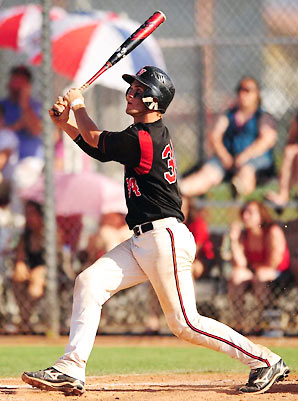
Source: SI.com
Overexposed is not a synonym for overrated…Overexposed is not a synonym for overrated…Overexposed is not a synonym for overrated…Overexposed is not a synonym for overrated…Overexposed is not a synonym for overrated…Overexposed is not a synonym for overrated…Overexposed is not a synonym for overrated…Overexposed is not a synonym for overrated…Overexposed is not a synonym for overrated…Overexposed is not a synonym for overrated…Overexposed is not a synonym for overrated…Overexposed is not a synonym for overrated…Overexposed is not a synonym for overrated…Overexposed is not a synonym for overrated…Overexposed is not a synonym for overrated…Overexposed is not a synonym for overrated…Overexposed is not a synonym for overrated…Overexposed is not a synonym for overrated…Overexposed is not a synonym for overrated…Overexposed is not a synonym for overrated…Overexposed is not a synonym for overrated…
Overexposed is not a synonym for overrated. Profound, huh? That’s my one sentence summary of Bryce Harper’s debut weekend. I guess I get some of the resentment of a player with such limited experience getting so much attention this early in his career, but I don’t see how anybody could let such a trivial emotion get in the way of objective analysis. Don’t hate the player because of the over-the-top media coverage of his debut; “hate” him for something meaningful in a baseball sense, like maybe because he still doesn’t have a true defensive home, or because he still hasn’t shown the ability to play up to his level of competition, or because he’s still so darn young that it is hard to project some of his growth dependent skills like 1) Will his still growing frame keep him from catching?, 2) Will he lose athleticism and foot speed as he bulks up?, and 3) Will his throwing mechanics, already seen as shaky by some, get worse with time?
Hey, speaking of media coverage…
“I can’t say anything about Bryce Harper,” said Zona, one of five members of the Nationals organization on hand to scout Harper and others in the Coyote Border Battle tournament.
Washington assistant general managers Bob Boone and Roy Clark and scouting director Kris Kline also attended CSN’s opener, witnessed by the largest crowd in the program’s 11-year history, about 1,300. Kline also declined comment about Harper.
Bob Boone, Roy Clark, Kris Kline, Jeff Zona, and one mystery man. It’s not quite Obama, Biden, Emanuel, and Axelrod, but it’s a pretty powerful Washington contingent all the same.
Harper capped his night by hitting a sacrifice fly to left field in the eighth inning during an attempted intentional walk. He reached out and poked the opposite-field drive for his second RBI.
Do we like this? I think I do, but I can very easily see this as evidence for the Harper haters as proof that he thinks he is bigger than the game or other such nonsense. Am I being paranoid with that “Harper haters” crack? Probably, but my crystal ball does show a growing storm of Harper backlash building up steam between now and June…
CSN raised its ticket prices this season, to $8 for a single game (from $5) and to $12 for a doubleheader (from $8). The school also raised prices for the tournament to $8 per game and $25 for a tournament pass (from $20).
Somebody at CSN has a pretty good idea of how to run a business. I’m fairly certain I’ve never paid more than $8 for a college game, but most of the games I’ve attended have either a) been in non-elite stadiums (like Boshamer pre-renovation), b) been in the northeast (in my experience, every university north of DC has been free), or c) been paid for by a student at the university (man, I miss my college discounts). Back on topic…
Pretty sure that this deserves to be posted without any further comment…
He knows what to expect; he had to close off practice in the fall because of interruptions caused by autograph hounds. A Harper autograph on auction site eBay.com is listed at $299. His autograph on the Sports Illustrated cover has been sold for $800.
Ah, finally the “big” Harper news of the weekend. Never in my life have I seen such an innocent comment misconstrued so badly by so many people. How can anybody read this…
“He’s getting a lot of hype,” Huntington said. “We will scout Bryce Harper. But we’re not going to select him because somebody thinks he’s the best prospect in the history of the game and we think he’s the 10th-best.”
…and come away with the conclusion that the Pirates currently have Bryce Harper tenth or lower on their organizational big board? Pittsburgh will pick the player they believe is the best fit for the franchise, nothing more and nothing less. The insane Harper hype will have no impact on their decision to draft or not draft him. Pressure from the fans won’t matter. Pressure from the media won’t matter. Evaluations from big league front offices besides Pittsburgh’s won’t matter. The only thing that will matter is whether or not the player is the best fit for the franchise. Will that be Bryce Harper? I still doubt they’ll ever get the chance to decide.
Through four games, Harper is hitting .263/.364/.474, good for an OPS of 838. He’s 5 for 19 with 1 HR, 1 2B, 4 RBI, 2 R, and 3 BB.
Virginia Cavaliers 2010 Draft-Eligible Prospects
Just a quick reminder that the College Team Profiles are designed to be an ongoing project meant to be continously updated. They are published as incomplete works in-progress, so try not to be concerned if a guy isn’t listed. That said, I always appreciate somebody pointing out when somebody they want to see isn’t on yet, especially when they then go on to plead the case of the omitted player. The explanation for the process of the College Team Profiles was never made explicit by me here on the main page, and I apologize for any confusion. I suppose that doesn’t really make this a reminder, but rather a clarification. Sorry. From this point forward I’m going to start with 2010 prospects for each university and then fill in the 2011 and 2012 players when I can. When I finish the complete set of 2010 players, I’ll provide a handy link and some quick thoughts for anybody still interested. It may look a little something like this…
Virginia Cavaliers 2010 Draft-Eligible Prospects
I think I’m probably too high on Grovatt, too low on Cannon, and all over the place with the pitchers, especially the four draft-eligible arms that fall in behind Morey. You could probably randomly reorder those four pitchers and the outcome wouldn’t necessarily look better or worse than what I’ve currently got. Not exactly something I’d want to put on my dust jacket (“Rankings almost as good as randomized lists!”), but it’s the truth. I’m also pretty sure my guesses at what round each player will be drafted in aren’t worth any more than the digital ink they are printed in. That aspect of the reports should get better in time, however, as we begin to get a better feel of the draft’s overall talent level. Like Lastings Milledge, Parker has true star potential, but there is a sizable gap between where he is now and where he needs to be if he wants to hit his ceiling. I really like that comp, in case you haven’t noticed. Grovatt, Morey, and Wilson all speak to me in a way that is hard to explain. As much as I consider myself to be a “high upside trumps up all” kind of guy, I like the idea of filling up a system with valuable role players (often high floor prospects) almost as much. If you can save on the margins (4th outfielders, back of the rotation starters, above-average middle relief), then you can use that saved cash on either retaining your own star-caliber players or trying to obtain a missing piece free agent on the open market. Guess this is just a way of saying it’s best to diversify your drafting to maximize your return – some upside early, some high floor guys in the middle, some high upside signability concerns late, etc.
I’m a little worried that I mention ten potential players from Virginia (from Parker down to Cannon) as being draft-worthy, but the number seems to be in line with what some big schools have done in recent years. The SEC has a breakdown of players drafted listed by each school in the conference, and a quick look revealed Florida had 10 guys selected last year while Georgia had 11 players picked. I feel better now about my high number. This is a damn fine Virginia team, so it makes sense that they’d bombard the 2010 MLB Draft with high quality prospects.
2010 MLB Draft College Conference Position Breakdowns – ACC Outfielders
College Team Profiles: Wichita State Shockers
One of the most popular (fine, the only) question I’ve been emailed since starting this site up goes a little something like this: I’m going to see ____ University/College/State play this weekend and I was wondering if there was anybody with a professional future that would be worth watching. The College Team Profiles are designed to preemptively answer any and all questions about the prospects from a particular college team…or maybe just open up a whole new debate full of new, even more confusing questions. We’ll see. The next three draft classes for one particular school are featured, with the players ranked in order (from greatest to least greatest) within each class.
As always, whether you agree, disagree, or think I’m a dope who should leave this sort of stuff to the experts (thanks, Mom)…let’s hear it via email (you can use either robozga at gmail dot com or thebaseballdraftreport at gmail dot com) or in the comments section.

2010
FR 3B/1B Johnny Coy (2010) has taken a long, strange trip to get to this point, but the eventual payoff could very well make it all worth it. Coy’s story began as a two-sport high school star, regarded by many as a better basketball prospect than baseball. After getting drafted by the Phillies in the 7th round, protracted and sometimes testy (allegedly) negotiations between player and team led to the two sides opting to go their separate ways. Coy’s older brother was reportedly heavily involved with negotiations, strongly pushing his bro to either a) get every last penny from the Phillies as possible (making him a greedy villain to many) or b) go to school and get a quality education. Coy wound up enrolling at Arizona State, but never made it to baseball season. He left the Sun Devils to move closer to home after his father suffered a stroke in late 2008. That led him to Wichita State. As a Shocker, Coy can now focus on honing his considerable baseball skills. All of his raw tools grade out as average or better – 55 speed, 60 arm, 65-70 raw power, average hit tool, and, perhaps most controversially, above-average upside with the glove at third. I remember not believing for a second that he’d ever stick at third after seeing video of him in high school, but all of the noise regarding his defensive progress coming out of Wichita has been positive. I’m a big believer in the big (6-8, 210 pound) righthanded freshman. As mentioned, Coy was a 7th round pick by the Phillies back in 2008. A good spring will get him three or four rounds higher than that, I think. All the typical signability concerns apply (Coy has three more seasons of eligibility left after this one), but the timing seems right for Coy to jump to pro ball, especially if his raw tools come together as quick as I believe.
SO RHP Jordan Cooper (2011) is coming off a fantastic freshman season and should once again thrive as Wichita State’s Saturday starter. His hard work on campus has helped him further develop his pro body and clean up his loose, easy, and repeatable throwing mechanics. He has a low-90s fastball, decent slider, an emerging changeup, and a curve still in its infancy. There isn’t a standout pitch in his arsenal just yet, but the ability to throw four (though closer to three and a half) pitches for strikes make him appealing as a potential back of the rotation starter. Another big year in 2010 ought to get him consideration as a top-five round pick, but, again, I’m not sure his limited upside will quite warrant such a lofty draft pick.
JR 1B Preston Springer (2010) is a big-time breakout candidate heading into 2010. In a year bereft of interesting college bats, Springer is a certifiable sleeper, a junior college transfer with a pro frame, above-average lefthanded power, and impressive plate discipline. He’ll play first base this spring for the Shockers, but he has defensive experience all over the diamond. If his defense is even passable at third (something scouts may need to find out through pre-game infield practice, talking to former coaches, referencing old reports, or good old fashioned guesswork), then we’ve got ourselves a prospect worth getting excited about. I know his arm strength will play at the position, but his hands, range, and footwork are all question marks at this point. I’m out on an island putting Springer this high up on the list, but I believe in his bat.
SR OF Ryan Jones (2010) heads into the 2010 season with much to prove after a disappointing junior season knocked him all the way down to the 39th round of the 2009 MLB Draft. Jones’s season wasn’t terrible by any stretch, but it is fair to point out that he didn’t make the substantial gains from sophomore to junior year that many had hoped to see. He’s back for his senior year and primed for a season that could shoot him into the first fifteen rounds of the draft. Jones is an outstanding corner outfielder (typically playing right), athletic enough to get by when needed in center. He fits the mold as one of those smartly aggressive hitters, a player happy to spit on pitches he knows he can’t handle while not being bashful with his cuts on balls in his wheelhouse. This approach got him in trouble last year as he began to rapidly expand his idea of what pitch types and locations he could handle, but coaches close to him believe they have themselves a more patient, more mature, and, hopefully, more dangerous hitter now that he has another year of at bats under his belt. I like him as yet another tweener, a player who maybe shouldn’t play center regularly but who also doesn’t have the power bat needed to play a corner every day; tweeners have value when used properly, but the limited big league ceiling of guys with fourth outfielder upside tends to give many scouting staffs’ pause. Betting on college seniors to go early in the draft and then eventually reach the big leagues isn’t the smartest thing to do, but Jones has enough untapped upside to at least consider him as one of the select few within the group who has a shot to do both.
SR RHP Cobey Guy (2010) has some serious sleeper potential. His low-90s fastball and above-average slider give him the two strong pitch base that any good reliever needs. Guy’s swing-and-miss stuff has worked at every level (starting at Arkansas Fort Smith, relieving in limited innings last year at Wichita State), striking out 196 batters in just 154 innings pitched. If he can quickly lay claim to a key spot in the Wichita pen, then the exposure could help scouts take notice of his raw stuff and get him picked late this June.
JR RHP/OF Mitch Caster (2010) is a two-way prospect coming off a season where he did very little of note (.231/.308/.265 in 117 at bats, only 5.1 innings pitched) either way, but his scouting reports have remained positive all the same. He is a far better prospect as a pitcher than as a hitter due in large part to a fastball peaking at 92 MPH and a slider that flashes plus when on. He’s also a fine athlete capable of consistently repeating his loose and easy delivery. Like so many other prospects profiled thus far, Caster has the makings of two above-average or better pitches and thus has to be taken at least somewhat seriously as a potential middle relief piece going forward. Unlike a lot of those prospects, however, Caster gets a little extra credit for the potential for untapped pitching ability because of his time spent moonlighting in the outfield for the Shockers.
JR RHP Tim Kelley (2010), the ace of the Shockers staff, typically sits in the high-80s with an average changeup. He has a well earned reputation as a strike thrower with plus command. Kelley is a bit of enigma, a guy with the size scouts want (6-6, 215), but not the velocity. He looks like he should throw harder, but so far the guns haven’t exactly been lit up when he takes the bump. That’s not to say he still can’t be a pro prospect, but it does put a pretty tight cap on his upside. Armed with a below-average velocity fastball and no real plus breaking ball, Kelley might have to hope a professional conversion to middle relief will unlock enough of a bump in his stuff to keep food on his table. Check out the comparison between Kelley and Saturday starter Jordan Cooper’s 2009 numbers. They are some bizarrely close statistics:
Player                 ERA   W-L   APP  GS  CG SHO/CBO SV    IP   H   R  ER  BB  SO  2B  3B  HR   AB B/Avg   WP HBP  BK  SFA SHA

11 Cooper, Jordan...  2.78   8-6    15  13   3   0/3    0  97.0  87  35  30  20  91   9   1   7  351  .248    6  15   0    2  10
36 Kelley, Tim......  2.86   5-4    14  14   3   1/0    0  94.1  83  40  30  22 102  20   0   8  356  .233   11  10   0    3   5
If we arbitrarily lump WPs and HBPs together as something called “uncontrollable pitches,” they are even more similar. Weird. Keep in mind Kelley is a year ahead of Cooper from an experience standpoint. Also keep in mind that Kelley redshirted his first season as a Shocker, so he actually is two calendar years older than Cooper.
SO RHP Remington Johnson (2010) was arguably the Shockers most dominant reliever last year, striking out 33 batters in only 21.1 innings pitched. He enters 2010 as a prime candidate to get saves out of the Wichita State bullpen. He is draft-eligible after redshirting in 2008, but probably won’t get a serious look from scouts until 2011 or 2012 due to his lack of overwhelming size (6-0, 198), stuff, and a non-stuffy old white guy first name.
SR 1B/RHP Clint McKeever (2010) has one of the best stories in all of college baseball, going from a walk-on cut from his dream school (Oklahoma State), to transferring to Wichita State, to then hitting an extra inning grand slam to beat – who else? – the OK State Cowboys. Seriously, how cool is that? McKeever’s bat makes him a darn fine college ballplayer, but it’ll probably his arm that gets him a shot in pro ball. With a fastball that touches the low-90s and a pretty good slider, McKeever has an outside shot to make it as a reliever down the line. As a huge fan of former big league two-way guy Brooks Kieschnick, I’d like nothing more than to see a player with legitimate talent both ways get a chance professionally. McKeever may not have the ability to do it — his fastball velocity has remained more or less stagnant since high school and his hitting, while impressive for a college player, won’t play as a big league starting position player – but it’ll happen somewhere, someday.
SO RHP Grant Muncrief (2010) will reportedly be ready for the start of the season after having Tommy John surgery this past April. The ten month recovery is one of the fastest that I can remember, so please excuse me if I’m not entirely sold on the idea that he’ll be game-ready from the get-go. The draft-eligible sophomore has generated some good buzz from the coaching staff, but it’s really hard to get a read on his long-term potential due to the injury. I’d guess he is a player we’ll be talking about again next year after an up-and-down sophomore year convinces him to stick around Wichita for at least another season.
JR RHP Justin Kemp (2010) made one of the best catches of the…wait, wrong sport…and wrong Justin Kemp. Sorry. The baseball playing Kemp isn’t likely to achieve the same level of athletic success as his namesake. The lightly recruited righthander is coming off a year of low-leverage relief innings for the Shockers, striking out 16 batters in 25.2 innings pitched.
SR RHP Tyler Fleming (2010) will be 24 years old by the time of the draft. What’s with Wichita State and all of these old guys? I know a lot are due to medical redshirts, but some of the ages on this club make it seem like a AAA roster. Fleming shouldn’t be a prospect, but he was drafted by the Rangers twice (20th round in 2006, 39th round in 2007) out of junior college, so you never know. If totally recovered from shoulder surgery, you’ll be able to find him pitching out of the back of the Shockers bullpen and moonlighting as the team’s backup infielder in 2010.
SR OF Travis Bennett (2010) comes to Wichita State from Northern Iowa (RIP) with the reputation of a player with a solid-average hit tool and an iron glove. He’s currently angling for some time in the outfield for the Shockers, but I’ve got a hunch he’ll settle in as the team’s primary DH once the season gets rolling. Without any real positional value, he’s not a pro prospect.
SR 2B Will Baez (2010) has a father named Wilson and a sister named Wilcania. Will’s full first name is Wilsisky. How about that? His first year playing major college ball went well enough for the Shockers (.275/.425/.368), but it is hard to project a player with only 12 extra base hits in 182 at bats as a pro prospect, especially for a middle infielder coming off a year of shaky defense at second base. I do appreciate the additional 52 times on base (42 BBs, 10 HBPs) and the guts it takes a converted catcher to give it a go at second, but without any power he won’t get drafted.
SR LHP Logan Hoch (2010) currently is on the mend after shoulder surgery sidelined him in 2009. He’s a good college lefthanded reliever (52 K’s in 45.1 IP during his last healthy year, 2008) with limited upside professionally. As a redshirt senior he’ll be 23 years old by draft day. Old college lefty relievers have to be outstanding to get a look professionally, something Hoch is not.
SO OF Kevin Hall (2010) writes a weekly column about life as a college ballplayer that is probably worth checking out on a regular basis. I mean, sure, he’s no Michael Schwimer, but Hall’s blog is off to a pretty solid start. I like his future as a writer a little more than as a prospect, despite the fact that Hall has a lot of the skills needed to be a solid college leadoff hitter; in fact, he hits a lot of the right notes (good speed and good range in center) in that respect. Unfortunately, there are centerfields with leadoff hitter profiles with far better tools out there.
SR OF Bret Bascue (2010) turned 23 this past December. He hasn’t shown much in his college career – little to no power, poor plate discipline, and average at best outfield defense. He’ll battle for time in Wichita State’s crowded outfield this spring, but he isn’t a pro prospect.
SR C Cody Lassley (2010) doesn’t have what it takes to be considered a pro prospect. To his credit, he has made significant improvements since signing with Wichita State, enough so to now be able to call himself a decent college catcher. Plus, he has somebody writing about him on the internet. That’s kind of cool, right?
JR UT Ryan Engrav (2010) should help Wichita State with his ability to play multiple positions, but his bat isn’t strong enough to make him a pro prospect. He should settle in as the Shockers’ primary rightfielder to start the season.
SR INF Taylor Gilmore (2010) will be the Shockers four-corners (1B/3B/LF/RF) utility guy in 2010. He doesn’t have a pro future.
2011
SO SS Tyler Grimes (2011) has spent the offseason working on a pretty nifty trick. He’s learning how to switch hit. That’s a far more impressive feat that whatever the heck I did between my freshman and sophomore years of college. That reminds me of a funny story…[story edited in order to maintain appearance that, yes, this is a family friendly website]…and that was the summer we learned a valuable lesson about Jon Favreau, organic peaches, nasty sunburns, and the power of love. Anyway, Grimes is coming off a darn fine freshman campaign. College numbers don’t tell the whole story, but a quick comparison between the freshman year numbers of the Wichita State shortstop and the consensus top college shortstops of 2009 and 2010 is interesting. Last season Grimes hit .294/.399/.467. In his freshman year, Grant Green, the top college shortstop off the board in 2009, hit .316/.388/.491. In Christian Colon’s first season, he hit .329/.406/.444. This ignores park factors, competition, and a slew of other important things to consider, but the raw rate stats are all pretty similar. Again, college numbers don’t tell the whole story. Grimes’s tools don’t match up with either Green’s or Colon’s, but he does appear to be a legitimate pro prospect in his own right. Grimes’s plus defense (good hands, great range, plus arm) will get him looks regardless of his development with the bat.
2012
FR 3B Nate Goro (2012) has a quick bat, a little bit of pop (he’s no power hitter, but he did break Ryan Howard’s Missouri state high school homerun record), and exciting instinctual actions in the field. He received rave reviews on his defense throughout the fall, pulling himself into a tight battle with Johnny Coy for the starting job at the hot corner. It’s hard to project him for more than 10-15 homerun upside as a professional, but a lot of that will depend on how he fills out in school. If the bat catches up to the glove, he is a top five round player by 2012. If he’s seen as more of a defensive whiz than a complete starting caliber player, downgrade him another five rounds or so. Either way, he has three seasons to improve. I like his chances.
FR 2B Walker Davidson (2012) injured his knee in the fall, so the amount of playing time he’ll get this spring is up in the air. He has received praise from the coaching staff for his defense, but the bat currently lags behind. He’s currently the leading candidate to replace Will Baez as the Shockers starting second baseman in 2011.
College Team Profiles: Virginia Cavaliers
One of the most popular (fine, the only) question I’ve been emailed since starting this site up goes a little something like this: I’m going to see ____ University/College/State play this weekend and I was wondering if there was anybody with a professional future that would be worth watching. The College Team Profiles are designed to preemptively answer any and all questions about the prospects from a particular college team…or maybe just open up a whole new debate full of new, even more confusing questions. We’ll see. The next three draft classes for one particular school are featured, with the players ranked in order (from greatest to least greatest) within each class. As always, whether you agree, disagree, or think I’m a dope who should leave this sort of stuff to the experts (thanks, Mom)…let’s hear it via email (you can use either robozga at gmail dot com or thebaseballdraftreport at gmail dot com) or in the comments section. 
2010
JR OF Jarrett Parker (2010) is one of the best of the many 2010 toolsy lottery ticket kind of players. I haven’t been doing this draft thing for that long, so it is hard for me to compare talent levels from class to class, but it seems that this year has a high number of mid-round high upside, high flameout potential players. I also haven’t been doing this writing thing long, as you can see from the mess that was that last sentence. Anyway, as mentioned, Parker is one of the very best of the so-called (by me) “lottery ticket” group, so he isn’t necessarily included in the mid-round subsection. In fact, many see him as a candidate to go in the first round. It’s easy to see why. His mix of tools and big-time sophomore numbers would make him a top-three round guy right now. Continued incremental improvements in his game his junior year will push his draft stock even higher. I’ll make a scary cross-race comparison here and claim Parker has a similar skill set as Lastings Milledge. He has plus power potential, an above-average arm, good speed, and the defensive chops to be a well above-average corner outfielder or a steady stopgap in center. Like Milledge, he struggles against breaking balls to the point that it’s hard not to see him as a 100+ strikeout big league hitter at this point. However, and I try my best to sandwich the bad news in between good news when I can, two big assets in Parker’s favor are his big league ready frame (6-4, 210 after packing on serious muscle), and the seemingly ever-increasing athleticism and agility (honed by practicing yoga) that should help him withstand the rigors of the professional grind. Additionally, Parker improved his walk rate from his freshman year to his sophomore year, and continued the positive trend during his otherwise disappointing campaign on the Cape this summer. I like that.
JR OF Dan Grovatt (2010) has a very patient approach at the plate, power to the gaps, average speed, and a good enough arm to play right field professionally. Sounds good, right? It should because Grovatt is a top five round caliber talent. My only worry is that his more good than great toolset makes him too similar a prospect to former Florida State standout Jack Rye. Rye was one of my all-time favorite college players and a guy I touted as a draft sleeper, but his pro numbers, especially his power indicators, haven’t exactly set the world on fire so far. The comparison is probably unfair – one player’s struggles don’t really have anything to do with another’s future – but, having seen both play, the similarity between the two seemed worth pointing out. However, the two aren’t clones of one another, either. Grovatt is the better athlete and defensive player, and he has more upside with the bat, especially in the power department. Those are all pretty important points in Grovatt’s favor. It’ll take more time and research to see where exactly Grovatt stacks up when compared to fellow 2010 college outfielders, but I have the feeling that he’ll grade out higher here than in most spots. His well-rounded game and extensive big-time college experience make him a good bet to hit the ground running professionally. I’d peg his upside as that of a solid everyday corner outfielder (defense included) with a still valuable floor as a good fourth outfielder.
JR RHP Robert Morey (2010) will, if nothing else, always have a big win over Stephen Strasburg in the opener of the 2009 Irvine Regional. Fortunately for him, however, he won’t have to limit himself to that one particular game when someday regaling his grandkids about his playing days. A low-90s fastball, above-average slider, and an emerging straight changeup, plus his status as the Saturday starter for a championship caliber college team, should get him into the top ten rounds this June as a future back of the rotation starter.
JR RHP Tyler Wilson (2010) will probably be the Cavalier most directly impacted by Cody Winiarski’s arrival on campus. The opportunity to slide into the vacant weekend starting spot would have done wonders for Wilson’s 2010 draft stock. Even without the starting gig, he’ll get noticed as Virginia’s primary reliever, the bullpen ace relied upon to pitch multiple innings at a time whenever called upon. His plus command, good athleticism, and easy, repeatable arm action help him thrive in the role. Additionally, Wilson’s solid three-pitch mix (fastball sitting 90-92 and topping out at 94, good sinking high-70s change, average slider) gives credence to the idea he has value either in the bullpen or as a starter. I like him a lot, and believe he’ll be a top-ten round guy in June.
JR RHP Kevin Arico (2010) had himself a breakout season as Virginia’s closer in 2009. His bread and butter is a plus low-80s slider that he has no problem throwing over and over and over again. The first time I saw Arico pitch I walked away pretty impressed with myself for finally finding a player that I could compare to Kiko Calero. After seeing him throw a few more times since then, I think I’m now ready to upgrade the comp a smidge to now qualify Arico for a Chad Qualls type of ceiling. There is little to no chance his final draft standing rivals Qualls’s (you’d think last names ending with the letter s would annoy me, but, brother let me tell you, nothing is worse than a name ending in z), but he could still find himself as a top 12-15 round pick who could be a quick mover for the team that takes the plunge. There should be some concern about a player so reliant on one specific skill, but Arico’s results against high level competition should help assuage most clubs’ worry.
JR INF/OF Phil Gosselin (2010) heads into the 2010 season as the man without a position. The 2009 First-Team All-ACC second baseman has been working out in leftfield almost exclusively this fall, but has also apparently been told to be ready to fill in just about anywhere (3B, 2B, maybe SS, in that order) as needed this spring. It’s rare that a college supersub would be a legit draft prospect, but Gosselin is just that. He is a slightly below-average infielder with an average arm (2B being his most likely pro landing spot if a team prefers him in the infield), who will almost certainly be first tried in the outfield as a pro. I’m not sure if that is the best way to maximize Gosselin’s pro value. He doesn’t have the glove/range for center, and doesn’t have the bat for a corner. If he isn’t a starting caliber outfielder, why not at least give him a shot in the infield? If he can bump his defense up to at least average in the infield, then you’ve got yourself a player who can help you stretch the limits of your 25-man roster, especially in the NL.
JR C/1B/OF Kenny Swab (2010) and his Cavalier teammate John Hicks (2011) – separated at birth? Swab figures to have the inside track on the primary backup catching job, but should also see time at first base, right field (to take advantage of his plus arm), and designated hitter. He’s got a live bat with above-average power potential, but it’ll take some serious lineup juggling from Brian O’Connor to get him the at bats he’ll need to boost his draft stock. As is, Swab is a potential 10-20th round player based on upside alone.
SR LHP Neal Davis (2010) goes into his senior season as Virginia’s top lefthanded relief pitcher, a player able to skillfully mix and match fastballs, sliders, and changeups to get hitters out. His most recent season was arguably his least successful – certainly his least dominating – so he heads into 2010 with plenty to prove. His big league frame (6-6, 210) and past success in a highly competitive conference (he struck out nearly a batter an inning [39 in 40] while only allowing 7 earned runs in 40 relief innings [1.58 ERA] in 2008) combined with intriguing stuff (sits in the high-80s to low-90s with the fastball and has an above-average mid-70s slider) make him another second half of the draft option for a team looking for a warm A-ball body on the cheap. I know I do this a lot, but I’d be remiss to write this much about Davis without mentioning the possibility that his stuff and frame would actually play well as a starting pitcher professionally.
JR RHP Cody Winiarski (2010) comes to Virginia via noted talent factory Madison Area Technical College. After doing a little bit of homework on him, I’ve found that he is a player with a whole lot of adamant supporters. Someone who saw him pitch on multiple occasions while at MATC raved about his potential plus changeup. Another admitted that while he had never actually seen Winiarski throw himself, he had heard very positive things from others about his command and general pitchability. Winiarski doesn’t have as much room for error as some pitchers with bigger fastballs, but the praise he has gotten from those who have seen him firsthand makes me a believer in his pro prospects. Assuming he holds down the last weekend starting job as expected, watch out for Winiarksi as a potential top-15 round arm this June.
SR INF Tyler Cannon (2010) reminds me of a better version of Missouri’s Greg Folgia, a player picked a round higher in 2009. Cannon is solid in all phases of the game, but lacks fluidity on defense at any position. Between his lack of a true defensive home and his steady, but unspectacular bat, Cannon has many believing his professional role will be that of a super-sub capable of playing literally every position on the diamond, including catcher. His college counting stats (through his first two seasons) match up with Eric Bruntlett’s in almost an eerie way, but the comparison falls apart when you look at each player’s rate stats. Anyway, I’d say that the Bruntlett comp may actually be a tad optimistic at this point. Cannon’s collegiate track record isn’t quite as strong as Bruntlett’s (though another big season like Cannon had last year would close the gap) and he lacks Bruntlett’s tremendous Civil War reenactor (that may be the single ugliest looking word in the English language) style beard, but I’d bet on enough marginal improvements as he progresses into his mid-20s to see him getting a chance as a AAAA utility guy good enough to position himself as a potential callup when injuries to the more talented players occur. His big junior year gives him something to build on heading into 2010, and the continued increase of talented infielders to the Cavalier program ought to give him more of an opportunity to show off the defensive versatility that will be his best shot at someday playing big league baseball.
SR C Franco Valdes (2010) plays exceptional defense behind the plate. He’s adept at blocking balls in the dirt, athletic enough to get out of his crouch to pounce on anything in front of him, and has a strong enough arm to keep potential base stealers honest. He also has one heck of a reputation when it comes to handling a pitching staff. However, and this is a biggie, his offense (career OBP = .301) leaves much to be desired. However, and this is may or may not be a biggie depending on how you feel about this sort of thing, he does have the benefit of draft pedigree (15th round pick of Detroit back in 2006) on his side. I never know how much stock to put into previous draft standing, especially when we’re talking about a college junior or senior who was drafted in a late round three or four years prior. So much can change in the span of three or four seasons, you know? Valdes certainly isn’t a 15th round caliber player anymore, mainly due to the stalled development of his offensive game, but the fact he was previously drafted makes me hesitant to claim he has no shot at all this time around. At best, he’s worth nothing more than a late late late round flier at this point.
JR OF John Barr (2010) is as nondescript a prospect as you’ll find. It’s nothing personal – in fact, I saw Barr play in high school, and I tend to form weird (non-creepy!) attachments to players I’ve seen early on – but nothing about his game stands out as being an average or better big league tool. His numbers dipped from his freshman year to his sophomore season, but he deserves the benefit of the doubt as he was recovering from shoulder surgery for much of 2009.
INF JR Corey Hunt (2010) has to be a big believer in the idea that timing is everything, if for not other reason than to help him ease his troubled head at night. In a different era of Virginia baseball it’s possible Hunt could have come in, gotten playing time early, established himself as a useful defense-first middle infielder with above-average on-base skills, and pushed his draft stock up enough by his senior season to be a worthwhile 20ish round or so pick. Instead, he has been behind some pretty good veteran infielders to start off his Cavalier career and he’ll be behind some really impressive youngsters to end his career. Without regular playing time he’ll be a very difficult player for scouts to assess come June. The lack of track record and standout tools make him a non-prospect at this point.
JR INF/OF Tyler Biddix (2010) has one of the most underrated names in all of college baseball. K’Nex, Lego, Megatendo, Fischertechnik, Biddix, Uberstix, Blockos…which ones are real building block toys and which ones are fake? Pretty sure the end table I bought from Ikea a few months ago was a Biddix. Damn, the Ikea joke was a better one than the K’Nex/Uberstix one, wasn’t it? Wish I would have thought of it first. Anyway, I have no doubt that the real Biddix (the person) is a better prospect than the flimsy table, but not by enough to make him a draftable prospect.
2011
SO INF/C Keith Werman (2011) did his best Pat Venditte impression while in high school, pitching a seven-inning complete game both lefthanded (3.1 innings) and righthanded (3.2 innings). That fun fact from the Virginia baseball website may have absolutely no bearing on Werman’s prospect stock, but it’s undeniably cool. What is relevant about his prospect stock is the fact he is a plus defender at second base who also has experience at shortstop and catcher dating back to his prep career. He can also handle the bat (.400/.481/.457 line in 70 at bats) enough to keep himself in the mix for a starting spot in 2010. Werman’s draft upside may be limited by his size (5-7, 150 – not saying judging him on size is fair, but it’s the reality), but the universal praise he earned last year as a sparkplug second leadoff hitter (the nice way of saying 9-hole hitter) for Virginia down the stretch should continue to get him noticed on the college level. The gap between Werman and Stephen Bruno is more perception than reality.
2012
FR SS Reed Gragnani (2012) is yet another talented young prospect expected to see significant time in a loaded Virginia infield. His game right now revolves largely around his well above-average speed, excellent athleticism, and impressive range up the middle, but he is no slouch with the bat either. Early comps include Brian Roberts (if he develops as is) and Ryan Zimmerman (if he bulks up and gains power). Gragnani’s brother, Robbie, grew four inches during his college tenure at Virginia Commonwealth, so that Ryan Zimmerman developmental path isn’t totally out of the question. That’s not to say that the only thing standing in the way between Gragnani and future big league All-Star status is a couple of inches and some muscle, but he’s a good player with high round talent all the same.
FR SS Stephen Bruno (2012) was one of the rarest of the rare coming out of high school – a prep player actually expected to stay at shortstop as a pro. We always hear about how pretty much every worthwhile big leaguer was the star shortstop/pitcher of his high school team, but it never registered how often these players were forced to move off the position after signing that first pro deal. I mean, Frank Thomas was a shortstop in high school* because, let’s be honest, that’s just where you put the best athlete at that level. I remember watching Billy Rowell play shortstop in high school. He positioned himself about 3 steps out on the outfield grass, basically admitting to all in attendance he had no range and instead relying exclusively on his rocket arm to gun people down at first. Rowell wasn’t a pro prospect as a shortstop, but he played shortstop on his high school team because, quite simply, if he didn’t, then who would? Bruno was a top ten round talent in 2009 who fell to the Yankees in the 26th round due to a very strong commitment to Virginia. He’ll stick at shortstop throughout his career due to his plus range, slightly above-average speed, and Speedy Gonzalez quick hands. He has flashed present power, launching a couple of 450 bombs his senior year of school, but lacks the overall strength to do it on a consistent basis. That last point may not seem like a huge deal for a middle infield prospect, but it does speak to the general concerns about Bruno’s future. Some players are projects based on the development of their tools, an area that Bruno grades out fairly well across the board (in addition to the aforementioned defensive skills, he has a 55 arm), but other players are projects based on their physical development. That’s where Bruno is at right now. He has worked his tail off to improve in each of the five tools (most notably speed and arm strength), but it’ll be the way is body fills out (keeping in mind he is 5-9, 165) that will make him into either a first round caliber guy or not.
***Frank Thomas may or may not have been a shortstop in high school. I actually have no idea. I just thought he was a good example for the point I was trying to make. Now I realize that making stuff up doesn’t help my argument at all, but it’s my site and I get to be as bad a writer and as big a liar as I want to be. Maybe Jim Thome would have been a better example; I bet he played shortstop in high school…
UPDATE: Found something! Go here, or just trust this excerpt: “In baseball, he was a 6-2, 175-pound shortstop. The Cincinnati Reds were interested but never drafted him. So Thome enrolled at Illinois Central College, where he played baseball and basketball. The Indians drafted him in the 13th round in 1989, one of the smartest selections they ever made.”
FR SS Chris Taylor (2012) might have hit himself into regular playing time after mashing the ball throughout the fall. One rumored starting infield for Virginia has Steven Proscia at first, Keith Werman at second, Tyler Cannon sliding back over to third, and Taylor getting regular time at short. Taylor has plus raw power and intriguing defensive tools, but comes to school with a bit less fanfare as fellow freshman infielders Gragnani and Bruno.
 The Baseball Draft Report