
Draft Prospect Retro – Northeastern’s Adam Ottavino

Busy, busy, busy week ahead. To get things started, a blast from the past in honor of Adam Ottavino’s Saturday big league debut. Ottavino will always have a special place in my heart because he was the starting pitcher of the only no-hitter I have ever witnessed in person. 18,431 baseball games watched in person (estimated), and only one no-hitter. Good story, huh? Anyway, here’s something originally published June 1, 2006 because a) it’s topical, b) it’s an excuse for me to put up that sad excuse for the above live action baseball photo taken by yours truly, c) it’s a holiday and this took me 10 minutes to put together, and d) an easy post like this buys me another day to finish up working on my rankings of top college outfielders and pitchers. Sneaky! Anyway, here it is…
There is a lot to like about Northeastern righthander Adam Ottavino. He’s got a major league body already, throws with a loose and easy arm action, is capable of hitting 93/94 MPH with his fastball (sits at 89-92), and mixes in a plus slider along with an emerging curve. His 6’5”, 215 pound frame and imposing presence on the mound make him look like a major leaguer and his workload this year at Northeastern shows he is capable of becoming a big league innings eater.
One of my big concerns after watching him pitch is the way his throwing motion differs when he going from his fastball to any of his off-speed stuff – the Hofstra hitters completely sat on his curve in the top of the sixth at the May 5th game I was at. I realize this is an obscure reference and an extremely small sample size, but it is an example of the larger problem I noticed in the three games I scouted him. This is his May 5th six inning breakdown (from the Northeastern website):
Hofstra 6th – Caputo singled to left field (2-2). Caputo advanced to second on a passed ball. Kougasian struck out swinging (3-2). Caputo stole third. Walsh singled up the middle, RBI (1-1); Caputo scored. Stern doubled down the lf line (0-1); Walsh advanced to third. Oliveri singled to right field, 2 RBI (2-2); Stern scored; Walsh scored. Panzarella grounded into double play 3b to 2b to 1b (0-0); Oliveri out on the play. 3 runs, 4 hits, 0 errors, 0 LOB.
In that Hofstra-NEU game, I was able to stand with the scouts behind home plate and get a first hand look at their radar gun readings and pitch charts. His breakdown in that game (again, this is just one game, but it is reflective of Ottavino’s bigger picture as a pitcher):
I’m as high on Ottavino as almost any other righthanded college arm in this draft – he’ll be a major league pitcher someday. Whether he becomes a back of the rotation workhorse innings eater, a late inning setup man, or something bigger and better (maybe a 2/3 starter or closer) remains to be seen. If I was a betting man, I’d say he reaches that high end projection and becomes one of the first few pitchers to reach the major leagues out of this draft.
2010 MLB Draft: Top 30 College Third Base Prospects (10-1)

10. Oregon State JR 3B Stefen Romero
Romero is arguably the best present defender on the top ten list. He makes all the plays on balls hit at him, and has proven more than capable of ranging to both his left and right when needed. What really makes his draft stock pop in comparison to some other names on the list is his performance with wood last summer on the Cape. The raw numbers don’t jump right out at you, but all of the reports from the summer were positive. Romero kept the momentum going this spring by displaying a steady dose of good defense, above-average power, and decent athleticism. A few area scouts that have seen him play way more than I have seem to like him a lot more than I do, so take his placement on the list as a rare example of me trusting people smarter than myself. Rare not because I’m trusting them, but because there are people out there actually smarter than I am. Hard to believe, I know. Romero’s upside is a good four-corners bench bat for me, something true of the majority of the players on this list no matter how rosy a picture I try to paint of their ultimate super duper best case scenario big league ceilings.
9. Connecticut JR 3B Mike Olt
I’ve toyed with the idea of standardizing these quick scouting capsules, but always wind up just doing the rambling paragraph or two synopses you see up and down the page. Seems like all of those standardized reports have some sort of strengths/weaknesses attached somewhere, so let’s try it out with a personal favorite, Mike Olt:
Strengths: three above-average or better tools (65 raw power, 55 speed, and 65 arm), plus athleticism, and a big league ready frame
Weaknesses: present tool most need in work is his bat, due in large part to a largely unrefined approach and inconsistent swing mechanics
So, will Olt make enough consistent hard contact to put his other tools to use professionally? I think any one of the guys on one of the deepest top ten college position lists I can remember in the long, storied history of this site has the upside of an every day player if the circumstances allow it. That comes out as a cop-out, but it’s true; this is a really, really deep year for college third basemen.
8. San Diego JR 3B Victor Sanchez
My support of Victor Sanchez goes back to his prep days, so it’s hard for me to be completely objective when trying to evaluate his current draft stock. The memory of the potential plus defender with equally exciting power potential and a mature beyond his years approach to every single at bat may be just that, a memory. Sanchez’s slow recovery from labrum surgery has knocked his prospect stock way down, but I’m enthused by the perhaps misguided hope that his depressed draft standing will give him the chip on his shoulder (not literally) needed to prove all the teams that passed on him wrong. Talent doesn’t disappear, but it can get lost in the fog of injuries. Teams willing to take the chance that Sanchez will someday recovery 100% from his shoulder injury are betting that the fog will soon lift.
7. Kansas JR 3B Tony Thompson
If he sticks at third, you’ve got a real player on your hands. If he’s a first baseman long-term, the bat will need to go up a level or two before you could realistically consider him a potential regular at the spot. For now, I think he’s got nimble enough feet to stick at third through his mid-twenties. Thompson’s successful return to health after an early season injury has allowed him time to showcase the plus arm and plus power that should get him drafted in the first five rounds no matter what teams think about his defense.
6. Louisville SO 3B Phil Wunderlich
Makeup is one of the easiest scouting terms to throw around as a positive or a negative for any given prospect because anonymous internet sources (like mine!) are never asked to truly qualify what the word means. Here’s what I mean when I say Wunderlich’s makeup is off the charts: In an completely fictional, but totally possible survey of college coaches and players, Wunderlich would win the “most likely to manage” poll going away. He’s that kind of player. Intangibles aside, Wunderlich is an underrated athlete with legit plus power and amazing patience at the plate. He may not be a natural defender at third, but he’s also not the type of player you’d bet against working his tail off until he is at least a decent big league defensive player.
5. Oklahoma City JR 3B Matt Presley
A trio of haikus, one offensive, one defensive, and one summing it all up, to describe draft sleeper Matt Presley…
Strikeouts are scary
But bat gives pitchers nightmares
Power is special
Not Schmidt with leather
Still, strong arm and high effort
Might fit best in right
Star in Sooner state
Not quite on Durant’s level
Better nickname, though
In summary: Easy to fall in love with his bat, but hard to realistically see him ever being average or better at third. Also, I suck at haikus.
4. Pittsburgh JR 3B Joe Leonard
Leonard has gotten a ton of positive press over the past few weeks, all of it well earned. He came into the season as one of the best college hitting prospects and one of the few collegiate position players projected to be productive enough both at the plate and in the field to start every day in the big leagues. The one question that scouts had about his game was his power upside. Leonard has answered the bell by hitting for over 30 extra base hits and slugging well over .600. He’s a good athlete with a plus arm and great big league size for a third baseman. Defensively he’s presently skilled enough to be considered big league average at the position, and continued development ought to get him up above-average during his best defensive seasons.
Neither his offense nor his defense will ever quite approach the level of peak years Scott Rolen (a really underrated player by many, I think), but if you squint really hard you can begin to see Leonard as perhaps developing into that type of player – exciting defenders, strong physiques, and often mischaracterized as power hitters first and foremost. In fact, after looking at the numbers some, I’d compare Leonard’s upside as a hitter to something around what Rolen did his rookie season (.283/.377/.469) with the Phillies. That kind of upside is substantial, clearly, so it may very well be that Leonard’s placement on this list is a mistake that I’ll have to rectify before June 7th hits.
3. Georgia Tech JR 3B Derek Dietrich
I’m part of the small but vocal minority that seems to think Dietrich could play a decent shortstop professionally if given the chance, but, seeing as its highly unlikely he’ll ever get that opportunity, we’ll judge him here on the basis of his potential well above-average glove and plus arm at third. There’s very little mystery as to what kind of player a team will get if they take Dietrich early on; he’ll hit with both above-average contact and home run numbers (consistent 20 homer upside, I think), play solid to plus defense (as mentioned), and consistently work hard to improve his overall game. I’m no fan of writers/analysts/scouts/Larry Browns who fall back on the tired cliché “he plays the game the right way,” but, hypocrite that I am, Derek Dietrich simply plays the game the way it was meant to be played. He won’t be a sexy pick, but he’s as good a bet as any player on this list to contribute in some capacity in the big leagues.
2. Arkansas SO 3B Zack Cox
Easily confused fellow that I am, I don’t quite understand the negativity surrounding Cox’s power potential that has come to the surface this season. It seems to me that he can’t really win with some people. Last year people oohed and aahed as he flashed prodigious raw power, but disappointed in the plate discipline department. This year he’s taken a much more patient, contact-oriented approach, but is getting heat for not hitting for the same power as he did his freshman year. I realize slugging .600+ and socking 20 extra base hits in college (like Cox has done so far in 2010) isn’t quite the feat it appears to be at first blush, but it’s still a decent indicator that the guy hasn’t been reduced to a singles only hitter this year. Now imagine the possibility that good professional coaching can help Cox unlock the secret of maintaining his gains in plate discipline and a high contact rate while simultaneously helping him rediscover the big power stroke of his first collegiate season. Sounds pretty good, right?
As arguably the draft’s top position player prospect, much has already been written about Cox’s toolset. The cliff notes version is this: potential plus bat, above-average present power but plus projection, 45/50 runner, plus arm, good defender. His worst tool is probably his speed, and, as you can see, even that project to be around average. I think Cox’s ceiling is below that of your typical top half of the first round college bat, but he’s still a relatively safe pick to be an above-average regular third baseman for a first division club.
1. Tulane JR 3B Rob Segedin
I had Segedin as the 47th best draft-eligible player in the nation heading into the year, so it’s nice to see him succeed in 2010 for totally selfish reasons alone. Sure, it’s also nice to see a hard working young man work his way back from a season lost to injury to put himself in a position for a well earned big paycheck and chance at chasing his dream of professional baseball, but, really, it’s all about me, me, me! Anyway, Segedin has a gorgeous righthanded stroke that’s so pretty to look at it’s almost a surprise when he makes contact and the ball doesn’t fly to an unattended gap somewhere. Defensively, he’ll stick at third at least in the short-term (steady hands, limited range), but could become a rightfielder with average range and a cannon arm if needed. It’ll be the bat that makes him the big bucks, and it’s got all the makings of a special one. At the plate, Segedin is a professional player trapped in the college game. Rare plate discipline, gap power that’s finally beginning to round into over-the-fence pop, and impressive bat control make him a hitter with a big future going forward. When your floor is a lefty mashing four-corners utility guy, then you’d better believe the ceiling is much, much higher.
2010 MLB Draft: Top 30 College Third Base Prospects (20-11)

20. Alabama SR 3B Jake Smith
Players coming off of more accomplished collegiate seasons precede Smith on this list, so take this aggressive ranking as a show of good faith that the Alabama senior’s tools will trump his up-and-down college career when it comes to his success or failure in the pros. Hey, speaking of aggressive, one of Smith’s biggest current issues is a tendency to get too aggressive at the plate, jumping out at pitches before they reach his happy zone. He’s gotten away with it to some extent in college, but hacking at anything 16 inches (give or take) off, up, or away from the plate is no way to advance up the minor league ladder in the enlightened age of baseball we’re lucky to be living in. Smith’s tremendous raw power and excellent defensive tools play in any era of baseball, but he’s been slow to recover from a serious ankle injury. I get the feeling based on all of the above that we’re talking about another four-corners backup type here. Fun fact: Replace “serious ankle injury” with “labrum injury” and you’ve got a very similar situation to what the number eight overall prospect on this list is dealing with. Any guesses about the identify of our mystery prospect?
19. Clemson SO 3B John Hinson
John Hinson was a tough player to rank because of his status as a redshirt and thus draft-eligible sophomore and his positional versatility across the infield. He was an easy guy to rank this high because of the really nice things that anybody who has seen him play this year had to say about him. Hinson was a highly touted prospect out of high school who was considered advanced enough after his freshman year to be asked to play for Hyannis in the Cape Cod League. Back surgery cost him all of his 2009 season, but the fully recovered version of Hinson put up a 2010 statistical line that reads a lot like Pittsburgh’s Joe Leonard’s work this season. A plus hit tool combined with above-average speed and power will get you far professionally, but people smarter than myself that I talked with told me some teams question his ability to play any one particular spot in the infield with the consistency needed of a regular. Based on the limited looks of Hinson that I’ve seen, I can’t say that I necessarily agree with that assessment, but his defensive skillset (good athlete, iffy arm) may make him better suited for second base than third. At either spot, he’s got the bat to make him a potential regular with a couple breaks along the way.
18. Tarleton State JR 3B Chris Casazza
Like Jayson Langfels and Jake Smith before, and Jason Martinson and Mike Olt after, Chris Casazza’s biggest deficiency is a long swing with holes in it that winds up waving and missing at the ball far too often. Like Martinson a few spots ahead of him, Casazza’s good batting eye and sneaky power upside should keep his secondary statistics afloat even when the K’s are trying to drag his prospect stock below the surface. In many ways he’s quite simply the better version of Alabama’s Jake Smith, especially at the plate – more power, more patience, less strikeouts, and better all-around bat. Definite sleeper to watch.
17. Tennessee JR 3B Matt Duffy
Duffy was a deep sleeper top five rounds candidate of mine heading into the season, so you know his underwhelming, but still solid, junior season won’t downgrade his stock too much for me. The Vermont transfer has all of the defensive tools to play a decent shortstop professionally, but profiles better as a potential plus defender at the hot corner. For Duffy, a Jack Hannahan (with more raw power) or Andy LaRoche (with less raw power) type of career is possible.
16. Azusa Pacific SR 3B Ryan Delgado
Delgado earned his way on the list because of his ridiculous power numbers over the years, but it certainly doesn’t hurt that Azusa Pacific has one of the most fun college names to say out loud. Try it, you won’t be disappointed. Besides the cool college name and plus power potential, Delgado has a true plus arm and a well above-average overall hit tool. His defense at third isn’t currently at the level where you could project him as above-average professionally, but the tools are there for him at least wind up a decent defensive player at least through his twenties. If it doesn’t work at third, however, there’s a backup plan that I know for a fact is actually Plan A for some teams. Delgado’s future for some teams might be donning the tools of ignorance behind the plate every day. It’s a stretch and it’s based largely on the 3B/C future that could be in store, but I can’t shake the Jake Fox comp for Delgado that I heard way back when.
15. Coastal Carolina JR 3B Scott Woodward
It’s very easy to envision Scott Woodward playing in the big leagues someday. He’s got an outstanding approach to hitting, a discerning batting eye, and a really good idea of his fundamental strengths and weaknesses at the plate. Woodward ably uses his plus-plus speed to leg out infield hits, turn balls driven to the gaps into triples, and steal bases at a tremendous success rate (46 steals in 52 tries). Home runs will likely never be a big part of his game, but his is a game based more on speed and plate discipline anyway. He could have the type of career many once projected for former Dodgers prospect Joe Thurston. Another comp that I like a lot is Phillies minor leaguer Tyson Gillies, a comparison made more interesting due to the fact both players are hearing impaired, but one not at all dependent on that fact as the basis of the comp. When I first thought of it a few weeks ago the connection didn’t even occur to me, but the two players share enough distinct offensive similarities to make it work.
14. North Carolina State JR 3B Russell Wilson
Betting on Wilson is betting on upside, a worthy risk to take when you are considering which mid-round college hitter to gamble on. See, the sad little truth about lists like this are that the players, while undeniably impressive and accomplished and talented, are more than likely never going to play in the big leagues. Heck, many of them won’t see AA. Once you get past the top two or three names on any of these college lists, it’s all a big guessing game. Educated guessing, to be sure, but guessing all the same. To make a long intro slightly less long, if you’re are going to bet on a mid-round college player, go for the rare guy with untapped potential. That’s Wilson. Here’s why…
I tend to overuse this word when writing about draft prospects, but it applies to Wilson so well here that I can’t help myself. Wilson is an interesting prospect. More than one team affiliated employee I spoke to used that word to describe Wilson in some way – “interesting upside,” “interesting bat,” and “interesting future.” Watch him for just a couple of innings and you’ll see evidence of all five tools right away. His bat is, well, interesting, and his power, while mostly to the gaps at this point, could top out with homer totals in the teens professionally. As a former quarterback unafraid to take off with the ball when needed, it comes as no surprise that his speed rates as an easy 60, with startlingly quick acceleration. Defensively he may have the speed, instincts, and athleticism to play up the middle (2B or CF), but his presence on this particular list is a bet on his plus arm playing best at third base over the long run. Wilson’s numbers this year were solid across the board, but his performance must be judged with his lack of college ball experiences prior to 2010 in mind. He needs more reps on the diamond, but if a team is patient with him they could be rewarded with a player who closely mirrors the Melvin Mora developmental path, something that will no doubt interest a big league club or two come draft day.
13. Texas State JR 3B Jason Martinson
The more I do this, the more I begin to gain an appreciation for the way certain college programs recruit and develop talent. The job Ty Harrington has done in San Marcos is nothing short of spectacular. I relate it to a college football team with very specific offensive and defensive schemes recruiting not based on consensus overall talent levels, but rather best fits for the program. You’d think these less talented players would succeed mainly due to the system in college, but then, lo and behold, draft day comes and teams start taking these supposed system talents left and right. Turns out that players overlooked in high school can turn out to be pretty valuable prospects after three years of quality college coaching. I suppose that’s really just my long way of saying that even though it’s common the best high school players sign out of high school, and even though it’s common the best unsigned high school players go to the big name schools in Texas, it’s still possible to have some really talented players wind up at non-traditional baseball schools. Schools like that often have coaching staffs more familiar with coaching guys up than allowing them to coast by on natural abilities they may or may not have.
Martinson is a plus athlete with very good defensive tools who, similar to Tennessee’s Matt Duffy, may be good enough with the leather to stick up the middle (either shortstop or second base) in some organizations. For me, however, his hands, range, and arm all play best at third, a position where he could eventually be a decidedly above-average defender. Offensively the rap on Martinson coming into the year was that he swung and miss too often to ever hit for an acceptable average professionally. That may or may not be true going forward — his 2010 performance has been very similar to his 2009 — but his quick wrists and above-average plate discipline should help keep his on-base percentage up even when he is striking out more often than you’d like. Teams will worry less about the low contact rate if Martinson can begin to tap into some of the long awaited above-average raw power that hasn’t really showed up through three seasons of college ball. If he can begin to apply some of his brute physical strength into homerun power professionally, he’s got a chance to be a starter. If not, his best chance of earning the big bucks will be in the good defender/patient pinch hitter role.
12. Wichita State FR 3B Johnny Coy
Coy has taken a long, strange trip to get to this point, but the eventual payoff could very well make it all worth it. Coy’s story began as a two-sport high school star, regarded by many as a better basketball prospect than baseball. After getting drafted by the Phillies in the 7th round, protracted and sometimes testy (allegedly) negotiations between player and team led to the two sides opting to go their separate ways. Coy’s older brother was reportedly heavily involved with negotiations, strongly pushing his bro to either a) get every last penny from the Phillies as possible (making him a greedy villain to many) or b) go to school and get a quality education (a far more admirable position, some might say). Coy wound up enrolling at Arizona State, but never made it to baseball season. He left the Sun Devils to move closer to home after his father suffered a stroke in late 2008. That led him to Wichita State. As a Shocker, Coy has been able to focus on honing his considerable baseball skills. All of his raw tools grade out as average or better – 55 speed, 60 arm, 65-70 raw power, average hit tool, and, perhaps most controversially, above-average upside with the glove at third. I remember not believing for a second that he’d ever stick at third after seeing video of him in high school, but all of the noise regarding his defensive progress coming out of Wichita has been positive. I’m a big believer in the big (6-8, 210 pound) righthanded freshman. As mentioned, Coy was a 7th round pick by the Phillies back in 2008. The questions concerning his signability will probably keep him from hitting that mark here in 2010, but his true talent level makes him a top ten round candidate worth pursuing if he even begins to hint that he’ll consider signing.
11. Fresno City College FR 3B David Rohm
Rohm hits and hits and hits. He can also steal a bag when left unattended (great instincts on the bases), smack a ball the other way (very mature hitting style), and crank it out of the ballpark when the mood strikes (above-average present power). Mostly though, he hits. His defense ranks in the bottom third of players here in the top 30, but he still has a better than 50/50 shot to stick at the position through his first six years of big league control. Ah, the defense update is appreciated, you’re thinking, but, wait, can the guy hit? Excellent question; yes, David Rohm can hit.
2010 MLB Draft: Top 30 College Third Base Prospects (30-21)

30. Bowling Green SR 3B Derek Spencer
Spencer won’t wow you with his tools or outstanding collegiate production, but his skills are good enough when taken in altogether to get himself on a professional roster. He’s the classic well-rounded, hard working, good enough senior sign who doesn’t do any one thing exceptionally well, but does everything so wonderfully competently that he profiles as an organizational player with backup upside. Three of his tools have average upside or better (power, speed, glove), so it’s no stretch to see him sneak him onto a big league bench someday.
29. Florida JR 3B Bryson Smith
Smith has a big league body, intriguing pop, useful positional versatility, but has been held back by injuries in 2010. Injury induced subpar seasons for mid- to late-round underclassman prospects are normally a recipe for a senior season return engagement, but Smith may be a victim of his own college team’s success. Playing time in 2011 looks to be very hard to come by on a young, stacked Florida starting nine, so Smith may try his luck professionally if a team is willing to bet that a return to health will bring him closer to the player he was at junior college than he was as a Gator.
28. UC Irvine JR Brian Hernandez
Hernandez has a similar scouting profile as Derek Spencer, but gets the edge because of better plate discipline and more balanced swing mechanics. Like Spencer, he’s your typical “whole is greater than the sum of his parts” kind of prospect, with the upside of a big league bench bat if everything breaks right.
27. Chipola FR 3B Michael Revell
Revell has really impressive tools across the board, but his production in 2010 didn’t reflect his true talent level. His plus bat speed, strong arm, good athleticism, and 20 homer lefthanded power upside will keep him on many follow lists despite his struggles. The down year will probably keep him at Chipola for a sophomore season; disappointing, sure, but perhaps a good thing for his long-term draft stock. Revell has the tools to succeed, but is raw enough that the extra relatively low pressure junior college at bats could help turn his substantial promise into production. It’s rare to see a player capable of starting in the big leagues so low on a prospect list like this, but it’s an acknowledgement of the wide gap between what Revell could be versus what he currently is. He makes the list as more of a token 2011 name to watch than a realistic 2010 draft target.
26. Holy Cross SR 3B Matt Perry
Is it sad that one of the first things I thought about when looking at my notes on Perry was “gee, I bet Bill Simmons would get a kick out of having a fellow Holy Cross guy show up on some anonymous internet nobody’s top 30 college third base prospect list…”? Perry is one of my favorite 2010 senior signs because of his advanced strike zone knowledge, good defensive tools, and renowned drive to succeed. It’s a rare college senior who plays in the big leagues, so sometimes it’s alright to dig deep to find a small something extra about a player that you think sets him apart. Perry’s steady four year progression, strong performance under pressure as a legacy at Holy Cross, and success with wood in the summer makes me think he’s a guy worth gambling on.
25. Eastern Kentucky JR 3B Jayson Langfels
Langfels came into the season with a reputation as a total hacker at the plate, but curbed his swinging and missing ways just enough to finally unlock his good raw power in game situations. I’ve gotten mixed reports on his defense this year, but his hands in the past have gotten him into some trouble at third. It ranges anywhere from somewhat possible to very likely that he’ll wind up as more of a power hitting four-corners utility type than a starting third base candidate; either way, there’s value enough in the bat.
24. Toledo JR 3B Jared Hoying
Hoying’s an interesting scouting, coaching, and prospect development test case. His swing is ugly, but his bat speed is exceptional. Knowing that, do you a) let Hoying be Hoying and go with what works, b) attempt to make slight alterations while preserving the integrity of the swing, or c) work to maintain Hoying’s great bat speed while simultaneously trying to reinvent his swing mechanics? More to the point, how exactly do you go about coaching the kid up? What coaches in the organization do you assign to help him? How much time and energy should be spent working with a mid-round draft prospect? Hoying’s swing isn’t the only intriguing, but raw part of his game. He’s an obviously raw defender, but the tools, most notably a plus arm and athleticism equally suited up the middle, are there for him to succeed anywhere in the infield in a pinch. His high strikeout rate is absolutely a concern, but the aforementioned bat speed, plus arm, and above-average base running give him the look of a potential above-average utility infielder in the mold of former Ranger, Indian, Cub, Brave, Brewer, Rockie, Cub again, Pirate, Dodger, Indian again, Pirate again, and Phillie Jose Hernandez.
23. Oklahoma SO 3B Garrett Buechele
And so begins a stretch of players with starting caliber upside, but high bust potential. Buechele has one of the stronger pure hit tools of this college third base class, and his quickly emerging power make him one to watch. His defense is plenty good enough to stick at third, so the only thing that realistically stands in the way of Buechele succeeding professionally (you know, besides all of the other things that can get in the way for any player drafted) will be high strikeout totals. He’s not as talented as Zack cox, so don’t take this as a direct comparison, but it seems that Buechele would be best served returning to school to work on honing his pitch recognition skills like the top player on this list managed to do in his sophomore season.
22. San Francisco JR 3B Stephen Yarrow
Yarrow’s basic story is very similar to Garrett Buechele’s in that both prospects have legit plus power potential and a strong overall hit tool. Going against Yarrow is his tendency to pull darn near everything, below-average tools outside of the batter’s box, and a long-term future as a four-corners type of player, not an everyday third baseman.
21. Furman JR 3B Brian Harrison
Harrison is a good, good player. Case in point, Harrison has a good arm, is a good defender, and has a good hit tool, with good power potential. He’s a really good athlete, perhaps too good to be “wasted” at third if there’s really a team out there willing to try him in centerfield as rumored. I wish he would have gotten more at bats on the Cape this past summer, but, as too often the case with Harrison, injuries limited his playing time. Get him healthy, get him a regular defensive home, and get a good, good player with starter upside past round ten. Good bargain. The relatively low ranking is more about the players ahead of him than the above-average (or, in other words, “good”) overall talent package that Harrison brings to the table.
College Pitching, Bryce Harper, and Scheduling
The Week Ahead
GO/AO College Data Update
2010 MLB Draft: Top 30 College Third Base Prospects
2010 MLB Draft: Top 100 College Outfield Prospects
2010 MLB Draft: College Position Player Big Board
Reader Suggestion?…
I’m really excited about the college third baseman list, so that’ll probably be the first thing published. I’d like to start rolling out the college pitching lists, but that may be something that won’t be ready to see the light of day until next week. Also coming next week will be a whole slew of high school position lists. As they get wrapped up in the next two weeks, so will updated big boards and expanded mock drafts. Two weeks and counting until draft day…
Bryce Harper
There are no words left to appropriately describe what Bryce Harper has done so far in 2010, but, with the help of a good thesaurus, I’ve managed to come up with a handful of words that at least begin to approach his insanely high level of play: Astonishing, Inconceivable, Outlandish, Staggering, Unimaginable, Prodigious, Stunning. This past weekend Harper was positively phantasmagorical in leading his Coyotes to the Junior College World Series. In admittedly ideal hitting conditions, Harper managed to overshadow a 6-7 performance (highlighted by everybody’s favorite statistical oddity, the cycle) on Friday with a 6-6, 4 homer day on Saturday. With Harper more of a lock than ever to go number one overall to Washington, we’re left with precious little top of the draft drama to chat about between now and the big day. Thankfully, there are plenty of other Harper related topics to consider between now and August 17th. These include, but are certainly not limited to, the following: 1) Harper’s potential signing bonus, 2) Harper’s minor league timeline, 3) Harper’s ultimate big league upside with the bat, 4) Harper’s long-term big league defensive position. Looking forward to delving into each and every one of these topics in depth in the weeks to come.
A quick look at the weekend in college baseball prospect pitching. The groupings for each set of pitchers was done really quickly, so don’t read too much into the particular designations if you disagree with them. If you agree, however, then it was most definitely by design; feel free to praise my genius if this is the case.
Friday
Second Tier 2010 Arms
Seth Blair: 7 IP 8 H 4 ER 2 BB 9 K (W-L is overrated, no doubt, but I can’t not point out that the guy is now 10-0 after getting the win against Oregon State)
Sam Dyson: 6.2 IP 5 H 4 ER 1 BB 7 K
Barret Loux: 5.2 IP 6 H 6 ER 5 BB 8 K
Kyle Blair: 7 IP 6 H 5 ER 0 BB 8 K
Third Tier 2010 Arms
Colin Bates: 6 IP 3 H 0 ER 0 BB 7 K
Austin Ross: 7 IP 4 H 3 ER 0 BB 8 K
Robert Morey: 7 IP 3 H 1 ER 4 BB 5 K
Chris Hernandez: 5.2 IP 5 H 1 ER 5 BB 9 K
Relievers
Chance Ruffin: 2 IP 1 H 0 ER 0 BB 6 K
Kevin Arico: 1 IP 1 H 0 ER 0 BB 1 K
Dan Klein: 1.2 IP 3 H 2 ER 0 BB 0 K (W-L is overrated, no doubt, as Klein’s iffy outing resulted in what is categorized as a “win”)
Brett Eibner: 1 IP 2 H 2 ER 0 BB 2 K (Saves are overrated, no doubt, as Eibner’s iffy outing resulted in what is categorized as a “save”)
Chris Manno: 3 IP 1 H 0 ER 1 BB 6 K
2011/2012 Names to Remember
Taylor Jungmann: 7 IP 9 H 2 ER 1 BB 9 K
Gerrit Cole: 7.1 IP 9 H 5 ER 2 BB 7 K
Brett Mooneyham: 7.2 IP 8 H 1 ER 2 BB 4 K
Kurt Heyer: 7 IP 8 H 3 ER 1 BB 7 K
John Stilson: 3.1 IP 5 H 0 ER 1 BB 5 K
Saturday
First Tier 2010 Arms
Jesse Hahn: 4.1 IP 9 H 5 ER 1 BB 4 K
Anthony Ranaudo: 1 IP 0 H 0 ER 0 BB 1 K
Sammy Solis: 6 IP 4 H 2 ER 1 BB 4 K
Alex Wimmers: 6 IP 5 H 1 ER 3 BB 8 K
Second Tier 2010 Arms
Cole Green: 5.2 IP 8 H 4 ER 1 BB 3 K
John Gast: 2.2 IP 4 H 6 ER 3 BB 3 K
Dixon Anderson: 7.1 IP 6 H 5 ER 5 BB 4 K
Cole Cook: 9 IP 8 H 3 ER 3 BB 4 K
Bryan Morgado: 0.2 IP 3 H 5 ER 3 BB 1 K
Logan Darnell: 3 IP 9 H 2 ER 0 BB 2 K
Relievers
Chance Ruffin: 1.2 IP 0 H 0 ER 0 BB 2 K
Kevin Arico: 1.1 IP 3 H 0 ER 0 BB 1 K
2011/2012 Names to Remember
Danny Hultzen: 5 IP 4 H 2 ER 5 BB 7 K
Trevor Bauer: 7 IP 8 H 2 ER 1 BB 7 K
Jack Armstong: 2.1 IP 5 H 4 ER 2 BB 3 K
Taylor Rogers: 4 IP 6 H 4 ER 3 BB 1 K
Ryan Carpenter: 6 IP 6 H 2 ER 2 BB 2 K
Sunday
First Tier 2010 Arms
Brandon Workman: 6 IP 5 H 4 ER 2 BB 5 K
Second Tier 2010 Arms
Rob Rasmussen: 6.2 IP 2 H 1 ER 2 BB 6 K
Relievers
John Stilson: 1 IP 0 H 0 ER 0 BB 2 K
2011/2012 Names to Remember
Dylan Floro: 6 IP 12 H 5 ER 1 BB 8 K
GO/AO Data Update 2.0 – May 21, 2010
Data good through May 20th. Weekend homework will be completing a few more college position lists (3B, OF, RHP, LHP) and starting back in with the high schoolers. For now, in an effort to buy me some more time to work on big stuff like that, I present the finest publicly available GO% in all the land…
North Carolina JR RHP Matt Harvey: 64%
Tennessee JR LHP Bryan Morgado: 51%
Texas Tech JR RHP Chad Bettis: 70% (!)
Texas JR RHP Brandon Workman: 56%
LSU JR RHP Austin Ross: 39%
Miami JR LHP Chris Hernandez: 63%
South Carolina JR RHP Sam Dyson: 68%
Florida State JR LHP John Gast: 69%
Virginia Tech JR RHP Jesse Hahn: 73% (10/0 GO/AO ratio in return from injury)
Texas SO RHP Taylor Jungmann: 65%
Virginia SO LHP Danny Hultzen: 50%
Kentucky SO RHP Alex Meyer: 53%
Rice SO LHP Taylor Wall: 58%
UCLA SO RHP Trevor Bauer: 44%
Vanderbilt SO RHP Jack Armstrong: 57%
Gonzaga SO LHP Ryan Carpenter: 56%
Kentucky JR LHP Logan Darnell: 57%
GO/AO Data Update – May 20, 2010
The plan is to start with pitchers who took the mound last Friday night and update the rest of the weekend totals throughout the day. No special order to the pitchers listed, just throwing them up based on where their name falls on my spreadsheet. GO/AO data has now been updated to include all starts (when applicable) through May 20, 2010.
Missouri JR RHP Nick Tepesch: 54%
Louisville JR RHP Thomas Royse: 53%
Mississippi JR LHP Drew Pomeranz: 47%
Florida Gulf Coast JR LHP Chris Sale: 61%
LSU JR RHP Anthony Ranaudo: 37%
Georgia Tech JR RHP Deck McGuire: 49%
Notre Dame JR RHP Brian Dupra: 61%
Vanderbilt SO RHP Sonny Gray: 70% (!)
UCLA SO RHP Gerrit Cole: 53%
Stanford SO LHP Brett Mooneyham: 61%
TCU FR LHP Matt Purke: 63%
Kentucky FR LHP Taylor Rogers: 56%
TCU SO RHP Kyle Winkler: 54%
2010 MLB Mock Draft 2.0
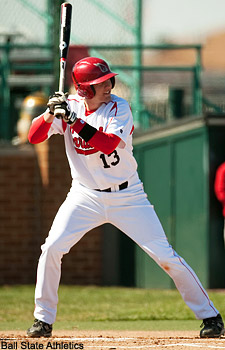
Photo Credit: Ball State Athletics
1.1 Washington Nationals: CC of Southern Nevada FR C Bryce Harper
1.2 Pittsburgh Pirates: The Woodlands HS (Texas) RHP Jameson Taillon
1.3 Baltimore Orioles: Brito Private HS (Florida) SS Manny Machado
1.4 Kansas City Royals: Mississippi JR LHP Drew Pomeranz
1.5 Cleveland Indians: Ball State JR 2B Kolbrin Vitek
1.6 Arizona Diamondbacks: Florida Gulf Coast JR LHP Chris Sale
1.7 New York Mets: Chipley HS (Florida) RHP Karsten Whitson
1.8 Houston Astros: UT-Arlington JR OF Michael Choice
1.9 San Diego Padres: Georgia Tech JR RHP Deck McGuire
1.10 Oakland Athletics: Harvard Westlake HS (California) Austin Wilson
1.11 Toronto Blue Jays: Oviedo HS (Florida) RHP AJ Cole
1.12 Cincinnati Reds: Arkansas SO 3B Zack Cox
1.13 Chicago White Sox: Texas JR RHP Brandon Workman
1.14 Milwaukee Brewers: Bishop Blanchett HS (Washington) OF Josh Sale
1.15 Texas Rangers: East Coweta HS (Georgia) Cam Bedrosian
1.16 Chicago Cubs: Louisiana State JR RHP Anthony Ranaudo
1.17 Tampa Bay Rays: Miami JR C Yasmani Grandal
1.18 Los Angeles Angels: Archbishop McCarthy HS (Florida) 3B Nick Castellanos
1.19 Houston Astros: Tattnall Square Academy (Georgia) RHP DeAndre Smelter
1.20 Boston Red Sox: Cowan HS (Indiana) SS/C Justin O’Conner
1.21 Minnesota Twins: Cal State Fullerton JR SS Christian Colon
1.22 Texas Rangers: Kentucky/Grand Prairie AirHogs LHP James Paxton
1.23 Florida Marlins: Maranatha HS (California) RHP Dylan Covey
1.24 San Francisco Giants: Middle Tennessee State JR OF Bryce Brentz
1.25 St. Louis Cardinals: North Carolina JR RHP Matt Harvey
1.26 Colorado Rockies: Dana Hills HS (California) RHP Peter Tago
1.27 Philadelphia Phillies: Lakeland HS (Florida) 3B Yordy Cabrera
1.28 Los Angeles Dodgers: Grandview HS (Colorado) RHP Kevin Gausman
1.29 Los Angeles Angels: Virginia Tech JR RHP Jesse Hahn
1.30 Los Angeles Angels: San Diego SO LHP Sammy Solis
1.31 Tampa Bay Rays: St Edward HS (Ohio) RHP Stetson Allie
1.32 New York Yankees: Cook County HS (Georgia) RHP/3B Kaleb Cowart
There will be full commentary added as the day goes along, but for now check out comments on the top ten after the jump…
2010 MLB Draft: Top 30 College Catching Prospects
30. Pittsburgh JR C Kevan Smith
The former Panthers quarterback is a plus athlete with a strong arm who is still understandably raw in some phases of the game. He was a highly regarded prospect coming out of high school who was at one point seen as a potential top five round pick, but was downgraded because of his strong commitment to the gridiron. There’s already some speculation that he’ll stick around for his senior year to further showcase his skills.
29. Louisville SR C Jeff Arnold
Arnold is good enough defensively to stick behind the plate, but his above-average speed could tempt a pro team into moving him off the position into a super-sub role. He’s always had a keen batting eye and a solid hit tool, but the lack of power should limit him to backup work going forward.
28. New Mexico JR C Rafael Neda
Neda’s strong statistical profile syncs up well with the increasingly positive scouting reports thrown his way this spring. He came into the year with a solid defensive reputation and above-average power to the gaps, but now has some scouts thinking he could grow into a decent regular with double digit homerun totals.
27. Texas Tech JR C Jeremy Mayo
Reminds me a lot of Jeff Arnold in that both players are above-average runners with solid gloves, but Mayo’s edge in power makes him the better prospect.
26. Ohio State JR C Dan Burkhart
Despite being a legitimate pro prospect in his own right, his biggest claim to fame may be convincing best friend and potential first rounder Alex Wimmers to join him for three years in Columbus. Burkhart is yet another good defensive catcher with a good batting eye and a questionable power ceiling. His scouting reports and his numbers come very close to Kevan Smith’s, but Burkhart’s higher probability of contributing gives him the edge over Smith’s higher upside. Burkhart also receives high marks for being one of the few catchers in the college game trusted to call his own pitches.
25. Rice SR C Diego Seastrunk
I haven’t seen or heard this comp elsewhere, so take it for what it’s worth (not much), but Seastrunk’s scouting profile and video remind me of a lesser version of Ryan Doumit. That’s high praise. Seastrunk is the kind of player who’s overall package exceeds the sum of his parts. Of course, it’s not exactly like his parts are all that shabby. I love, love, love the way Seastrunk has transitioned to the role of full-time catcher this spring. Seastrunk’s combination of an above-average arm, gap power, and plus makeup (he’s a tireless worker and a great team player) has me believing his tools will play as a professional. He isn’t a natural behind the plate, but the instincts I’ve seen from him in going down to get balls in the dirt lead me to believe he’ll be an above-average defender before long. I eventually can see Seastrunk filling a supersub role (not unlike Doumit before he broke out).
The majority of catchers at this point in the ranking fall into one of three categories: 1) high ceiling, low floor (could be a starting catcher with all the right breaks, but doesn’t have the customary skill set big league clubs like in backup catchers), 2) low ceiling, high floor(ready-made big league backup skill set, especially defensively, but without the offensive upside to start) , 3) supersub upside (capable of contributing at first, third, and/or the outfield corners). Seastrunk has a throwing arm that flashes plus (great raw strength, improving pop times), gap power (notice this commonality among the back half of the top 30?), and good patience at the plate. He also has experience at all of the supersub positions listed above. He may never be a big league starting catcher, nor may he be a primary backup, but his versatility should be a boon for whatever pro team takes the chance on him.
24. Oklahoma State JR C Kevin David
On paper, David is a top ten college catching prospect, but his results through three years at Oklahoma State have been more good than great. There’s not much to quibble with when it comes to his excellent athleticism, strong throwing arm, and above-average glove, but all of that untapped potential needs to turn into production before long. His relatively low placement on the list — it’s possible he goes somewhere between round 5-10 — is more about the players ahead of him than anything else; if that’s a cop-out, so be it.
23. Embry-Riddle SR C Austin Goolsby
Besides having a fun name to say, Austin Goolsby is an intriguing NAIA catching prospect with elite defensive potential, good pro size, and power to the gaps. His skills as an economist, however, are at this point unknown.
22. Southern Illinois SR C Tyler Bullock
Bullock possesses the best present power of any player in the bottom half of the top thirty, no real shock when you consider his classic big bopper (6-4, 275) build. He’s a lesser version of one of my 2009 favorites, Purdue’s Dan Black, another large man with prodigious power potential. Like Black, Bullock’s defense is passable and his arm strength is above-average. Like Black, Bullock’s professional future is that of a versatile backup catcher capable of filling in at first base (Bullock and Black) and/or third base (Black only).
21. Western Kentucky JR C Matt Rice
Average hit tool, slightly above-average power, solid defender = mid-round pick with big league backup upside.
20. Georgia Tech JR C Cole Leonida
As one of the spring’s fastest rising prospects, Cole Leonida does a lot of little things very well. His defense around the plate is a strength, and his power potential is second only to Tyler Bullock’s here on the latter half of the top thirty. Leonida’s impressive throwing arm, while at least big league average in strength and above-average in accuracy, could really stand to benefit from some mechanical adjustments to help with his release point. With good coaching that big league average arm could easily become consistently above-average. As a hitter he’ll probably never hit at or near .300 professionally, but his raw power could translate into double digit homeruns if given enough playing time.
19. Virginia JR C Kenny Swab
Here’s what was said here about Mr. Swab back before the season started:
He’s got a live bat with above-average power potential, but it’ll take some serious lineup juggling from Brian O’Connor to get him the at bats he’ll need to boost his draft stock. As is, Swab is a potential 10-20th round player based on upside alone.
Not a bad preseason prediction on a fairly unheralded junior college transfer, right? In the at bats Swab’s earned this year, he’s impressed. Good power, good patience, good defender, good arm, and good positional versatility. He’s not a star by any means, but he’s a good player. That sounds pretty good to me.
18. Missouri JR C Brett Nicholas
Similar to Swab in that both are junior college transfers with solid hit tools capable of playing a variety of positions, but Nicholas’ greater power potential and more intriguing secondary position (Nicholas is at least passable on the hot corner) gives him the advantage.
17. Arizona State JR C Xorge Carrillo
Carrillo’s placement this high is largely speculative, but, hey, isn’t that really what a list like this is all about? Carrillo has missed almost all of the season with a bum forearm, but when healthy showed off impressive power to all fields and much improved athleticism behind the plate. That last reason is why I’m comfortable keeping the twice drafted Carrillo this high on the list despite the injury. The improvements in his body and subsequent uptick in footwork behind the plate indicate a dedication to getting better that makes me think his injury is just a minor blip on his path towards getting drafted a third time.
16. Lewis-Clark State JR C Kawika Emsley-Pai
Emsley-Pai’s injury history, most notably a stress fracture of his L5 veterbra that occurred in high school, could keep some teams away, but as a switch-hitter with patience and really good defensive tools he should get plenty of looks this June. Recent back tightness is a bit of a red flag, but, again, if his medicals check out then the former Longhorn will finally get his chance in pro ball.
15. North Carolina State JR C Chris Schaeffer
Good defensively? Check. Above-average power production? Check. Mature approach at the plate? Check. There really aren’t a lot of obvious chinks in Schaeffer’s prospect armor, especially when stacked up against his draft-eligible college catching competition. Biggest knock on Schaeffer that I’ve heard revolves around his swing. His experience with wood in the past hasn’t inspired a great deal of confidence that his power is more than an aluminum bat mirage. Even if we adjust for a loss of power, Schaeffer’s other aforementioned skills make him an attractive mid-round candidate as a developmental backup catcher type.
14. North Carolina JR C Jesse Wierzbicki
Wierzbicki’s tools grade out as solid across the board, especially if you’re like me and willing to grade a catcher’s running speed on a curve. I tend to think of backup catchers falling into one of three general archetypes. The first group of backups are the sluggers (big raw power, capable of popping an extra base hit or two in that one start a week), the second are the defensive aces (nothing mesmerizes big league coaching staffs more than a catching with a plus arm), and the third are the players that do everything pretty well, but nothing great. Wierzbicki falls squarely in with that last category of player. He’s known for having power to the gaps, a consistent line drive generating swing, and a solid arm. He’s also a tireless worker who knows his own athletic limitations, two of those tricky intangible qualities that either mean a lot to a team or nothing at all.
13. Santa Clara SR C Tommy Medica
Medica was profiled last year:
Tommy Medica brings tons of experience with 92 starts behind plate in his first two years at Santa Clara. He offers up good size (6-1 215), gap power, a very fine throwing arm, above-average athleticism (he’s played a decent LF in the past), and a classic sounding baseball player name, but he hasn’t seen live action since leaving a game with what has been since diagnosed as a separated shoulder on March 7th. That makes Medica a unique prospect to evaluate – what do we make of a solid mid-round catcher considered by many to have untapped potential with the bat (good!) who is on the mend rehabbing a pretty serious injury (bad!)?
He doesn’t necessarily have a standout tool (though his arm is darn good), but he also doesn’t have any glaring weaknesses. I think I remember coming to the conclusion that catchers who are billed as solid players unspectacular in any one area tend to disappoint, yet I still can’t help but like Medica’s game. I need to fight that like and go with what my hastily thrown together research told me – Medica fits the profile of a player who faces a long climb towards attaining the ultimate goal of making himself a useful big leaguer.
He’s healthy this year and producing at about the level expected of his tools. The outfield experiment hasn’t gone quite as well as it has in the past, but the positional versatility still helps his stock. Teams that were in on him last year before the injury should probably be after him in the mid-rounds once again in 2010.
12. TCU SR C Bryan Holaday
Off the charts leadership, plus raw strength, excellent gap power, elite defender, and a plus arm. That description immediately makes me think of the guy ranked number four on this list. Quick conclusion: Bryan Holaday is about 90% of the player Micah Gibbs is with only about 9% of the hype. Of course, their respective placement on the list makes me guilty of overlooking Holaday as well. He’s a relatively safe investment in the mid-rounds for a team in need of a high floor backup with the upside of a solid second division starting player.
11. Coastal Carolina SR C Jose Iglesias
Iglesias started 2009 with as much helium as any college catcher in the country. I remembered talking to a scout really early in the season about Iglesias. He told me that from a body/tools/projection standpoint, Iglesias was as good a bet as any college catcher in the country, Tony Sanchez included. His junior season (.306/.381/.570) was a letdown for many, but only because of the tremendous expectations placed on his head during the winter. His numbers in 2010 are better across the board, and his skills, especially his batting eye and power potential, remain strong. As much as any catcher on the list so far, Iglesias has what it takes to be a big league starter behind the plate.
10. Tennessee JR C Blake Forsythe
As one of my favorite players in the country heading in the year, Forsythe, no doubt already feeling the heat as a key bat on a top SEC school expected to compete in 2010, had the added pressure of keeping this faceless internet stranger happy with a big season at and behind the plate. He’s responded with a season reminiscent of Jose Iglesias’s 2009 – good, but certainly not top five round worthy like many had hoped. Like Iglesias, it may be in his best interest to return for a senior season to rehabilitate his slipping draft stock. As it stands, his stock isn’t completely down the tubes; legit power potential and super plate discipline will get a guy chances, down year or not. I also think he’s a better athlete and runner than he often gets credit for, but those skills aren’t going to be what gets him paid. If he hits like expected, he’s a big leaguer.
9. Vanderbilt JR C Curt Casali
Casali has an almost perfect big league body, incredible athleticism for a catcher, and great physical strength. That’s all well and good (and I don’t say that derisively, it really is both well and good), but can he play baseball? Well, he’s an above-average defender who has caught a wide array of pitchers while at Vanderbilt, and his throwing arm has made a slow, but steady recovery from Tommy John surgery. His bat has some serious juice (near-plus power may be the tool that comes most naturally to him) and his patient approach makes him a legit candidate to play every day professionally.
8. Texas JR C Cameron Rupp
Now we’re finally getting to some college catching prospects with legit plus tools. In Rupp’s case, it’s plus raw power and a plus throwing arm. The raw power is hard to argue with, though there is some concern it’s more of a pure physical strength power rather than quick wrists and a classic swing kind of power. Rupp’s arm strength has been called above-average in some places, but, for me, his arm becomes a plus tool when you combine that above-average throwing power with his incredibly precise throwing accuracy. Arm and power, check. As for the other three tools, well, that’s more of a mixed bag. His running speed is well below-average and his long swing has enough holes against breaking pitches to keep him from ever having anything more than a league average bat. His defense, however, gives him a third above-average tool, especially his surprisingly nimble lateral movement behind the plate.
7. UNC Wilmington JR C Cody Stanley
Stanley gets the edge over Rupp due to better athleticism, but, really, the two are similar prospects in many respects. Both have plus power potential, both have plus throwing arms (Stanley’s isn’t as strong, but better footwork and a quicker release helps narrow the gap), and both profile as solid big league defenders behind the plate. Pretty similar, right? So what exactly gives Stanley the advantage as a prospect? Well, we’ve already covered Stanley’s superior athleticism, but the UNC Wilmington catcher also bests his Texas counterpart in baserunning (Stanley has great instincts and is an average runner for a catcher) and track record with a wood bat (Stanley killed it on the Cape this past summer). Stanley over Rupp by a hair; the proof is in the parentheses.
6. UC Riverside SO C Rob Brantly
Originally my favorite four-year college in the 2010 class, Brantly’s sophomore season hasn’t really done too much to hurt his stock, but has nonetheless seen his spot in the rankings slip as other college guys have simply done more. The one and only time (maye) I’ll lift something directly from the always wonderful Baseball America comes now:
[Redacted] has a strong, compact swing and the ability to make consistent, hard contact to all fields. He has a mature, patient offensive approach, excellent pitch recognition and advanced strike-zone awareness. He has above-average power to the pull side and also good power the other way.
That could very easily be written about Rob Brantly, but it was actually the most recent scouting report on Washington’s Derek Norris. The comparison isn’t perfect, but I think it works as a general outline – big bat, professional strike-zone awareness, solid defensive tools, but not yet a reliable backstop. Norris was a fourth round steal out of high school in 2007; Brantly could be the college equivalent, in round and value, here in 2010.
5. Villanova SO C Matt Szczur
- Bias #1: Players with plus makeup that really, really, really back it up
- Bias #2: Players with the plus athleticism needed to excel at a high level in another sport
- Bias #3: Players with an idea of the strike zone
- Bias #4: Players I’ve seen play in person a disproportionate number of times
- Bias #5: Local players
I can’t really defend the last two biases on the list, but the first three are things that I know I’m not alone in looking out for. Szczur’s scouting credentials include the following: really impressive hit tool, good speed (not just good for a catcher, either), plus arm, plus athleticism, rapidly emerging power, championship pedigree, worthwhile positional versatility (3B and corner OF collegiate experience, above-average at all three spots), and, as a long-time two-sport star conditioned to split his training two ways since junior high, vast untapped potential on the diamond. I won’t profess to know Szczur’s ultimate upside as a ballplayer, but I have a hard time watching him play and seeing anything but a young man on the cusp of a long big league career. These rankings have been more or less surprise free to this point, but Szczur’s high placement is something I’m willing to roll the dice on.
4. Louisiana State JR C Micah Gibbs
Previously on Micah Gibbs…
JR C Micah Gibbs (2010) is currently a potential late first round pick who, even with a subpar junior season, still ought to hear his name called in the first three rounds of the 2010 Draft. Offensively he is more solid than spectacular, though his plate discipline (career 69/76 BB/K ratio) is a skill worth getting somewhat excited about. Scouts have long pegged him as a player with big raw power, especially from the left side, but in two years at LSU he hasn’t been able to show off that batting practice thunder in game situations. Gibbs’ leadership is praised far and wide and his defense is beyond reproach, so expect Gibbs to get a ton of ink as one the chosen players MLB decides to “talk up” with positive press heading into the June draft.
Next week on Micah Gibbs…
Unfunny joke aside, not much has really changed from Gibbs’ preseason outlook to now. Only the emergence of his in-game power qualifies, and even that’s a stretch when you consider said emergence was predicted by many heading into the year. Gibbs’ defensive skills make him a solid bet to reach the big leagues in some capacity. His power/speed combination makes him a pretty good bet to reach the big leagues ready to start and put up league average or better numbers for the position. In other words, Gibbs is a relatively safe player with a high floor worth betting on having some semblance of a successful big league career.
3. Minnesota JR C Mike Kvasnicka
I try my best to balance reading as much as possible about the draft as I can while also not allowing any one publication’s rankings influence my own. Kvasnicka at third overall on the list of top college catchers seemed so clever before checking one of the big boys’ lists (ESPN, I think) and seeing Kvasnicka up at the top as well. Oh well, clever doesn’t really suit me all that well anyway. Kvasnicka’s spot near the top is incredibly well deserved. Here’s what was said about him in the preseason:
JR OF/C Mike Kvasnicka (2010) possesses one of the longest swings of any major prospect in the 2010 draft. This is a good thing when he makes contact (I’ve heard both the thwack! of the bat in the Northwoods League and the ping! at Minnesota, both very impressive), but a very bad thing when up against pitchers with effective offspeed stuff. Kvasnicka has struck out 103 times in 438 college at bats. Any regular reader knows that I’m firmly entrenched in the strikeouts are no worse than any other kind of out camp, but that only really applies to big leaguers. There is something to be said for high-K rates being an indicator of poor contact abilities for minor leaguers and amateurs. If I was told I’d be drafting the current iteration of Kvasnicka, then I’m not sure I’d be too happy selecting a hitter who I won’t think will make enough contact to be a regular. Luckily, nobody is drafting the February version of any potential draft pick. Any team drafting Kvasnicka isn’t getting the Kvasnicka of February, 2010; they’ll get the player he will be someday down the line. Given the fact that Kvasnicka is a plus athlete with a well-rounded toolset (good speed, decent arm, plus raw power), there should be plenty of teams interested to see if he can figure it all out professionally, long swing and strikeouts be damned. His draft stock (already pretty solid – round 4-7 is my current guess) gets a bump if teams buy into his defensive abilities behind the plate.
To recap: February Kvasnicka, the free swinging outfielder with the long swing, was an intriguing draft prospect, but May Kvasnicka, the catcher with the revamped swing and more mature approach, is a potential big league star. Again, all the positives from the preseason remain; his speed, arm, and power will all work at the big league level. That’s the good news. The better news is the way Kvasnicka has worked to improve across the board this spring. The swing itself is so much better than the last time I saw it. Equally important, however, is the process that went into correcting his long, loopy swing in the first place. The realization of the existence of a correctable problem, implementation of a plan to fix said problem, and successful execution through hard work and practice is exactly what teams are looking for. Remember, most amateur players that are drafted high aren’t prospects that came out of nowhere; these guys have been on the radar for years. Teams spend a lot of time, money, and energy trying to figure out which players in the draft pool have what it takes to successfully adjust their game over time. Kvasnicka’s phenomenal transformation from intriguing draft prospect to potential big league star ought to give big league scouting staffs all over the country confidence that he is one of those players capable of constantly working to improve his game.
2. Miami JR C Yasmani Grandal
From my notes on Grandal: “big lefty power, but with from right side.” If anybody can explain what the heck I was trying to say there, I’d love to know. The part that’s easy to decipher is the “big lefty power” part; the data from College Splits via Jonathan Mayo backs that scouting idea up with empirical evidence: “The left-handed hitting backstop has feasted off of righties to the tune of .485/.592/.897. Southpaws have been a little more challenging: .328/.488/.508.” Can you use a semicolon and a colon in the same sentence? Darned if I know, but I just did. You know who might know? Yasmani Grandal. Why? Well, the guy is on such a roll in 2010 that there’s no reason to put anything past him at this point. Plus lefty power, hit tool with league average potential, above-average throwing arm, and defense that won’t hurt you (the accomplished salsa dancer has shown off some really fancy footwork behind the dish this year) combine to give you a prospect with four potential big league average minimum tools. Sure, there are some things that need to be cleaned up (swing can get long, inconsistent release point on throws to second, etc.) once he gets going in pro ball, but Grandal very clearly has what it takes to be an above-average big league starting catcher from a tools/production standpoint.
1. Community College of Southern Nevada FR C Bryce Harper
.417/.509/.917. With wood. At 17 years old. Even BB/K ratio. 42 extra base hits. No discernable platoon split. I’m only now starting to come around to the idea that moving him off of catcher may give him the best chance to unlock all of the professional potential he has with the bat, but, man, I really do love his defensive tools behind the plate. That’s honestly my biggest question with him right now – will he wind up a great hitting catcher or a really great hitting right fielder? With that as the biggest question about his future, there’s no wonder he’s atop this particular list. Bryce Harper is good.
Mid-May GO% Update
Again, just a random sampling of a few of the best, worst, and perfectly neutral groundball inducing 2010 MLB draft-eligible pitchers. If there’s anybody not included that you want to see, feel free to ask in the comments or via email. If you’ve asked about a specific pitcher recently (Cole Cook, for example), hang in there – I have the data updated, but I want to double-check it one last time before publishing it.
Also, I’ve got a really good Anthony Ranaudo comp that I want to share, but, before I do, I’m curious – anybody else out there have a comp on him they are comfortable with? I’m on record of loving player comparisons because I think they help fans get a general idea of the kind of player the previous unknown amateur prospect could be someday, but I know not everybody is on board. Data time!
TOP
70% – Texas Tech JR RHP Chad Bettis
70% – Virginia Tech JR RHP Jesse Hahn
69% – South Carolina JR RHP Sam Dyson
68% – California SO RHP Dixon Anderson
68% – Florida State JR LHP John Gast
66% – North Carolina JR RHP Matt Harvey
65% – Miami JR LHP Chris Hernandez
62% – Florida Gulf Coast JR LHP Chris Sale
MIDDLE
50% – Louisville JR RHP Thomas Royse
50% – Ohio State JR RHP Alex Wimmers
BOTTOM
35% – Louisiana State JR RHP Anthony Ranaudo
32% – San Diego SR RHP AJ Griffin
2010 MLB Draft: Top 30 College Catching Prospects (8-5)
[Again, my apologies for continuing to stretch this out as long as I have. The real life job that pays me real life dollar bills is crazy right now, but things should slow down at the “office” by Wednesday night. If it helps any, 2010 MLB Mock Draft 2.0 is almost ready to see the light of day. In the meantime, hey, how about that Villanova guy ranked fifth?]
8. Texas JR C Cameron Rupp
Now we’re finally getting to some college catching prospects with legit plus tools. In Rupp’s case, it’s plus raw power and a plus throwing arm. The raw power is hard to argue with, though there is some concern it’s more of a pure physical strength power rather than quick wrists and a classic swing kind of power. Rupp’s arm strength has been called above-average in some places, but, for me, his arm becomes a plus tool when you combine that above-average throwing power with his incredibly precise throwing accuracy. Arm and power, check. As for the other three tools, well, that’s more of a mixed bag. His running speed is well below-average and his long swing has enough holes against breaking pitches to keep him from ever having anything more than a league average bat. His defense, however, gives him a third above-average tool, especially his surprisingly nimble lateral movement behind the plate.
7. UNC Wilmington JR C Cody Stanley
Stanley gets the edge over Rupp due to better athleticism, but, really, the two are similar prospects in many respects. Both have plus power potential, both have plus throwing arms (Stanley’s isn’t as strong, but better footwork and a quicker release helps narrow the gap), and both profile as solid big league defenders behind the plate. Pretty similar, right? So what exactly gives Stanley the advantage as a prospect? Well, we’ve already covered Stanley’s superior athleticism, but the UNC Wilmington catcher also bests his Texas counterpart in baserunning (Stanley has great instincts and is an average runner for a catcher) and track record with a wood bat (Stanley killed it on the Cape this past summer). Stanley over Rupp by a hair; the proof is in the parentheses.
6. UC Riverside SO C Rob Brantly
Originally my favorite four-year college in the 2010 class, Brantly’s sophomore season hasn’t really done too much to hurt his stock, but has nonetheless seen his spot in the rankings slip as other college guys have simply done more. The one and only time (maye) I’ll lift something directly from the always wonderful Baseball America comes now:
[Redacted] has a strong, compact swing and the ability to make consistent, hard contact to all fields. He has a mature, patient offensive approach, excellent pitch recognition and advanced strike-zone awareness. He has above-average power to the pull side and also good power the other way.
That could very easily be written about Rob Brantly, but it was actually the most recent scouting report on Washington’s Derek Norris. The comparison isn’t perfect, but I think it works as a general outline – big bat, professional strike-zone awareness, solid defensive tools, but not yet a reliable backstop. Norris was a fourth round steal out of high school in 2007; Brantly could be the college equivalent, in round and value, here in 2010.
5. Villanova SO C Matt Szczur
- Bias #1: Players with plus makeup that really, really, really back it up
- Bias #2: Players with the plus athleticism needed to excel at a high level in another sport
- Bias #3: Players with an idea of the strike zone
- Bias #4: Players I’ve seen play in person a disproportionate number of times
- Bias #5: Local players
I can’t really defend the last two biases on the list, but the first three are things that I know I’m not alone in looking out for. Szczur’s scouting credentials include the following: really impressive hit tool, good speed (not just good for a catcher, either), plus arm, plus athleticism, rapidly emerging power, championship pedigree, worthwhile positional versatility (3B and corner OF collegiate experience, above-average at all three spots), and, as a long-time two-sport star conditioned to split his training two ways since junior high, vast untapped potential on the diamond. I won’t profess to know Szczur’s ultimate upside as a ballplayer, but I have a hard time watching him play and seeing anything but a young man on the cusp of a long big league career. These rankings have been more or less surprise free to this point, but Szczur’s high placement is something I’m willing to roll the dice on.
2010 MLB Draft: Top 30 College Catching Prospects (15-9)
(Sorry to keep stretching out the Top 30 College Catching Prospects bit, but I spent far too much time working on site maintenance — re-tagged and recategorized every post ever — and long-range draft projects that should hopefully pay off big in the coming weeks. Stay tuned…)
15. North Carolina State JR C Chris Schaeffer
Good defensively? Check. Above-average power production? Check. Mature approach at the plate? Check. There really aren’t a lot of obvious chinks in Schaeffer’s prospect armor, especially when stacked up against his draft-eligible college catching competition. Biggest knock on Schaeffer that I’ve heard revolves around his swing. His experience with wood in the past hasn’t inspired a great deal of confidence that his power is more than an aluminum bat mirage. Even if we adjust for a loss of power, Schaeffer’s other aforementioned skills make him an attractive mid-round candidate as a developmental backup catcher type.
14. North Carolina JR C Jesse Wierzbicki
Wierzbicki’s tools grade out as solid across the board, especially if you’re like me and willing to grade a catcher’s running speed on a curve. I tend to think of backup catchers falling into one of three general archetypes. The first group of backups are the sluggers (big raw power, capable of popping an extra base hit or two in that one start a week), the second are the defensive aces (nothing mesmerizes big league coaching staffs more than a catching with a plus arm), and the third are the players that do everything pretty well, but nothing great. Wierzbicki falls squarely in with that last category of player. He’s known for having power to the gaps, a consistent line drive generating swing, and a solid arm. He’s also a tireless worker who knows his own athletic limitations, two of those tricky intangible qualities that either mean a lot to a team or nothing at all.
13. Santa Clara SR C Tommy Medica
Medica was profiled last year:
Tommy Medica brings tons of experience with 92 starts behind plate in his first two years at Santa Clara. He offers up good size (6-1 215), gap power, a very fine throwing arm, above-average athleticism (he’s played a decent LF in the past), and a classic sounding baseball player name, but he hasn’t seen live action since leaving a game with what has been since diagnosed as a separated shoulder on March 7th. That makes Medica a unique prospect to evaluate – what do we make of a solid mid-round catcher considered by many to have untapped potential with the bat (good!) who is on the mend rehabbing a pretty serious injury (bad!)?
He doesn’t necessarily have a standout tool (though his arm is darn good), but he also doesn’t have any glaring weaknesses. I think I remember coming to the conclusion that catchers who are billed as solid players unspectacular in any one area tend to disappoint, yet I still can’t help but like Medica’s game. I need to fight that like and go with what my hastily thrown together research told me – Medica fits the profile of a player who faces a long climb towards attaining the ultimate goal of making himself a useful big leaguer.
He’s healthy this year and producing at about the level expected of his tools. The outfield experiment hasn’t gone quite as well as it has in the past, but the positional versatility still helps his stock. Teams that were in on him last year before the injury should probably be after him in the mid-rounds once again in 2010.
12. TCU SR C Bryan Holaday
Off the charts leadership, plus raw strength, excellent gap power, elite defender, and a plus arm. That description immediately makes me think of the guy ranked number four on this list. Quick conclusion: Bryan Holaday is about 90% of the player Micah Gibbs is with only about 9% of the hype. Of course, their respective placement on the list makes me guilty of overlooking Holaday as well. He’s a relatively safe investment in the mid-rounds for a team in need of a high floor backup with the upside of a solid second division starting player.
11. Coastal Carolina SR C Jose Iglesias
Iglesias started 2009 with as much helium as any college catcher in the country. I remembered talking to a scout really early in the season about Iglesias. He told me that from a body/tools/projection standpoint, Iglesias was as good a bet as any college catcher in the country, Tony Sanchez included. His junior season (.306/.381/.570) was a letdown for many, but only because of the tremendous expectations placed on his head during the winter. His numbers in 2010 are better across the board, and his skills, especially his batting eye and power potential, remain strong. As much as any catcher on the list so far, Iglesias has what it takes to be a big league starter behind the plate.
10. Tennessee JR C Blake Forsythe
As one of my favorite players in the country heading in the year, Forsythe, no doubt already feeling the heat as a key bat on a top SEC school expected to compete in 2010, had the added pressure of keeping this faceless internet stranger happy with a big season at and behind the plate. He’s responded with a season reminiscent of Jose Iglesias’s 2009 – good, but certainly not top five round worthy like many had hoped. Like Iglesias, it may be in his best interest to return for a senior season to rehabilitate his slipping draft stock. As it stands, his stock isn’t completely down the tubes; legit power potential and super plate discipline will get a guy chances, down year or not. I also think he’s a better athlete and runner than he often gets credit for, but those skills aren’t going to be what gets him paid. If he hits like expected, he’s a big leaguer.
9. Vanderbilt JR C Curt Casali
Casali has an almost perfect big league body, incredible athleticism for a catcher, and great physical strength. That’s all well and good (and I don’t say that derisively, it really is both well and good), but can he play baseball? Well, he’s an above-average defender who has caught a wide array of pitchers while at Vanderbilt, and his throwing arm has made a slow, but steady recovery from Tommy John surgery. His bat has some serious juice (near-plus power may be the tool that comes most naturally to him) and his patient approach makes him a legit candidate to play every day professionally.
2010 MLB Draft: Top 30 College Catching Prospects (30-16)
30. Pittsburgh JR C Kevan Smith
The former Panthers quarterback is a plus athlete with a strong arm who is still understandably raw in some phases of the game. He was a highly regarded prospect coming out of high school who was at one point seen as a potential top five round pick, but was downgraded because of his strong commitment to the gridiron. There’s already some speculation that he’ll stick around for his senior year to further showcase his skills.
29. Louisville SR C Jeff Arnold
Arnold is good enough defensively to stick behind the plate, but his above-average speed could tempt a pro team into moving him off the position into a super-sub role. He’s always had a keen batting eye and a solid hit tool, but the lack of power should limit him to backup work going forward.
28. New Mexico JR C Rafael Neda
Neda’s strong statistical profile syncs up well with the increasingly positive scouting reports thrown his way this spring. He came into the year with a solid defensive reputation and above-average power to the gaps, but now has some scouts thinking he could grow into a decent regular with double digit homerun totals.
27. Texas Tech JR C Jeremy Mayo
Reminds me a lot of Jeff Arnold in that both players are above-average runners with solid gloves, but Mayo’s edge in power makes him the better prospect.
26. Ohio State JR C Dan Burkhart
Despite being a legitimate pro prospect in his own right, his biggest claim to fame may be convincing best friend and potential first rounder Alex Wimmers to join him for three years in Columbus. Burkhart is yet another good defensive catcher with a good batting eye and a questionable power ceiling. His scouting reports and his numbers come very close to Kevan Smith’s, but Burkhart’s higher probability of contributing gives him the edge over Smith’s higher upside. Burkhart also receives high marks for being one of the few catchers in the college game trusted to call his own pitches.
25. Rice SR C Diego Seastrunk
I haven’t seen or heard this comp elsewhere, so take it for what it’s worth (not much), but Seastrunk’s scouting profile and video remind me of a lesser version of Ryan Doumit. That’s high praise. Seastrunk is the kind of player who’s overall package exceeds the sum of his parts. Of course, it’s not exactly like his parts are all that shabby. I love, love, love the way Seastrunk has transitioned to the role of full-time catcher this spring. Seastrunk’s combination of an above-average arm, gap power, and plus makeup (he’s a tireless worker and a great team player) has me believing his tools will play as a professional. He isn’t a natural behind the plate, but the instincts I’ve seen from him in going down to get balls in the dirt lead me to believe he’ll be an above-average defender before long. I eventually can see Seastrunk filling a supersub role (not unlike Doumit before he broke out).
The majority of catchers at this point in the ranking fall into one of three categories: 1) high ceiling, low floor (could be a starting catcher with all the right breaks, but doesn’t have the customary skill set big league clubs like in backup catchers), 2) low ceiling, high floor(ready-made big league backup skill set, especially defensively, but without the offensive upside to start) , 3) supersub upside (capable of contributing at first, third, and/or the outfield corners). Seastrunk has a throwing arm that flashes plus (great raw strength, improving pop times), gap power (notice this commonality among the back half of the top 30?), and good patience at the plate. He also has experience at all of the supersub positions listed above. He may never be a big league starting catcher, nor may he be a primary backup, but his versatility should be a boon for whatever pro team takes the chance on him.
24. Oklahoma State JR C Kevin David
On paper, David is a top ten college catching prospect, but his results through three years at Oklahoma State have been more good than great. There’s not much to quibble with when it comes to his excellent athleticism, strong throwing arm, and above-average glove, but all of that untapped potential needs to turn into production before long. His relatively low placement on the list — it’s possible he goes somewhere between round 5-10 — is more about the players ahead of him than anything else; if that’s a cop-out, so be it.
23. Embry-Riddle SR C Austin Goolsby
Besides having a fun name to say, Austin Goolsby is an intriguing NAIA catching prospect with elite defensive potential, good pro size, and power to the gaps. His skills as an economist, however, are at this point unknown.
22. Southern Illinois SR C Tyler Bullock
Bullock possesses the best present power of any player in the bottom half of the top thirty, no real shock when you consider his classic big bopper (6-4, 275) build. He’s a lesser version of one of my 2009 favorites, Purdue’s Dan Black, another large man with prodigious power potential. Like Black, Bullock’s defense is passable and his arm strength is above-average. Like Black, Bullock’s professional future is that of a versatile backup catcher capable of filling in at first base (Bullock and Black) and/or third base (Black only).
21. Western Kentucky JR C Matt Rice
Average hit tool, slightly above-average power, solid defender = mid-round pick with big league backup upside.
20. Georgia Tech JR C Cole Leonida
As one of the spring’s fastest rising prospects, Cole Leonida does a lot of little things very well. His defense around the plate is a strength, and his power potential is second only to Tyler Bullock’s here on the latter half of the top thirty. Leonida’s impressive throwing arm, while at least big league average in strength and above-average in accuracy, could really stand to benefit from some mechanical adjustments to help with his release point. With good coaching that big league average arm could easily become consistently above-average. As a hitter he’ll probably never hit at or near .300 professionally, but his raw power could translate into double digit homeruns if given enough playing time.
19. Virginia JR C Kenny Swab
Here’s what was said here about Mr. Swab back before the season started:
He’s got a live bat with above-average power potential, but it’ll take some serious lineup juggling from Brian O’Connor to get him the at bats he’ll need to boost his draft stock. As is, Swab is a potential 10-20th round player based on upside alone.
Not a bad preseason prediction on a fairly unheralded junior college transfer, right? In the at bats Swab’s earned this year, he’s impressed. Good power, good patience, good defender, good arm, and good positional versatility. He’s not a star by any means, but he’s a good player. That sounds pretty good to me.
18. Missouri JR C Brett Nicholas
Similar to Swab in that both are junior college transfers with solid hit tools capable of playing a variety of positions, but Nicholas’ greater power potential and more intriguing secondary position (Nicholas is at least passable on the hot corner) gives him the advantage.
17. Arizona State JR C Xorge Carrillo
Carrillo’s placement this high is largely speculative, but, hey, isn’t that really what a list like this is all about? Carrillo has missed almost all of the season with a bum forearm, but when healthy showed off impressive power to all fields and much improved athleticism behind the plate. That last reason is why I’m comfortable keeping the twice drafted Carrillo this high on the list despite the injury. The improvements in his body and subsequent uptick in footwork behind the plate indicate a dedication to getting better that makes me think his injury is just a minor blip on his path towards getting drafted a third time.
16. Lewis-Clark State JR C Kawika Emsley-Pai
Emsley-Pai’s injury history, most notably a stress fracture of his L5 veterbra that occurred in high school, could keep some teams away, but as a switch-hitter with patience and really good defensive tools he should get plenty of looks this June. Recent back tightness is a bit of a red flag, but, again, if his medicals check out then the former Longhorn will finally get his chance in pro ball.
Quick Comparison – 2010 College Catchers vs 2009 College Catchers
Given the choice of a random sampling of college catching prospects from 2010 and 2009, what side of the ’10 vs ’09 debate will you fall on? It’s been said that 2010 is the better year for college catching, a sentiment I agree with for what it’s worth, but why not actually put conventional wisdom to the death with a head-to-head comparison? Originally I had planned to pick players 1-5-10-15-20-25 from each draft class (2010 based on my rankings, 2009 based on draft order) and compare, but the presence of Bryce Harper would make the entire exercise even more pointless than it probably already is. Instead, we’ll compare 2-7-12-17-22-27. Also, I may have miscounted with the 2009 draft class, but, really, the comparison is unscientific enough already, what’s the harm in mixing things up even further?
Full 2010 college catcher rankings tomorrow. Maybe an Alternate Reality Mock Draft, too. Real Mock Draft is almost done, should be ready to be published early next week. Additionally, comments and emails will be answered in the next 48 hours. Please, do try to contain your excitement. As for our college catching comparison, here’s the quick breakdown:
2010
Yasmani Grandal
Cody Stanley
Tommy Medica
Xorge Carrillo
Tyler Bullock
Jeremy Mayo
OR
2009
Josh Phegley
Tobias Streich
Carlos Ramirez
Tyson Van Winkle
Michael Thomas
Jeremy Gillan
Personally, I like Grandal better than Phegley, Stanley over Streich, and Ramirez more than Medica. 2 wins for 2010, 1 win for 2009. After that, things get pretty close to even with each matchup. Xorge Carrillo gets the edge over Van Winkle in the battle of hilariously named prospects, Bullock (offense!) wins by the slightest of margins over Thomas (defense!), and Mayo/Gillan is a true pick-em. 4 wins for 2010, 1 win for 2009, 1 too close to call. Admittedly not the most scientific way to determine a particular year’s draft strength, but it’s at least one more tiny data point for the pro-2010 crowd.
 The Baseball Draft Report